

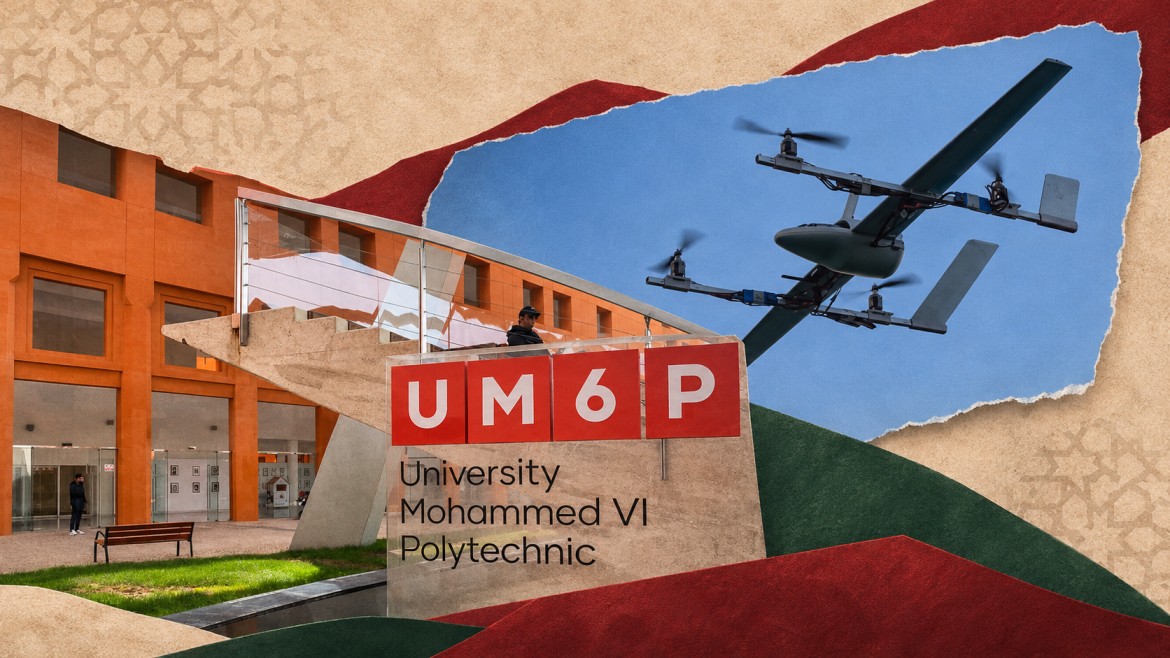
A Moroccan university is developing two new drone technologies that could make aircraft more energy-efficient and allow them to navigate without constant human control. Mohammed VI Polytechnic University (UM6P), based in Benguerir, is working on drones with wings that change shape during flight and autonomous navigation systems powered by artificial intelligence (AI).
The two research projects aim to improve drone performance and support their use in industrial settings. Details were published in research opportunities on the EURAXESS platform on 6 November.
The first project focuses on wings inspired by birds and bats. The design would allow drones to change the shape of their wings during flight to improve aerodynamics and reduce energy use.
Researchers plan to use lightweight composite materials, computer-designed structures and 3D-printed parts to build the prototypes.
The drones will then undergo wind tunnel experiments, vibration and fatigue tests, followed by flight trials to assess their performance and durability.
The project aims to produce a prototype that reaches Technology Readiness Level (TRL) 5. This means the technology will have been tested and validated in an environment that reflects real operating conditions.
The research is also expected to produce three scientific papers and contribute to a patent.
The second project focuses on drones that can navigate and respond to their surroundings using AI.
Researchers will combine machine learning, computer vision and data from several sensors. These systems will allow drones to analyse their surroundings and adjust their movements according to changing conditions.
The project also includes the development of digital twins – virtual models that reproduce how physical drones operate.
These models will use flight data to monitor equipment, assess performance and predict possible technical failures. Some data processing will take place directly on board the aircraft, allowing them to analyse information more quickly.
Tests are planned at UM6P and facilities operated by the OCP Group, the Moroccan phosphate and fertiliser company.
The second project aims to produce a demonstrator reaching TRL 6, meaning the technology will be tested in conditions similar to those found in industrial operations.
Researchers will also develop a digital platform to organise drone missions and collect data from the aircraft.
The technologies could have applications in industrial inspection, infrastructure monitoring and mining operations. Autonomous drones could be used to inspect industrial facilities, monitor infrastructure and map extraction areas with less need for human intervention.


