Morocco’s main agricultural research body and an international drylands institute have agreed a new five-year plan to work together on improving farming methods and crop production.
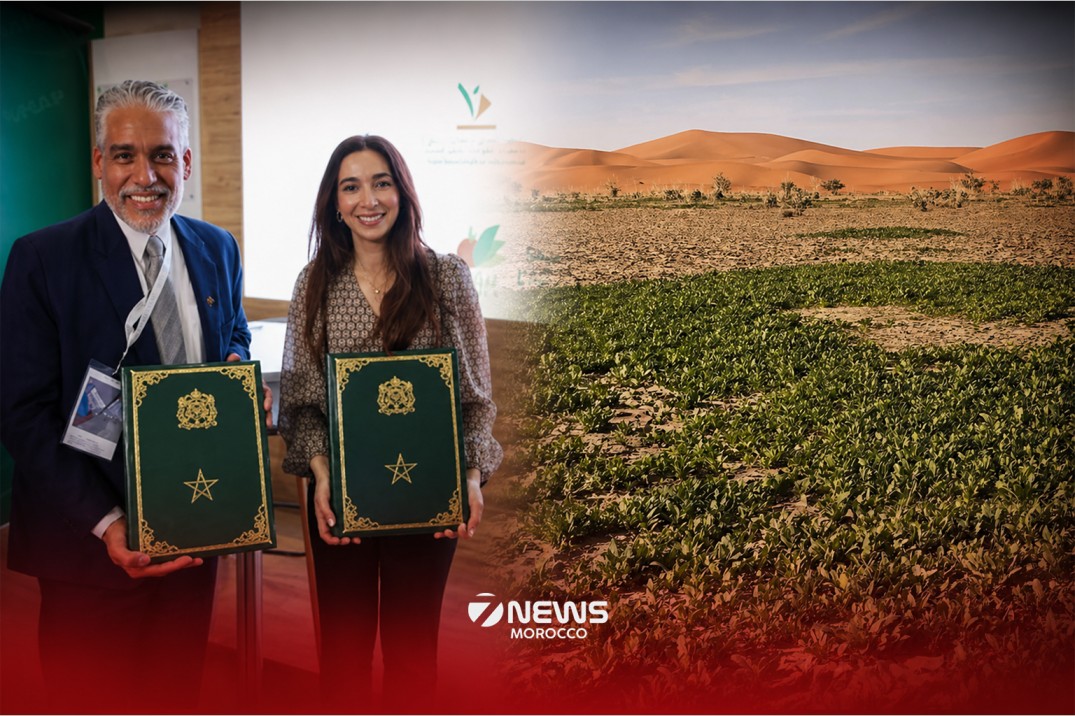
The National Institute for Agricultural Research (INRA) and the International Center for Agricultural Research in the Dry Areas (ICARDA) signed the agreement during the International Agriculture Fair in Morocco (SIAM). It covers the period from 2026 to 2030 and continues a partnership that began in 2013. The plan is part of Morocco’s Generation Green 2020–2030 strategy, which aims to strengthen food supply and support rural areas.
Lamia Ghaouti, Director of INRA: “This memorandum reinforces a partnership active since 2013. The new phase prioritises seed development, cereal production and desert farming techniques.”
Augusto Becerra of ICARDA: “Morocco has become a strategic hub for global dryland research, and resilient systems are needed to respond to climate change.”
A major focus of the plan is developing crops that can cope better with drought and heat. Researchers will work on improved types of durum wheat and barley that need less rainfall, using genetic selection methods. The aim is to help keep harvests stable as dry conditions continue in Morocco.
The agreement also covers farming in desert and semi-desert areas, especially in southern regions. This includes testing irrigation using salty water and using protected farming systems to grow crops in harsh conditions. The idea is to make land that is currently unused productive for crops like tomatoes and berries.
New technology will also be used more widely. Satellites and artificial intelligence will help monitor soil moisture and improve irrigation decisions. This is important in Morocco, where agriculture uses about 80 percent of available water.
Work carried out in Rabat and Settat is already being used in other countries in North and West Africa.