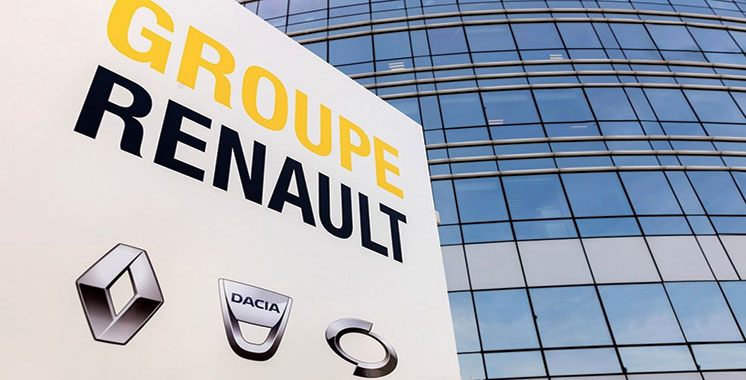
Morocco has become Renault Group’s biggest manufacturing hub outside France after producing more vehicles than Spain in 2025 . Renault built 394,000 vehicles at its factories in Tangier and Casablanca last year, overtaking production at its Spanish plants. Lower labour costs, a growing supplier network and fast shipping to Europe have helped make the country one of the group’s most important production bases.
Most Dacia Sandero cars, Europe’s best-selling passenger vehicle, are made in Tangier. The factory also builds the Dacia Jogger and Logan.
Stellantis has also expanded production in Kenitra. The plant makes the Peugeot 208 and electric quadricycles, including the Citroën Ami, Opel Rocks e and Fiat Topolino.
Labour costs remain one of the biggest advantages. Industry figures show it costs just over €100 in labour to build a vehicle in Morocco. The same figure is about €900 in Spain and more than €1,400 in France.
Fast shipping across the Strait of Gibraltar allows carmakers to deliver vehicles to Europe within days while keeping production costs low.
The automotive industry is also driving exports. Data from the Exchange Office shows automotive exports reached more than 77 billion dirhams, about $8.2bn, in the first five months of 2026. That was 15.9% higher than a year earlier.
The industry is no longer focused only on assembling cars. Exports of electrical wiring harnesses reached 28.89 billion dirhams during the same period, showing that local suppliers are becoming a bigger part of the global supply chain.
Market research estimates the automotive sector was worth $4.29bn in 2025 and could grow to $4.76bn in 2026.
The country’s growing role comes as the European Union prepares new rules to encourage more manufacturing inside the bloc.
Draft proposals under the Industrial Accelerator Act would require final vehicle assembly to take place in the EU for cars to qualify for subsidies. Vehicles would also need at least 70% local content, while batteries would have to reach 50% local content within three years.
The new rules could affect the next-generation Dacia Sandero, expected in 2027 or 2028. An electric version is widely expected, but if it is built in Morocco it may not qualify for EU purchase incentives. That could make one of Europe’s cheapest electric cars more expensive for buyers.
Competition from Chinese manufacturers is adding more pressure. Data from the Moroccan Association of Vehicle Importers shows Chinese brands increased their share of new car sales from 4.8% to 11.3% in the first half of 2026. Companies including BYD are expanding quickly in the market.
The European Automobile Manufacturers’ Association has urged Brussels to avoid strict rules that exclude production in neighbouring countries. It says factories in Morocco help European brands stay competitive, especially in the affordable electric vehicle market.