

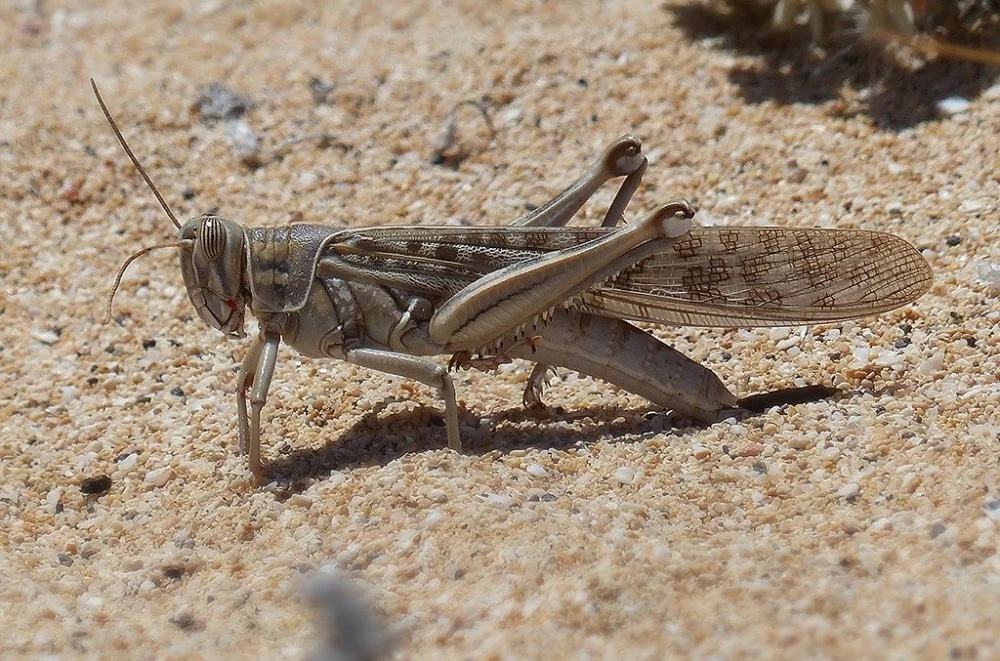
The UN food agency has warned that desert locusts are becoming a growing threat in parts of Morocco, posing a threat to crops and food supplies.
In a report, the UN Food and Agriculture Organization (FAO) said early signs of locust breeding were seen in Morocco’s southern areas, especially near Tan-Tan. Desert locusts are the most damaging moving pest in the world and can spread very quickly.
Locusts usually live alone and cause little harm. But after rainfall, plants in dry areas grow, and they change and gather into huge swarms. A swarm covering one square kilometre can eat the same amount of food in one day as 35,000 people.
The FAO said the situation is now focused on two main areas. The first runs from northern Senegal to southern Mauritania. There are fewer small swarms, but adult groups are still active.
The second area is closer to Morocco and is more worrying. Locust breeding started there in late January. These insects can travel up to 150 kilometres in a single day, making the risk hard to control.
The agency warned that swarms could move north from Mauritania into Morocco in the coming weeks. They could also spread towards border areas near Algeria. February is expected to be a key month, with new young locusts likely to appear in the Moroccan Sahara.
The FAO also pointed to a clear drop in spraying efforts. In January, about 45,900 hectares were treated, down from more than 82,000 in December. This drop comes as new breeding areas are being found.
While the situation is calmer in countries like Sudan and Egypt, the FAO said Morocco must stay alert. If locust swarms reach central farming areas, they could harm major fruit and vegetable crops.
Early spotting of the insects remains the best way to stop a wider outbreak.


