
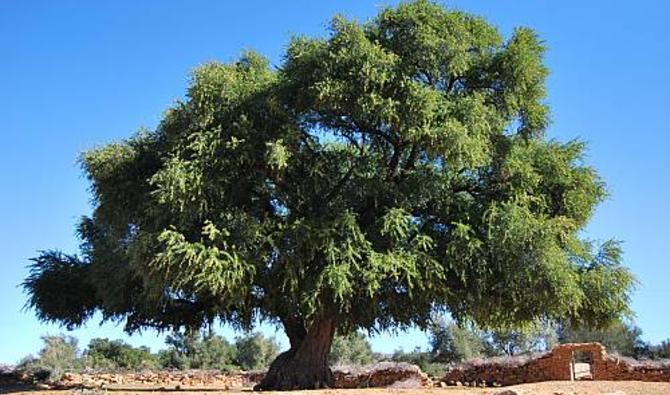
Agadir is currently hosting the fourth edition of the International Argan Tree Fair, a major event celebrating one of Morocco’s most iconic natural and cultural treasures. Running until January 16, the exhibition shines a spotlight on the argan tree—recognized by UNESCO as both a Biosphere Reserve and an element of Intangible Cultural Heritage of Humanity.
Held under the High Patronage of King Mohammed VI, this year’s edition is closely aligned with two national strategies: “Green Generation 2020-2030” and “Forests of Morocco 2030.” Both launched in 2020, these initiatives share a common goal: to structure and scale up the argan sector as a tool for social inclusion, job creation, and export growth.
Progress is already visible. Over 246,000 hectares of historical argan forest have been restored, and an additional 10,000 hectares have been newly planted across the Souss-Massa, Marrakech-Safi, and Guelmim-Oued Noun regions. This expansion follows a climate-resilient approach to argan farming that balances biodiversity conservation with economic development.
The event is organized by the Ministry of Agriculture and the National Agency for the Development of Oasis and Argan Zones (ANDZOA). It highlights the vital role the argan tree plays in empowering rural communities and preserving generations of traditional knowledge. The fair also provides a platform for industry professionals to build networks, establish partnerships, and explore new opportunities in the argan value chain.
At the heart of the exhibition, more than 200 booths showcase argan oil in both its culinary and cosmetic forms, alongside a vibrant display of local crafts born from the Argan Biosphere Reserve. These creations reflect the depth and diversity of skills tied to this unique ecosystem.
This edition also takes on an international dimension, welcoming delegations from 20 African countries, each represented through dedicated spaces. The fair becomes a forum for intercultural dialogue and south-south collaboration, with the argan tree serving as a shared symbol of resilience, adaptation, and sustainable development.
This year’s theme, “The Argan Tree: A Symbol of Resilience and Adaptation, a Bridge for African Communication,” underscores Morocco’s ambition to serve as a continental model—combining environmental protection, local value creation, and the empowerment of rural women.
Speaking to MAP, Hou Dahbi, head of statistics and studies at ANDZOA, emphasized that the event also aims to energize the city during the African Cup of Nations, with Agadir being one of the host cities. He described the fair as a vital showcase for cooperatives and artisans, especially as demand for argan-based products continues to grow.
Exhibitors share this enthusiasm. Many see the fair as a powerful opportunity to boost visibility, promote their goods, and reach new markets in an atmosphere that encourages innovation.
Beyond the commercial displays, visitors can enjoy a rich and diverse program. The Argan Village features live craft demonstrations, cooking shows using local ingredients, traditional music performances, and family-friendly activities. Events are spread across key city locations including Prince Héritier Square, City Hall Square, and the Marina Fan Zone.
Through this edition, organizers aim to reinforce Agadir’s appeal as a tourist destination while bolstering the local economy. Above all, the event offers visitors a deep dive into the world of the argan tree and the cultural heritage it represents—not just for Morocco, but for the entire African continent.