
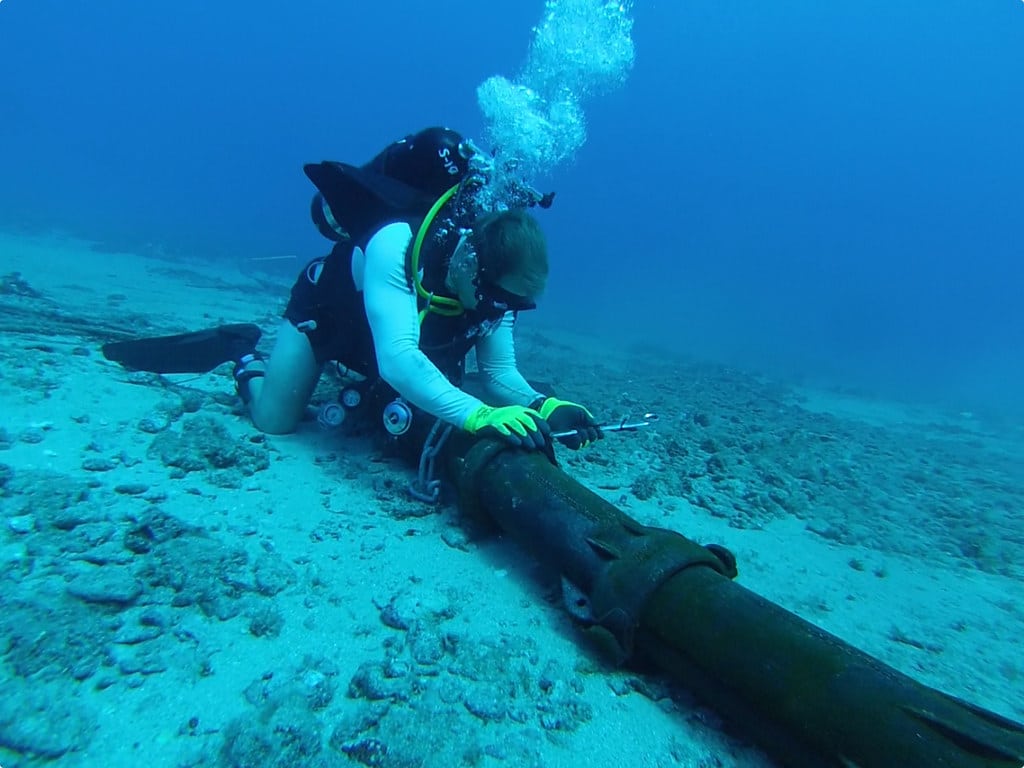
More than 50 million people lost power during a major blackout in Spain, Portugal and Andorra in April 2025. Now, 18 months later, Morocco and Spain are preparing to inspect the undersea cables that helped keep electricity flowing between the two countries. Spanish marine services company Advanced Cargo Services & Marina (ACSM) has secured the contract to inspect the cables. The work will be funded equally by Morocco’s National Office of Electricity and Drinking Water (ONEE) and Spain’s electricity grid operator, Red Eléctrica de España.
The inspection will assess the condition of the cables and identify any maintenance work needed to keep the connection operating safely.
The 30km link crosses the Strait of Gibraltar, connecting the Fardioua station in Morocco with the Tarifa substation in Spain. The cables reach depths of up to 640 metres below sea level.
The system has two electricity circuits operating at 400 kilovolts (kV), with seven cables in total. Three cables serve each circuit, while a seventh is kept as a shared reserve. The first circuit began operating in 1997 and the second in 2006.
The connection has a maximum combined capacity of 1,400 megawatts (MW). Under standard commercial arrangements, up to 900MW can flow from Spain to Morocco and 600MW in the opposite direction.
How Morocco helped Spain restore power
The blackout on 28 April 2025 affected mainland Spain, mainland Portugal and Andorra, leaving more than 50 million people without electricity for around 10 hours.
Spain’s electricity generation fell from about 25 gigawatts (GW) to roughly 10GW within minutes, according to figures recorded by Red Eléctrica.
Power restoration began that afternoon, and the affected electricity networks gradually returned to normal overnight, between 28 and 29 April.
Morocco and France helped Spain restore its electricity supply by sending power across their interconnections. Morocco redirected part of its electricity generation to Spain, with reports putting the transfer at up to 900MW. Other figures cited a contribution of 519MW.
The emergency highlighted the importance of cross-border electricity links when a country’s power system comes under pressure. The connection allows Morocco and Spain to exchange electricity in either direction, depending on demand and available supply.
It also provides an additional route for electricity trading between Europe and Africa, particularly as both countries increase their use of renewable energy.
A third connection planned
Morocco and Spain are also working on plans for a third undersea electricity connection, which would operate at 400kV and add 700MW of capacity.
The project is expected to cost about $169m, with the two countries set to share the investment equally.
The new link would increase the amount of electricity that can be exchanged between the two countries and provide additional capacity for their power networks.
The existing cables are inspected periodically because of the difficult conditions under the sea. The latest inspection will help determine their condition and whether repairs or other maintenance work are needed.