
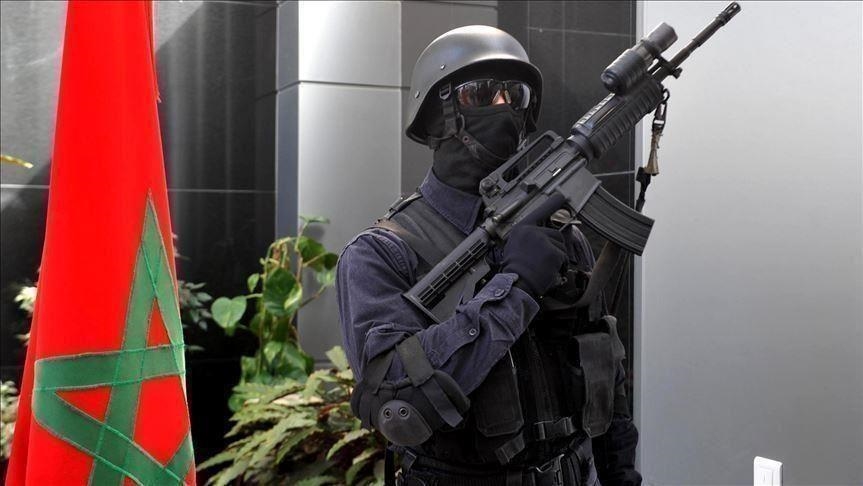
Morocco has been listed as a country with “no impact” from terrorism in the 2026 Global Terrorism Index (GTI), published by the Australian Institute for Economics and Peace. The country scored zero out of ten points, putting it joint 100th in the world with other nations where terrorism has little or no effect.
The GTI ranks 163 countries based on the number of attacks, deaths, injuries, and property damage. Countries with higher scores are more affected by terrorism.
The report shows terrorism dropped sharply in the Middle East and North Africa in 2025. The total number of attacks fell by 56%, from 646 in 2024 to 286, and deaths fell by 81%, from 1,064 to 205. No country in the region saw its score get worse, a first since the index began in 2012.
In the region, Algeria was the most affected, ranking 47th globally, followed by Tunisia in 50th and Libya in 59th. Morocco and Mauritania were both 100th.
Globally, Pakistan was the most affected country, followed by Burkina Faso, Niger, Nigeria, Mali, Syria, Somalia, and the Democratic Republic of Congo. Worldwide attacks fell 22% to 2,944, and deaths dropped 28% to 5,582, the lowest since 2007. Deaths in Western countries, however, rose 280% to 57, mainly due to antisemitism, Islamophobia, and politically motivated attacks.
The report says the Islamic State (ISIS) and its branches remain the most deadly, causing about 17% of global attacks.
The GTI looks at the impact of attacks over the past five years, not just single incidents. Each attack is measured by how many people were killed or injured, how much property was damaged, and how many attacks happened. This explains why some countries stay high on the list even in quiet years.
Morocco’s zero score comes from a long-term, proactive approach started after the 2003 Casablanca bombings. This includes intelligence and law enforcement work by the Central Bureau of Judicial Investigation (BCIJ), religious reforms, prisoner rehabilitation, and programs like “Musalaha” to counter extremist ideas. Experts say this mix has kept Morocco stable despite being in a risky region.
Six of the ten most affected countries are in sub-Saharan Africa, especially the Sahel region. Countries like Burkina Faso, Niger, and Mali have seen extremist groups grow after ISIS and al-Qaeda lost power in Iraq and Syria. Political instability and weak security have made it easier for these groups to expand.
The report also warns about new threats, including drones and cyberattacks, which give small groups the ability to carry out attacks more easily and over long distances. Conflicts in Iran and South Asia, plus economic problems in the West, could also increase risks.
Terrorism also costs a lot of money. The GTI estimates billions of dollars each year are lost due to property damage, fewer investments, drops in tourism, and higher military spending instead of health and education.