

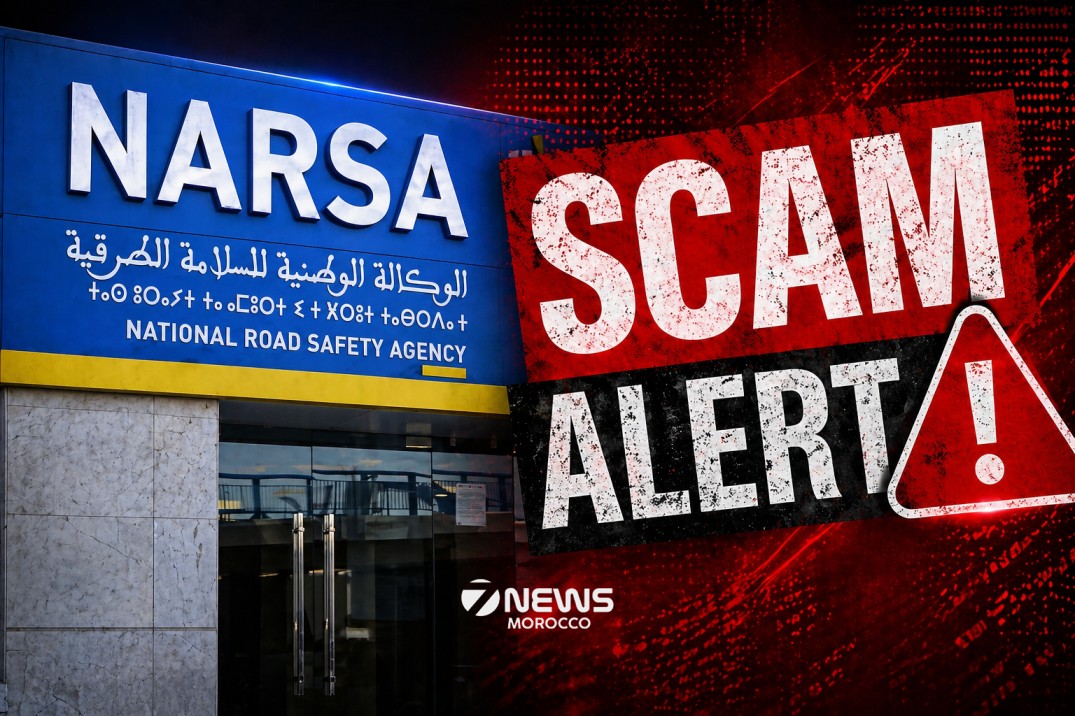
Morocco’s National Road Safety Agency has warned about a fake website pretending to be its official platform. The site is designed to trick people into sharing personal and banking information.
The agency, NARSA, says the website copies its name and look to appear legitimate. It is not connected to the agency and is being used for phishing.
According to NARSA, scammers are using the fake site to collect passwords, banking details and other personal data from users.
The agency has told people to only use its official websites: www.narsa.ma and https://perminou.narsa.gov.ma. It also advised users not to click on suspicious links and to report anything unusual to the authorities.
More scams targeting public services
This case is part of a wider pattern of scams targeting Moroccan public institutions.
Earlier this month, the Ministry of Justice warned about SMS messages claiming vehicle owners could get fine exemptions. The messages directed people to fake payment pages and threatened penalties if they did not act.
The central bank, Bank Al-Maghrib, has also warned about similar scams using phone calls and text messages. These usually try to pressure people into giving away bank details by claiming there is an urgent issue with their accounts.
Experts say some of these scams are now using old stolen data. Information leaked from past breaches is being reused to make messages look more convincing and personal.
AI is making scams harder to detect
Cybersecurity experts say scams in 2026 are becoming harder to spot because of artificial intelligence.
Fake messages and websites are now written in clear French or Moroccan Arabic, without the mistakes that used to give them away.
This makes it easier for scammers to trick users, especially people who are less familiar with checking website links or spotting fake pages.
What users are advised to do
Authorities are telling people to be more careful when dealing with online messages and services.
They recommend checking that official websites end in .ma or .gov.ma, ignoring urgent messages asking for payments or personal details, and using official apps from trusted app stores.
People are also encouraged to report suspicious activity through Khidmat al Mostahlik or to DGSSI.
Morocco is currently ranked 34th in the Global Cybersecurity Index. Officials say the country is improving its digital security, but scams like these remain a growing problem.


