

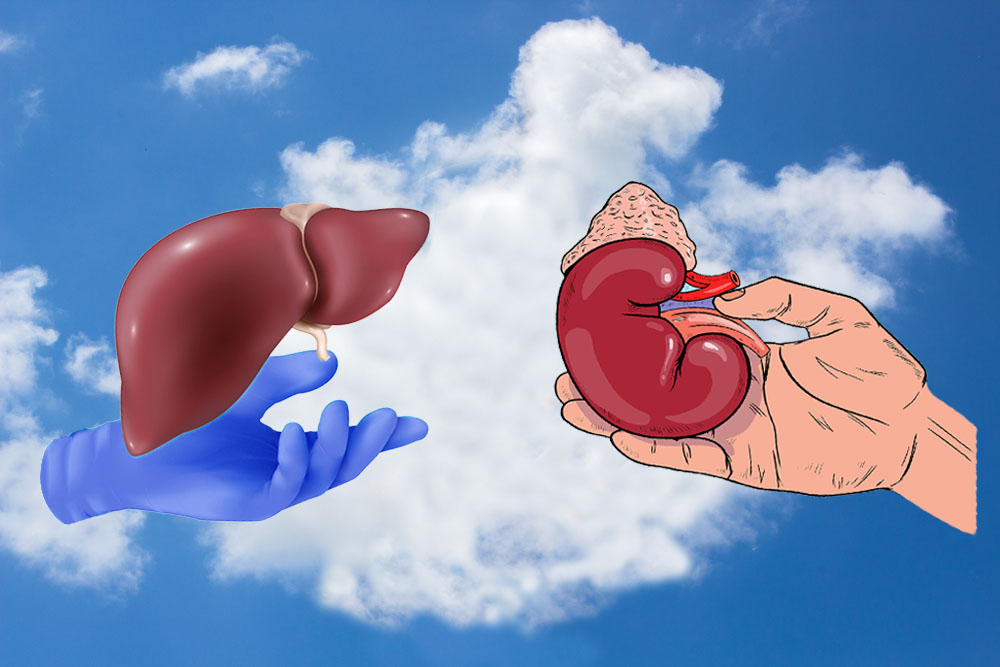
Every day in Morocco, thousands of patients wait—some in silence, others in pain—for the life-saving gift of an organ. For many, that wait drags on endlessly. Others die before they’re even placed on a transplant list. Despite having legal frameworks in place for nearly two decades, and despite repeated warnings from health professionals and patient advocacy groups, Morocco’s organ transplant system remains barely functional. The contrast with countries like Spain, where organ donation has become a model of global excellence, is not only stark—it’s heartbreaking.
The numbers paint a bleak picture. In 2025, Morocco recorded just 0.5 donors per million people—one of the lowest rates worldwide. Fewer than 200 transplants were performed nationwide that year, and nearly all were kidney transplants from living, related donors. Although post-mortem organ donation is legally permitted, it remains extremely rare. Liver, heart, or lung transplants are virtually nonexistent, hindered by a lack of infrastructure, poor coordination, and a shortage of donors.
Meanwhile, Spain carried out over 6,300 transplants in 2025 alone. The United States surpassed 40,000. Even countries with fewer resources, like some in Latin America and Eastern Europe, are achieving far better outcomes. France, facing its own challenges, still managed to perform more than 6,000 transplants.
Morocco’s problem isn’t a legal vacuum. Since 1999, legislation has authorized post-mortem donations, provided the individual gave consent during their lifetime or their family approves it afterward. In theory, anyone can register as a donor through the local court. In reality, fewer than 1,000 Moroccans have done so. The registration process is complicated, poorly promoted, and largely unknown to the general public.
Hospitals often lack the means to act. “We can identify cases of brain death, but they almost never lead to an organ retrieval,” admits a doctor at Ibn Rochd University Hospital in Casablanca. Staff training is limited, interdepartmental coordination is weak, and families are rarely informed or supported during critical moments. Add to that a shortage of suitable infrastructure, and the result is a system paralyzed at nearly every stage.
Cultural and psychological barriers further complicate matters. Even though Morocco’s High Council of Ulemas has officially endorsed post-mortem donation, public mistrust remains strong. Many families refuse to consent, often out of fear, lack of knowledge, or religious misconceptions. Awareness campaigns, though more frequent in recent years, have struggled to break out of niche circles. Patient groups frequently criticize the lack of a coordinated national communication strategy. “Unless we talk about organ donation in schools, in mosques, on TV shows—nothing will change,” says a Casablanca-based activist.
Meanwhile, thousands of patients remain forgotten. Many have been on dialysis for over a decade. Some are unofficially on waiting lists; others never even get the chance. According to nephrologists, more than 10,000 Moroccans suffer from end-stage kidney failure. For them, a transplant is often the only hope of returning to a normal life. But unless they have a living family donor, their chances of receiving an organ are slim. Those with the financial means try their luck abroad. The rest are left to wait—quietly, indefinitely.
Spain offers a masterclass in what a fully functioning transplant system looks like. For over 30 years, the country has built a centralized, highly organized and well-funded structure. Every hospital has a dedicated transplant coordinator. When a case of brain death occurs, an automatic process is triggered: staff are trained, families are supported, and transportation is managed in real time. In 2025, Spain counted 51.9 donors per million people. Most donations now come not from traffic accidents, but from stroke or cardiac arrest victims. Spain is also the only country in the world performing all types of organ transplants from donors in asystole—a method still considered too advanced by many others.
Spain’s 2025–2030 national strategy is aimed at keeping its lead: promoting living kidney donations, investing in technology, simplifying procedures, and expanding specialized teams.
And Morocco?
Healthcare professionals are well aware of the gap and have been increasingly vocal. University hospitals in Rabat, Marrakech, and Casablanca are trying to build transplant units. The Ministry of Health has floated the idea of a national, digital donor registry on several occasions. But so far, no meaningful structural reform has been implemented.
“Unless there’s strong political will, dedicated funding, and coordination between ministries, we’re just patching holes,” says a doctor who requested anonymity. “Moroccans need to understand that one organ can save multiple lives. Right now, we’re burying organs out of ignorance.”
Morocco has already proven its ability to build efficient systems in other areas—mass vaccination campaigns, the COVID-19 response, or the development of major healthcare infrastructure. Organ donation and transplantation could follow that same path, but only if it’s treated as a national priority.
It requires a long-term vision, a clear strategy, adequate resources—and, most importantly, collective engagement. Because behind every potential donor, every harvested organ, every successful transplant, there isn’t just a number. There’s a life that gets to go on.