
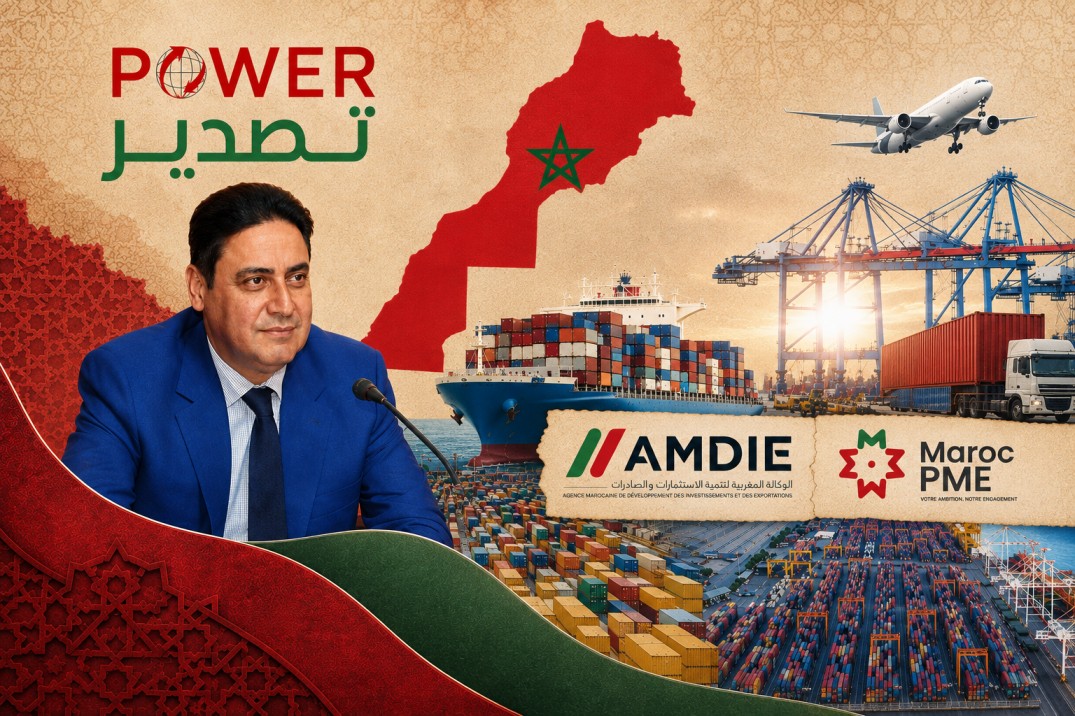
Nearly 100 Moroccan companies and cooperatives have been approved for support under the government’s new Power Export programme after the first round of applications.
The steering committee approved the projects during a meeting in Rabat on Thursday. Around 100 applications were selected from 435 submissions received from all 12 regions of the country, giving the programme an acceptance rate of about 23%.
Power Export is part of the 2025-2027 Foreign Trade Roadmap, which aims to help more Moroccan businesses sell abroad, improve their competitiveness, digitalise trade services, open new export markets and strengthen trade ties, especially with Africa.
Secretary of State for Foreign Trade Omar Hejira said: “Approving this first batch of applications is a decisive step in implementing the Power Export programme. It marks the transition from planning to active implementation across the main pillars of the 2025-2027 Foreign Trade Roadmap.”
The programme is open to small and medium-sized enterprises (SMEs) and cooperatives. It supports three groups: companies exporting for the first time, businesses that already export and want to grow, and exporters looking to enter new markets.
The programme is jointly managed by the Moroccan Agency for Investment and Export Development (AMDIE) and Maroc PME.
AMDIE Director General Ali Seddiki said the programme builds on regional studies carried out in all 12 regions and completes the third year of the Export Morocco Now programme.
The first approved projects cover businesses across the country in sectors including agrifood, textiles, and chemicals and parachemicals.
Maroc PME Director General Anouar Alaoui Ismaili said the meeting reviewed applications assessed by both agencies.
He highlighted the role of the programme’s flash audit, which measures the competitiveness and export potential of micro, small and medium-sized enterprises (MSMEs) and cooperatives before they receive support.
The flash audit checks a company’s production capacity, financial health, product quality, competitiveness and international certifications such as ISO and HACCP.
Companies that pass the assessment can receive technical support to improve packaging, meet foreign regulations, upgrade equipment and prepare products for overseas markets.
The programme also offers mentoring, financial support for trade fairs, legal advice on distribution agreements, export credit insurance and access to digital trade platforms that simplify customs procedures and connect businesses with international buyers.
Officials also reviewed the programme’s progress and set priorities through 2027. They confirmed that Power Export will continue to focus on two areas: export audits and direct business support and mentoring.