Morocco is set to get new funding for solar and wind power projects under a 10-year deal with Norway, which will pay for carbon credits linked to cuts in greenhouse gas emissions. The agreement covers up to 8.78 million tonnes of emissions reductions between 2027 and 2036. It is also expected to help attract investment in about 2,000 megawatts (MW) of new renewable electricity capacity, as well as battery storage projects.
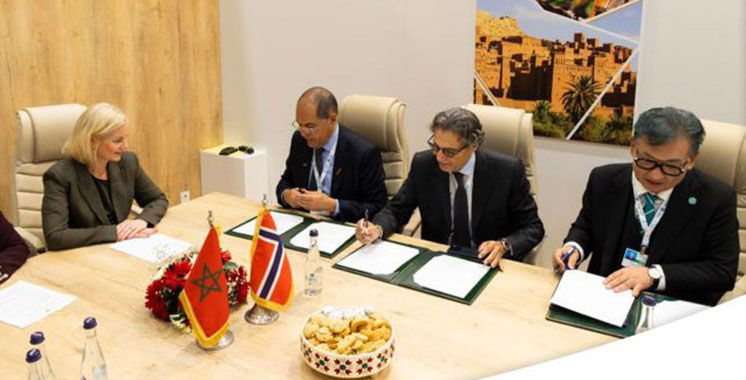
Norway’s Ministry of Climate and Environment announced the agreement on Monday, 16 November 2026. Officials from both countries signed it on the sidelines of the COP31 climate summit in Antalya, Turkey. The Global Green Growth Institute helped facilitate the deal.
Under the agreement, Norway will buy carbon credits from Morocco in return for emissions cuts achieved by eligible projects. Each reduction must be measured and independently verified before Norway makes a payment.
The funding will focus particularly on renewable energy projects that struggle to make enough money to attract investors. The payments are intended to improve their financial returns and make them more attractive to private investment.
Norwegian Climate and Environment Minister Sigrun Aasland said the agreement would help increase clean electricity production and create new jobs in Morocco, while delivering additional cuts in emissions.
The deal will operate through a Moroccan programme that rewards projects according to the results they achieve. Rather than providing all the money at the start, the programme will pay financial incentives once projects have delivered verified emissions reductions.
The two countries will now work on completing the programme’s rules and setting up systems to monitor, report and verify the results. They will then launch a pilot phase, with the first emissions reductions eligible for transfer expected from 2028.
The agreement builds on cooperation established in May 2026 between Morocco’s Ministry of Energy Transition and Sustainable Development and Norway’s Ministry of Climate and Environment.
It falls under Article 6.2 of the Paris Agreement, which allows countries to work together to reduce emissions and transfer carbon credits between them. Accounting rules are designed to ensure that the same emissions cuts are not counted twice.
Morocco hopes the mechanism will bring in more money to support its shift towards cleaner energy. The country aims to raise renewable energy’s share of its total installed electricity-generating capacity to more than 52% by 2030.
The financial value of the agreement has not been disclosed. Neither government has announced how much Norway will pay for each tonne of emissions avoided.
The final payments will depend on how much pollution the supported projects actually prevent and how much of those reductions passes independent checks and qualifies for transfer over the 10-year period.