Nine Moroccan companies have made it into the 2026 list of the Middle East and North Africa’s most valuable firms, published by Forbes Middle East.
The ranking, called “The Region’s 100 Most Valuable Companies 2026”, shows Morocco in fourth place by number of companies. It sits behind the United Arab Emirates, Saudi Arabia and Qatar, but ahead of Kuwait. The UAE and Saudi Arabia alone make up 69 of the 100 companies on the list.
The numbers show how concentrated the region’s wealth is. The 100 companies are worth a total of $3.7tn, which is 86% of the total value of 12 stock markets across the region. Saudi Arabia alone accounts for $2.4tn of that, largely because of Saudi Aramco, which is valued at about $1.7tn and makes up nearly 40% of the region’s total.
In that context, Morocco stands out as a country without oil that still manages to keep a strong presence.
Most of the Moroccan companies on the list are banks, telecoms firms, or infrastructure businesses. This reflects an economy built on stability rather than fast-growing tech companies.
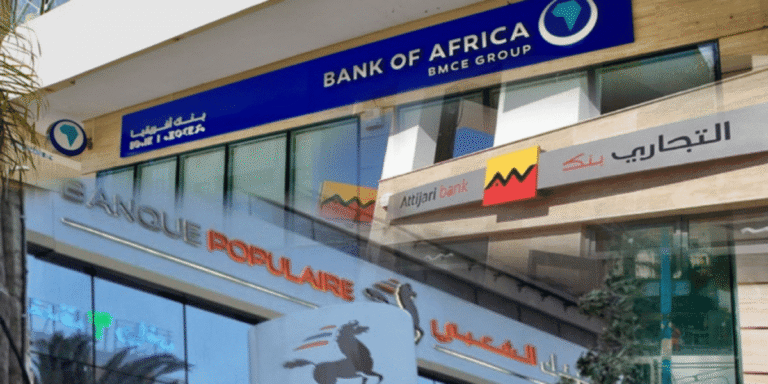
The banking sector is the biggest driver. Attijariwafa bank is the highest-ranked Moroccan firm at number 33, with a value of $17.4bn. BCP Group (69) and Bank of Africa (88) are also on the list.
These banks are large, stable and operate in many African countries. Some are active in more than 20 markets, which helps them balance slower growth at home with faster growth elsewhere.
Other Moroccan companies include Maroc Telecom (50), which is worth $10.4bn and has about 81 million customers.
Industrial and infrastructure firms also feature. These include Managem Group (48), Marsa Maroc (60), TAQA Morocco (77), and LafargeHolcim Maroc (96).
Construction company SGTM (75) is one of the newer names, after a major stock market listing worth about $500m.
Companies linked to OCP Group are also important. OCP controls around 70% of the world’s phosphate reserves, which are key for fertilisers. This gives it a role similar to oil companies in other countries, especially as it invests in products like customised fertilisers and green ammonia.
Forbes says Morocco has built its economy around stability instead of relying on natural resources like oil. Over the past 20 years, the country has invested heavily in infrastructure and signed trade deals with major partners such as the European Union and the United States.
Many of the companies on the list are essential to the country’s economy. They provide core services like banking, telecoms and logistics, and tend to generate steady and predictable income.
This is different from some Gulf economies, where company values often rise and fall with oil prices or property markets.
A key reason Moroccan banks rank highly is their strong presence across Africa. Groups like Bank of Africa and BCP Group have expanded widely into sub-Saharan Africa.
This helps them spread risk and benefit from faster-growing markets. In many cases, banks, telecoms and insurance companies expand together, supporting each other in new countries.
The report also points out some weaknesses. The Casablanca Stock Exchange is still dominated by a small number of large, long-established companies.
There are not many new companies joining the market, especially in technology or newer industries. This limits Morocco’s ability to compete with faster-moving economies like the UAE or Saudi Arabia.
Many big companies are partly owned by the state or large holding groups, which makes the market stable but less dynamic. It is also harder for fast-growing startups to grow big enough to be listed.
To address this, reforms have been introduced, including a futures market launched in 2026. This allows international investors to better manage risk and has helped bring more foreign money into the market, pushing up company valuations.
The Forbes list is based on four main factors using 2025 data: market value, total assets, profits and revenues.
Moroccan companies perform well on assets and profits, especially banks with large balance sheets, often above $50bn. They also benefit from stable income streams, such as telecom subscriptions or financial services.
Even so, the gap with the Gulf remains large. The total value of all nine Moroccan companies is still less than 5% of Saudi Aramco alone.