
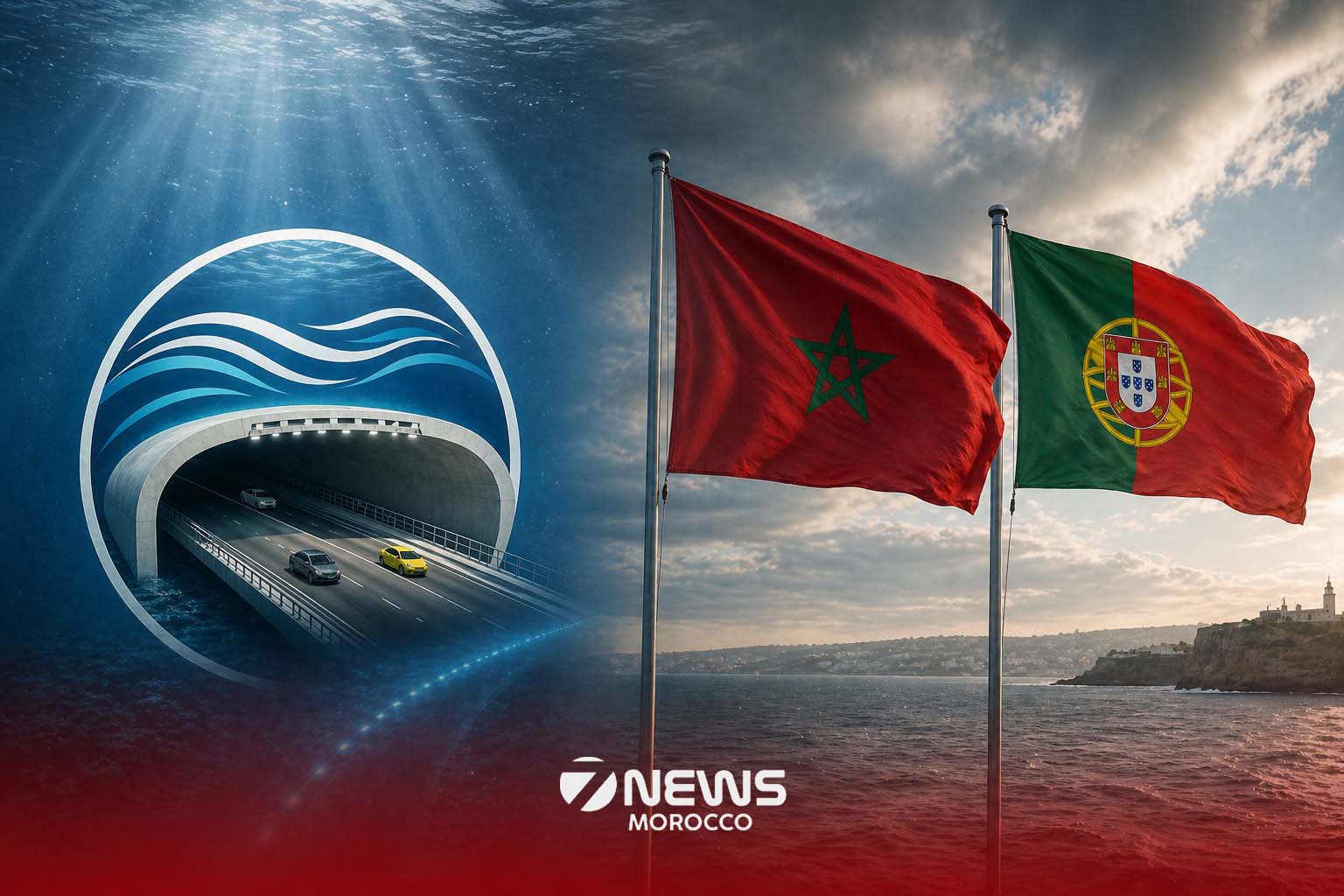
People in Portugal and Morocco are looking at a plan to build an undersea road link between the two countries, in a move that would physically connect Europe and North Africa for the first time. The idea is now in a detailed planning stage, with costs estimated at more than €800m.
The proposal would link northern Morocco near Tangier with southern Portugal in the Algarve. It would be an undersea tunnel for cars and other vehicles, running beneath the Strait of Gibraltar.
Portugal and Morocco are backing a design that has moved towards a “double-bore” tunnel. This means two separate tubes for traffic going in each direction, plus a central corridor for emergencies and technical work. The project is also planned to be built in stages so it does not heavily disrupt sea and land transport during construction.
On the Portuguese side, the tunnel would connect into the A2 motorway and the wider road network in the Algarve, linking it directly towards Lisbon. In Morocco, it would connect into main highways leading to Tangier and nearby logistics routes.
A similar but separate project is also being discussed between Spain and Morocco, focusing on a rail tunnel under the same strait. That plan would link Tarifa and Tangier and is estimated to cost more than €8.5bn on the Spanish side alone. Spain’s Transport Minister Óscar Puente has been involved in recent talks with Morocco on infrastructure cooperation.
The timing of both projects links in part to preparations for the 2030 FIFA World Cup 2030, which Spain, Portugal and Morocco are set to co-host.
There are still major technical challenges. The Strait of Gibraltar sits on a shifting tectonic zone between the African and Eurasian plates, known for seismic activity. Scientists have described a geological system called the Gibraltar Arc, which is active but not expected to change the shape of the strait in any human timescale.
Spain approved €1.73m in March 2026 to study seismic activity and the seabed conditions in the area. Engineers are paying close attention to the Camarinal Sill, where water reaches about 475 metres deep and rock layers are heavily fractured, making tunnelling more complex.
German tunnelling firm Herrenknecht has suggested that full completion of such projects is more likely in the mid 2030s or later, possibly around 2040. However, planners still hope early stages or symbolic progress could be ready by 2030.
If completed, the projects would create a fixed transport corridor linking southern Europe and northern Africa, changing how goods and people move across the region.