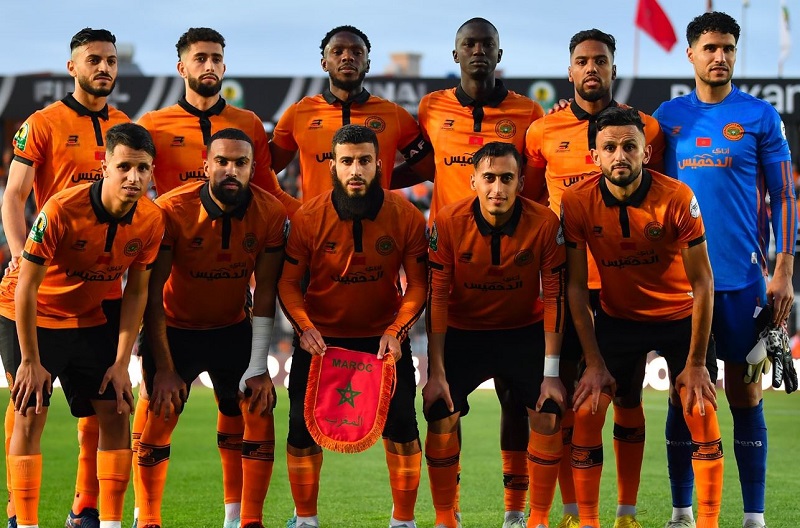
FIFA has imposed a transfer ban on Moroccan club Renaissance Sportive de Berkane (RS Berkane), preventing the team from registering new players until further notice.
The sanction came into effect on 29 May and was published on FIFA’s official registration ban list. The measure blocks the club from signing players at both domestic and international level until the issue behind the ruling is resolved.
FIFA’s public registry does not specify the exact details of individual cases. However, transfer bans are typically imposed when clubs fail to comply with financial decisions issued by FIFA’s Dispute Resolution Chamber (DRC) or the Court of Arbitration for Sport (CAS).
Under FIFA regulations, clubs that do not settle outstanding payments within 45 days of a final ruling can automatically face a registration ban.
RS Berkane has recently been involved in legal disputes, including a case linked to Senegalese midfielder Mamadou Lamine Camara and Libyan club Al Ahli Tripoli concerning contract termination procedures and financial obligations.
The latest sanction adds to a difficult period for the club.
In April, the Confederation of African Football (CAF) suspended Moroccan defender Hamza El Moussaoui for two years after he tested positive for a prohibited substance during a continental competition match. The case prompted objections from rival clubs, including Al Hilal.
The transfer ban does not affect RS Berkane’s participation in domestic or continental competitions. However, it prevents the club from strengthening its squad ahead of the next transfer window.
To have the sanction lifted, the club must provide FIFA with proof that all outstanding financial obligations, including player dues, interest payments and related legal costs, have been settled.
RS Berkane is one of several African clubs currently facing FIFA registration bans as football’s governing body steps up enforcement of financial compliance rules.
Other clubs listed under active FIFA transfer sanctions include Morocco’s Wydad AC and Olympic Club de Safi, Egypt’s Zamalek SC, Tanzania’s Young Africans SC and Algeria’s ES Sétif.
The ban will remain in place until FIFA confirms that the underlying dispute has been fully resolved.