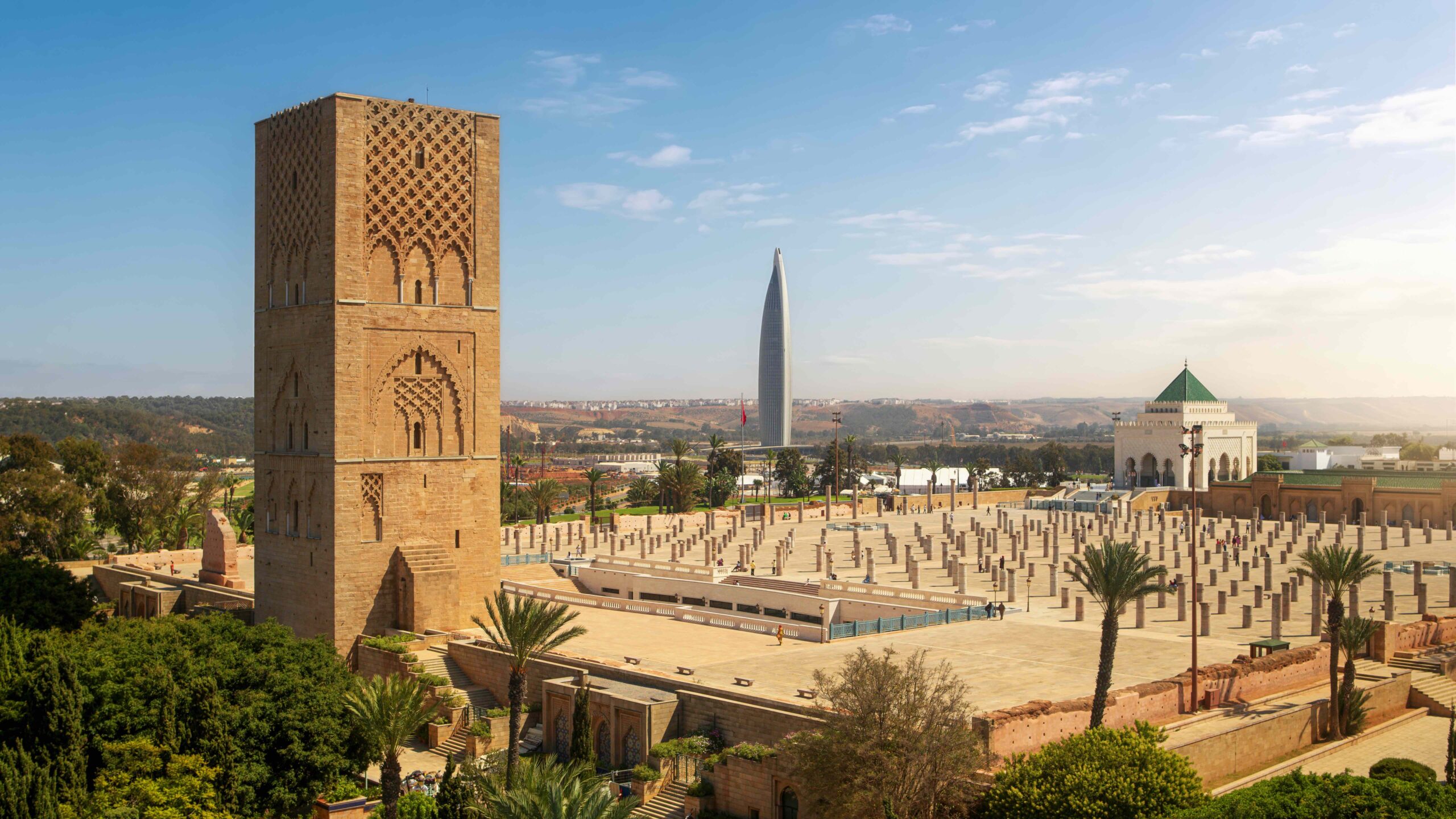
A vertical structure now defines the Bouregreg valley between Rabat and Salé. At 250 metres and 55 floors, the Mohammed VI Tower was inaugurated on 13 April 2026 and stands as Morocco’s tallest building and one of the highest in Africa.
The project is part of the wider “Rabat City of Light” programme, which aims to reshape the riverfront into a mixed urban district linking administrative, cultural and commercial functions. The tower sits within the Bouregreg Valley development zone, alongside major infrastructure including the Rabat Grand Theatre and planned retail and leisure complexes.
The concept was first developed in 2013 by Othman Benjelloun for a corporate headquarters in Casablanca. It was later relocated to Salé in 2016, increased in height, and integrated into a national development framework. Construction began in 2017 and was delivered in 2026 by a joint venture of BESIX and TGCC.
The building rests on 104 deep concrete barrettes reaching 60 metres into layered sand and silt. A 3.5 metre reinforced raft distributes the structural load. The tower uses a tube in tube system combining a reinforced concrete core with a steel frame to manage wind and seismic forces while allowing open floor layouts. A 160 tonne tuned mass damper is installed at the top to reduce building movement in high winds.
The façade covers more than 70,000 square metres and is divided into two main elevations. The north side is glazed and oriented towards the Atlantic. The south side includes opaque panels and 4,000 square metres of integrated photovoltaic panels across the façade and podium roof. Energy is supplied through a dedicated microgrid that supports building systems including lighting, lifts and HVAC.
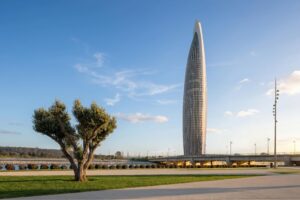
The internal programme follows a vertical layout. The lower floors contain office space designed for financial institutions, multinational firms and diplomatic missions. Above this are 55 residential units. Floors 29 to 46 contain the Waldorf Astoria Rabat Salé with 55 rooms and suites. The upper levels include an observation area and heritage exhibition space overlooking the Bouregreg and the historic cores of Rabat and Salé.
The podium includes a 350-seat auditorium, conference facilities, retail space and hospitality areas. Vertical transport is managed by 36 elevators serving both the tower and podium levels.
Sustainability systems include rainwater harvesting, greywater recycling, energy-recovery ventilation, and dynamic lighting controls. The building holds LEED Gold and HQE certification. These systems reduce energy and water demand and support long-term operational efficiency.
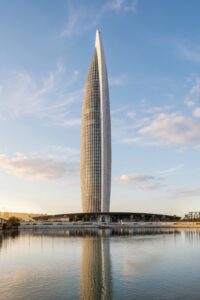
The development forms part of the Bouregreg Valley masterplan covering around 6,000 hectares. The wider zone is designed to accommodate residential, cultural and commercial growth along the river corridor and improve connectivity between the two cities.
The tower was delivered under a design and build contract. Engineering work was carried out jointly by BESIX and TGCC, with simultaneous design and construction phases. Structural completion was achieved in 2025 followed by handover in March 2026.
The project adds 102,800 square metres of mixed-use space to Rabat Salé, including offices, residential units, hotel capacity and public facilities. It is expected to support financial services activity, diplomatic functions and tourism in the capital region.