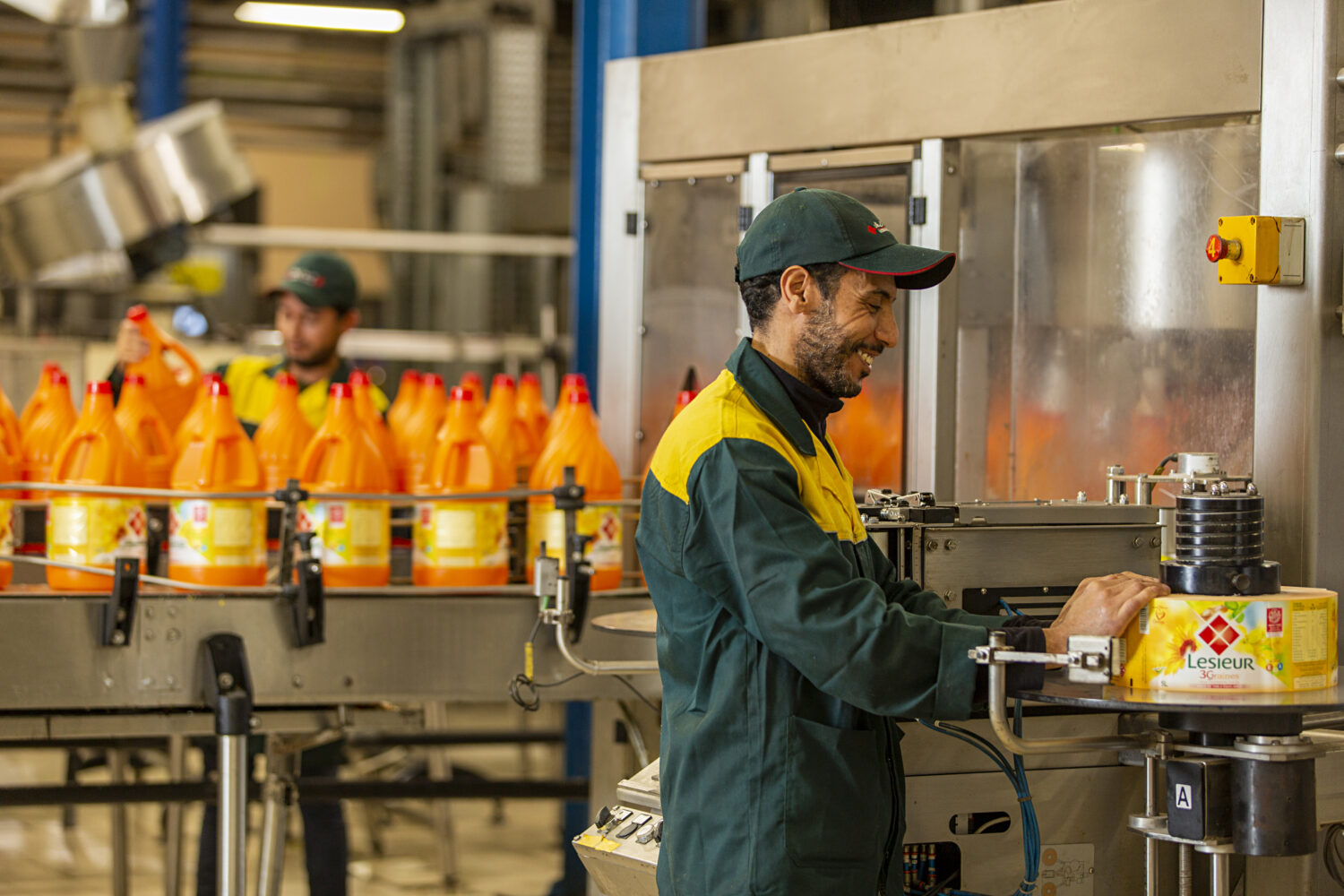
Lesieur Cristal is planning to use olive waste products in new ways as it looks to improve efficiency and manage financial pressures.
At its annual general meeting on 15 May, the company will ask shareholders to approve an agreement for its subsidiary, Société d’Exploitation de l’Olive (SEO), to sell olive pits to the parent company. The aim is to make better use of byproducts and create new sources of income.
Olive pits can be used as fuel because they contain a high level of energy. They are also used in some industrial processes, including filtration. In Morocco, they are often used in boilers and to heat greenhouses. They can also be processed for use in products such as cosmetics and water treatment materials.
By buying directly from its subsidiary, Lesieur Cristal says it will secure a steady supply of olive pits and reduce its use of imported fossil fuels in its factories.
The company reported a net loss of 50.2 million dirhams for the 2025 financial year. Its overall group net income was 8.2 million dirhams. The board has proposed not paying a dividend this year and keeping 373.5 million dirhams in retained earnings.
Because the agreement is between a parent company and its subsidiary, it is classed as a regulated transaction under Moroccan company law. Shareholders must approve it to ensure it is carried out in a transparent way.
The plan comes as the olive sector faces supply and price changes across Morocco and the wider Mediterranean region. Lower rainfall in Morocco and Spain over the past two years has reduced harvests and pushed prices higher in 2024 and 2025. This has affected costs for companies that process olive oil.
The government’s Green Generation 2020–2030 programme encourages agricultural companies to reduce waste and increase the use of renewable energy in industry. Lesieur Cristal’s plan to use olive pits fits within this approach.
Higher olive oil prices have also changed buying habits in Morocco. Some households have increased their use of other cooking oils such as sunflower and soybean oil.
The company has also renewed its auditors, Hdid & Associés and Forvis Mazars, as part of standard governance procedures for listed firms in Casablanca.