Construction of Morocco’s Grand Stade Hassan II is moving ahead with a key technical contract awarded for its electrical systems, marking another step in the delivery of the country’s flagship sporting venue.
The Sports Infrastructure Department of the National Agency for Public Equipment, the ANEP, has assigned the electrical works to a consortium made up of Construction Management Services and EM Energie.
The contract covers high and low voltage systems for the stadium, including specialist lighting for global broadcasts, fire detection and suppression systems, and full IT and telephone cabling. Work began at the start of March. Officials say the package is central to transforming the structure from basic construction into a fully operational international arena.
Major infrastructure project
The stadium is being built in Benslimane, between Casablanca and Rabat, as part of a wider strategy to relieve urban pressure and improve regional connectivity.
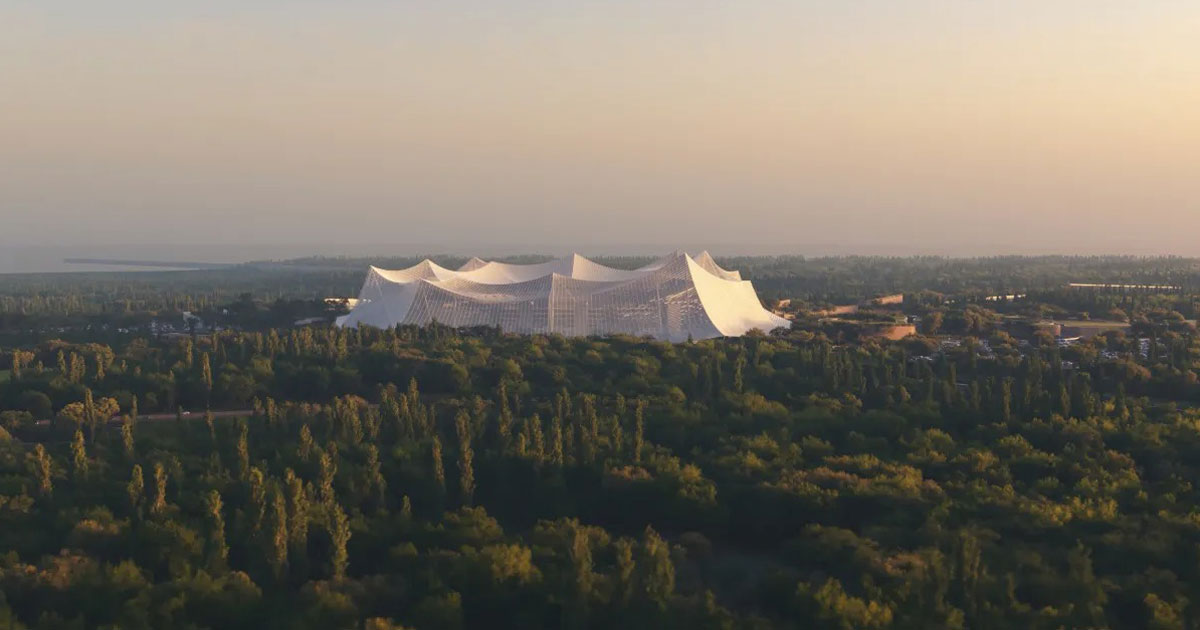
It is designed to become the world’s largest football stadium, with a planned capacity of 115,000 seats, and is a key venue for the 2030 FIFA World Cup, which Morocco will co-host with Spain and Portugal.
Construction and design partners
The architectural concept is led by Populous in partnership with Moroccan firm Oualalou + Choi. The design draws inspiration from a traditional Moroccan Moussem and features a large translucent roof structure integrated into the landscape.
Engineering work includes Italy’s Maffeis Engineering, alongside technical consultants focused on mechanical systems and cost management.
Major construction is being delivered by Moroccan firms SGTM and TGCC. They recently secured a 3.7 billion dirham contract for the roof and façade. SGTM also handled early earthworks valued at around 356 million dirhams.
Transport and digital infrastructure
Jet Contractors are building a dedicated high-speed rail station under a 415.5 million dirham contract. The station is expected to act as the main gateway for spectators, linking to wider intermodal transport systems.
Telecommunications and cybersecurity infrastructure for the wider rail expansion is being developed by Italy’s SITE, under contracts worth about 1.46 billion dirhams.
The national railway operator ONCF is the client for the station project.
Project structure and timeline
The stadium is divided into 12 technical lots. Several have already been awarded, including earthworks, structural shell, electrical systems, and transport infrastructure. Additional packages covering HVAC, plumbing, interior finishes, hospitality, and landscaping remain in progress or due to be launched.
The project is overseen by SONARGES, which will operate the stadium once completed, alongside ANEP, which manages technical compliance and procurement.
Construction is scheduled for completion in 2028, positioning the stadium as a central venue for major international football tournaments and future national events.