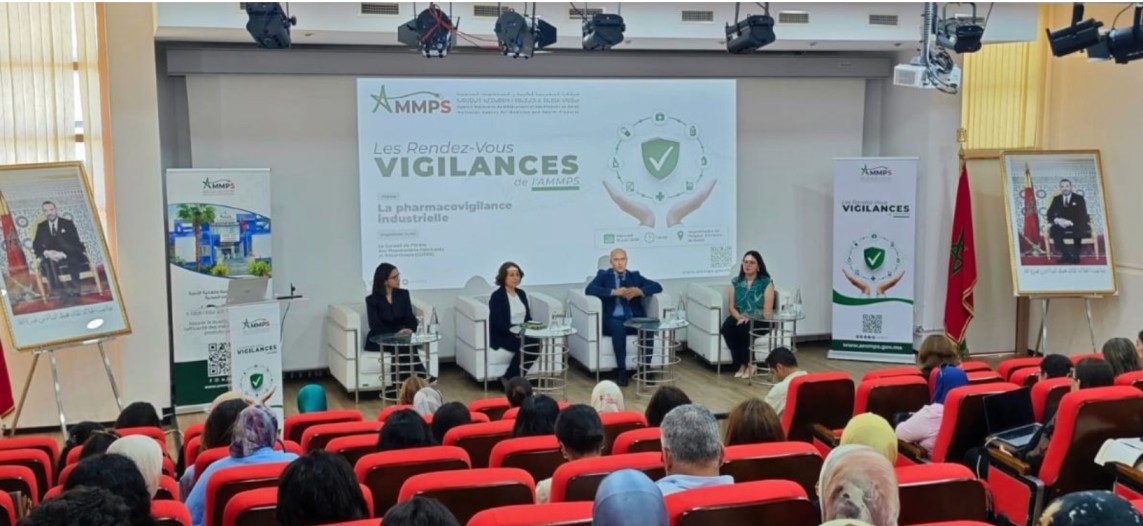
Morocco’s medicines agency says drug companies will face stricter rules on monitoring the safety of medicines as the country works to strengthen patient protection. The Moroccan Agency for Medicines and Health Products (AMMPS) outlined the changes during a meeting with pharmaceutical companies in Rabat. The event focused on how medicines are monitored after they reach patients and what drugmakers must do to report safety issues.
The agency presented new requirements covering risk management plans, safety reports and the reporting of side effects.
Opening the meeting, AMMPS Director General Samir Ahid said the agency was created as part of Morocco’s wider healthcare reform programme launched under King Mohammed VI.
He said the agency is responsible for carrying out public policy on medicines and health products while making sure they are safe, effective and of good quality.
Officials said monitoring medicine safety remains one of the main pillars of the country’s new healthcare governance system. The goal is to keep track of medicines after they enter the market and quickly identify any risks to patients.
During the meeting, Loubna Alj, head of the National Centre for Health Vigilance and Risk Management, explained how the country’s drug safety system works.
The centre currently has eight pharmacists and four doctors. Ten staff members focus on medicine safety, while two work on monitoring other health products.
Its work includes collecting and analysing safety data, investigating potential safety concerns, coordinating regional monitoring centres and providing training for healthcare professionals.
The centre also works with the World Health Organization’s international drug safety programme and manages Morocco’s national system for reporting side effects.
Patients, doctors, pharmacists and pharmaceutical companies can report suspected side effects through several channels, including the VigiFlow platform, the AMMPS website and the VigiMobile application.
Officials stressed that every report must include four key pieces of information: an identifiable patient, the suspected medicine, the suspected side effect and the identity of the person making the report.
The agency also called on pharmaceutical companies to play a bigger role in monitoring the medicines they sell.
Companies are required to maintain effective pharmacovigilance systems, collect and analyse safety information and share it with regulators.
AMMPS said it is gradually introducing a new electronic reporting platform called eReporting Industrie, which is expected to become the main channel for safety reporting by pharmaceutical companies. The agency also plans to carry out inspections focused on pharmacovigilance.
Zineb Alaoui Abdellaoui, head of the Risk Management and Regional Coordination Service, said risk management plans should be seen as practical safety tools rather than simple paperwork.
The agency now requires these plans for new medicines whose safety profile is not yet fully known, medicines that have previously raised safety concerns and biological products such as vaccines and biosimilars.
Drug companies must prepare the plans according to European standards. Imported medicines must also include the risk management plan used in the country of origin along with a version adapted to Morocco.
She said companies will have to show that risk reduction measures are actually being applied and monitored. They will also be required to keep a Pharmacovigilance System Master File, known as a PSMF, to document how their safety monitoring system works.
The agency also outlined new rules for identifying and managing safety signals.
Officials said companies can use two approaches: reviewing individual reports of side effects and analysing larger safety databases using statistical methods.
Any new safety concern that could have an immediate impact on patients must be reported quickly to AMMPS. Confirmed concerns could lead to updates to safety information, regulatory changes or separate notifications to authorities.
Sara Tebaa, head of the Vaccine Vigilance and Biological Products Vigilance Service, presented the rules governing periodic safety reports submitted by pharmaceutical companies.
According to figures shared at the meeting, AMMPS reviewed 12 safety reports between 10 December and the end of 2025. Since the start of 2026, it has already reviewed 100 reports as of 10 June.
These reports help regulators identify new risks, track known risks and regularly reassess whether the benefits of a medicine continue to outweigh its risks.
The reviews can lead to medicines keeping their marketing approval, having their conditions changed, being suspended or being withdrawn from the market if serious safety concerns emerge.
At the end of the meeting, AMMPS said it wants to build a stronger national drug safety system by improving cooperation with pharmaceutical companies, increasing the quality of reports and making greater use of digital tools.
The agency said these measures should help identify medicine-related risks earlier and improve patient safety.