Morocco has taken another step towards becoming a major producer of green hydrogen after approving early technical studies for two large clean energy projects worth billions of dollars. Government committees approved the first studies for the ORNX Morocco project and the TAQA-Moeve project in June 2026, allowing both developments to move into the next stage of planning.
The projects are part of Morocco’s Green Hydrogen Offer, a national programme aimed at attracting investment and building a new clean energy industry.
The ORNX project, located in the Laayoune-Sakia El Hamra region, brings together US company Ortus Power Resources, Spain’s Acciona and Germany’s Nordex.
The project involves an initial investment of about $4.5 billion. It plans to build more than 2 gigawatts of wind and solar power, battery storage facilities, a seawater desalination plant and a 900-megawatt electrolyser used to produce hydrogen.
Once operational, the first phase is expected to produce 100,000 tonnes of green hydrogen each year. That hydrogen will then be turned into around 560,000 tonnes of green ammonia for use in Morocco and export markets.
Ortus Power Resources is leading the project, while Acciona will build the desalination and processing facilities. Nordex will provide wind turbines designed for the strong desert winds in southern Morocco.
The consortium is also studying future projects in Boujdour and Dakhla.
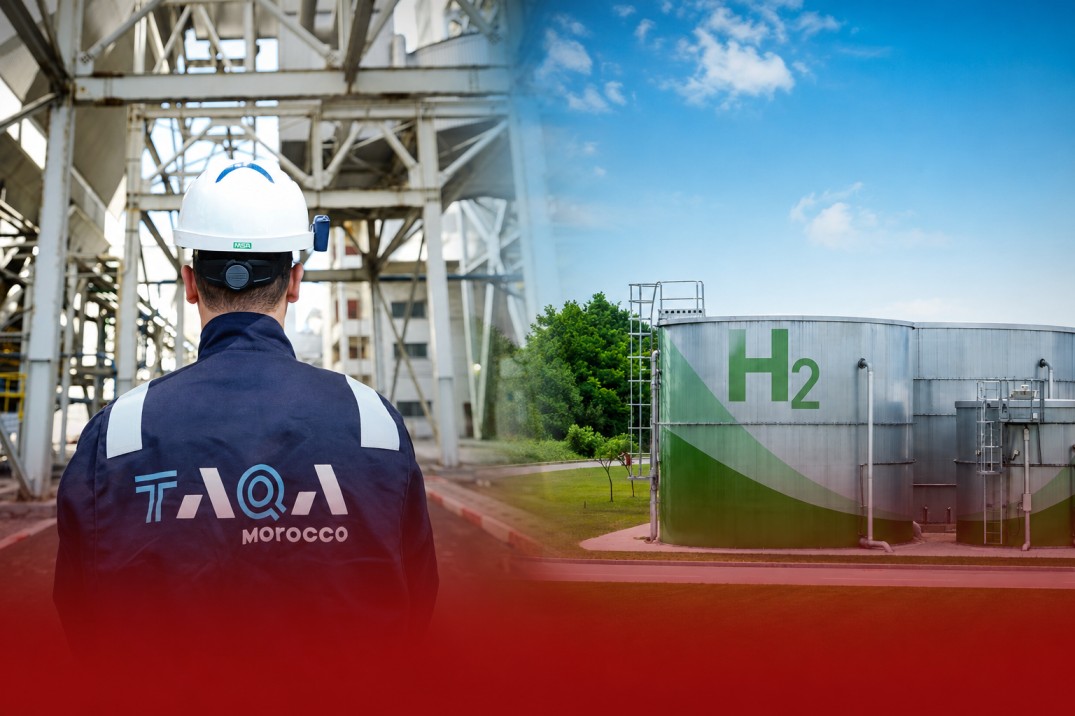
The second project is a partnership between TAQA Morocco and Spanish energy company Moeve, formerly known as Cepsa.
Under the plan, renewable electricity will be generated in the Dakhla region, while green fuels and green ammonia will be produced and exported from the Port of Jorf Lasfar.
TAQA Morocco will build the wind and solar facilities, while Moeve will oversee processing, marketing and exports.
The signing of land reservation agreements allows both companies to move forward with environmental studies and detailed feasibility work.
TAQA Morocco currently operates 2,056 megawatts of installed power capacity and supplies about 34% of Morocco’s electricity demand.
Both projects are now entering the second stage of Morocco’s approval process.
The first phase, completed in February 2026, focused on reserving land for the projects. The second phase will last 18 months and includes detailed engineering work, technical studies and environmental assessments.
The final phase will involve signing investment agreements with the government before construction can begin.
The wider Green Hydrogen Offer is one of Morocco’s biggest clean energy plans to date.
The government has already allocated 300,000 hectares of land to approved investors, while a total of one million hectares has been identified for future projects. Individual developments can receive up to 30,000 hectares.
Morocco hopes green hydrogen production costs will fall to between €2 and €2.50 per kilogram by 2030. The country also aims to capture more than 4% of global green hydrogen demand by the end of the decade.
The strategy could help reduce Morocco’s dependence on imported energy. The country currently imports about 90% of its energy needs.
It could also support the fertiliser industry. OCP, Morocco’s state-owned phosphate producer, currently imports around 12% of the world’s traded grey ammonia, which is made using fossil fuels.
Officials hope locally produced green ammonia will improve supply security and reduce reliance on imports.
Morocco is also betting on its location close to Europe. Rising demand for green hydrogen in European industry could create a major export market for Moroccan producers in the coming years.