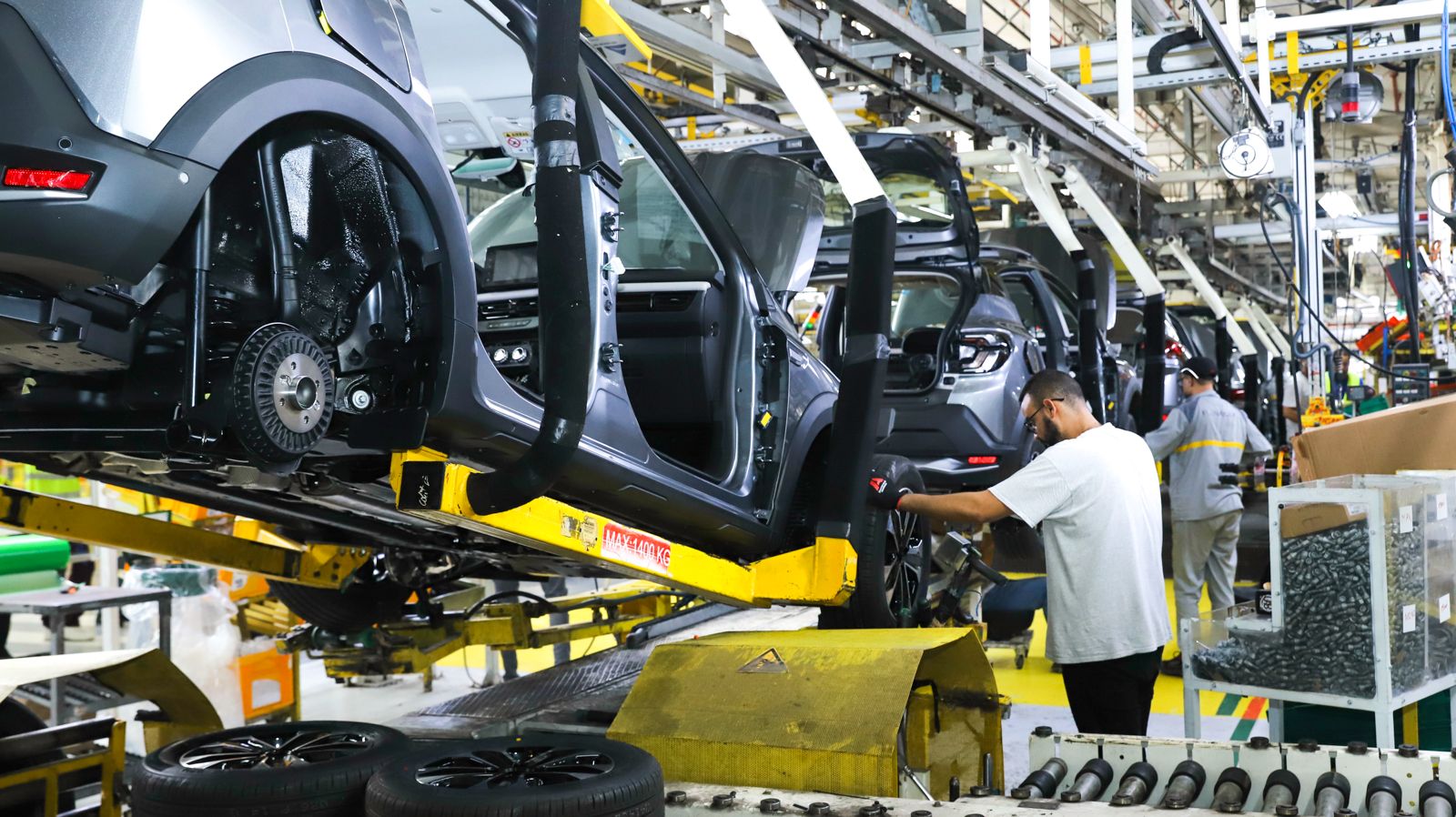
Thousands of cars are made in Morocco every day and shipped to European showrooms. But proposed European Union rules could make it harder for some of them to qualify for public contracts and financial support, raising concerns for carmakers with major investments in the country.
The European Commission wants electric cars, plug-in hybrids and hydrogen fuel-cell vehicles covered by the proposals to be assembled inside the EU and contain at least 70% European components by value, excluding the battery.
The draft rules, presented on 4 March 2026, would affect access to public contracts, some subsidies for vehicle fleets and incentives for small electric cars. They would not ban cars made in Morocco from entering the EU, but could put them at a disadvantage when competing for publicly supported business.
The proposals are still being negotiated by the European Commission, the European Parliament and EU member states.
The European Automobile Manufacturers’ Association (ACEA), which represents 17 major automotive groups, has called for existing factories in Morocco and Turkey to be protected. In a position paper published on 28 September, it said: “Turkey and Morocco be included in the geographical scope of the text for the existing activities of its members”.
The association also wants the UK to receive the same treatment as the EU’s 27 member states.
The scale of the industry shows what is at risk.
EU countries imported 220,557 cars made in Morocco in the first six months of 2026, up 13.3% from the same period a year earlier. They accounted for 10.8% of all passenger cars imported into the bloc from outside the EU.
Factories in Morocco produced 267,305 cars during the same period, an annual increase of 10.2%. About nine in every 10 cars exported from the country are shipped to Europe.
Automotive exports reached 116.148bn dirhams between January and August 2026, up 14.5% from a year earlier, according to figures from the country’s Exchange Office.
Vehicle manufacturing generated 44.747bn dirhams, while wiring harnesses — bundles of wires that carry electricity and signals through vehicles — brought in a further 44.777bn dirhams.
The figures cover all export destinations and product categories, not just vehicles affected by the proposed EU rules.
French carmaker Renault Group produced more than 394,000 vehicles in Morocco in 2025, making the country its second-largest manufacturing base worldwide by production volume.
The company operates major factories in Tangier and Casablanca. It exported 82% of its output from the country to 63 destinations and works with 87 first-tier suppliers.
Mohamed Bachiri, general manager of Renault Group Morocco, described the country in a presentation published in June as “a key pillar of Renault Group’s global industrial footprint, built on industrial excellence and world-class logistics.”
The Tangier factory has a direct rail link to the port, allowing finished cars to be transported for export. A network of suppliers has also developed around the plant.
Stellantis expanded its Kénitra factory in July 2025. The multinational carmaker announced annual capacity to produce 400,000 cars, 135,000 electric micro-mobility vehicles and 350,000 engines.
By 2030, Stellantis aims to buy more than €6bn worth of goods and services from suppliers based in Morocco, equivalent to about 64.9bn dirhams. It also wants to increase the share of vehicle components and production sourced locally to 75%.
The proposed EU rules could complicate those plans if vehicles assembled outside the bloc fail to qualify for certain public contracts or financial incentives.
Morocco has had a free trade area with the EU since its Association Agreement came into force on 1 March 2000. It also belongs to the Pan-Euro-Mediterranean system, which allows certain materials and components from participating countries to count towards preferential rules of origin.
Articles 8 and 9 of the draft regulation set out conditions under which products from countries linked to the EU through free trade agreements or customs unions could be treated as equivalent to European-origin products. Some exclusions may apply.
The provisions could allow components made in Morocco, including wiring, glass and structural parts, to count towards the proposed 70% European-content threshold.
But meeting the content requirement would not necessarily be enough. The separate assembly rule means a car could still fail to qualify if its final assembly takes place outside the EU.
That could limit the benefits of existing trade arrangements for complete vehicles shipped from factories in Tangier and Kénitra.
ACEA wants the calculation of European content to include the value added through assembly, engineering, software and other industrial operations, rather than relying only on the purchase price of components.
The association also argues that requiring European battery cells within six months of the regulation taking effect would be premature. It wants a three-year transition period to give manufacturers more time to secure supplies.
The European Commission says the policy is designed to ensure public money supports production and jobs in Europe.
“taxpayer money must benefit European companies and workers,” the Commission said.
Its preliminary impact assessment estimates that the measures could generate up to €10.5bn in additional value across the European automotive supply chain. That is a projection, not a guaranteed outcome, and will depend on the final rules and how they are implemented.
The debate comes as Chinese carmakers increase their presence in the European market and look to manufacture more vehicles inside the EU.
The bloc imported 708,908 cars from China in the first half of 2026, up 52.8% from a year earlier, according to Eurostat figures included in an ACEA report published on 12 October.
The value of those imports reached €10.541bn, or about 114bn dirhams, an increase of 70.5%. Chinese-made cars accounted for 34.8% of EU passenger car imports from outside the bloc, compared with 10.8% for cars made in Morocco.
Several Chinese manufacturers are planning production in Europe, where locally assembled vehicles could qualify for support under the proposed rules.
Changan Automobile aims to reach annual European production capacity of 180,000 cars by 2028 and 350,000 by 2030. It hopes to produce its first vehicle on the continent in early 2027.
At the Paris Motor Show, its president, Zhao Fei, said the company had begun talks with European equipment manufacturers and carmakers about joint production ventures.
Chery is pursuing a similar strategy. Its chairman, Yin Tongyue, said the company wanted to “design locally, establish local engineering, manufacture on site, and build a local supplier network”.
The company has partnered with Spain’s EV Motors to restart production at the former Nissan factory in Barcelona’s Zona Franca district.
Electric vehicle manufacturers Xpeng and GAC are also preparing production capacity in Europe. Xpeng already has an assembly agreement with Magna, an Austrian-Canadian supplier that makes electric cars for the company in Austria.
The European Commission imposed countervailing duties on Chinese-made electric vehicles in October 2024 following an investigation into subsidies. Chinese manufacturers subsequently increased their focus on plug-in hybrids, which combine a combustion engine with a rechargeable battery.
In October 2026, EU-China trade discussions entered a new phase with an agreement aimed at limiting imports of Chinese hybrid vehicles through export pricing arrangements and caps.
The proposed production rules would add another layer to the dispute by encouraging manufacturers to assemble qualifying vehicles inside the EU.
Factories in Turkey and the UK could also be affected by the proposed rules because of their close links with European carmakers.
Turkey has a customs union with the EU. The Turkish Automotive Industry Exporters Association estimates that the sector supports 250,000 jobs within the bloc.
It points to Ford’s electric Transit vans, which are made in Turkey using components from European suppliers. More than half the value of their components comes from Europe, including batteries made in Hungary and Poland and parts manufactured in Germany and Italy.
Kemal Yazici, president of the Turkish association, has argued that these established industrial links should be recognised when defining European manufacturing.
The UK faces uncertainty following its departure from the EU. British factories remain closely connected to European automotive supply chains, but the