Patients treated at a hospital in Tangier have developed severe eye inflammation, with some facing sudden vision loss after receiving injections. Health authorities are investigating whether the complications were caused by an infection, contaminated medicine or a problem with the treatment process.
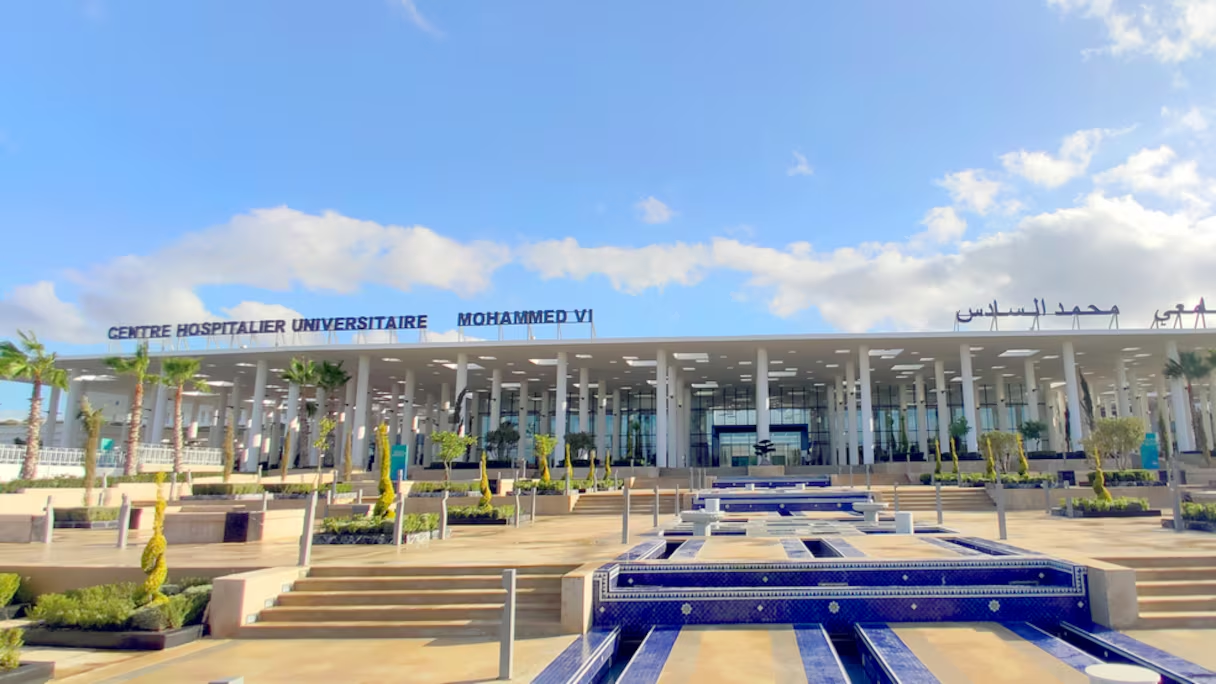
The Mohammed VI University Hospital Centre (CHU) confirmed that 13 patients developed acute inflammation after receiving treatment on 8 October. All 13 were admitted for specialised care and placed under medical supervision.
The hospital’s findings came after examinations of 16 patients who received injections during the same treatment session. The other three showed no signs of complications, according to the hospital.
A relative of one patient told our colleagues at al3omk that his brother returned home after the injection able to see normally. Later that afternoon, he suddenly lost his sight and developed a severe burning sensation in both eyes. The relative said his brother had received further treatment to control the inflammation, but his vision had not noticeably improved.
He also reported that the number of affected patients had risen from about 16 to 25, although this figure has not been confirmed by the hospital.
What could have caused the complications?
The medical incident may involve a condition known as post-injection endophthalmitis, a serious infection inside the eye, or toxic anterior segment syndrome (TASS), an intense inflammatory reaction that is not caused by an active infection. Neither diagnosis has been confirmed in this case.
The patients received intravitreal injections, in which medicine is injected directly into the gel-like substance inside the eye. The procedure is commonly used to treat conditions affecting the retina.
An infection or toxic reaction following an injection can cause pain, redness, inflammation and a rapid decline in vision. Severe cases can permanently damage the retina or optic nerve, making urgent treatment essential.
Investigators are examining several possible causes.
One is bacterial contamination during the preparation of the medicine. Some treatments for retinal conditions use medicines originally developed for other purposes, including the cancer drug bevacizumab, which may be divided into smaller doses for eye injections. If contamination occurs while the doses are being prepared, several patients receiving medicine from the same vial could be affected.
Another possibility is a problem with the medicine’s storage or handling. Temperature fluctuations or other changes could affect a product’s quality and potentially trigger an inflammatory reaction.
Investigators are also examining whether syringes, needles or other medical equipment were contaminated, and whether infection-control procedures were followed during the injections.
These are potential explanations, not established causes of the Tangier incident.
Health authorities launch investigation
The Ministry of Health and Social Protection, the National Agency for Medicines and Health Products (AMMPS) and the hospital’s infection control committee are investigating the incident.
The inquiry is expected to include tests to determine whether the inflammation was caused by bacteria or another source, as well as checks on the medicine used, remaining syringes, storage records and preparation procedures.
Investigators are also expected to review the hygiene measures followed during the treatment session on 8 October.
The hospital said it had taken preventive measures, admitted affected patients and placed them under specialised medical supervision. It has not announced a final cause for the complications.
The investigation will seek to establish what happened and whether changes to medical procedures or other regulatory action are needed.
The Mohammed VI University Hospital Centre was inaugurated in April 2023. It has 800 beds and serves the Tangier-Tetouan-Al Hoceima region, which has a population of about 3.8 million.
The hospital has pledged to continue treating affected patients while the investigation proceeds. Authorities have yet to publish their final findings or establish responsibility for the incident.