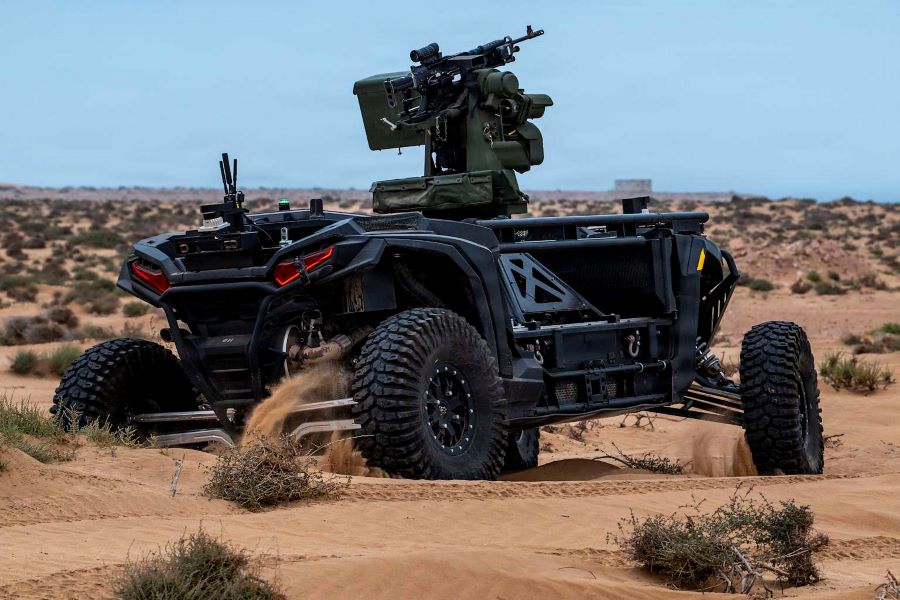
The US Army is offering up to $1m in prize money to companies developing technology to detect and stop drones, with military trials set to take place in Tan-Tan, Morocco, in February 2027. Up to 15 companies will be invited to test their equipment during trials running from 15 to 26 February. The army is looking for systems that can detect, track and disable drones, as well as equipment to protect military installations in remote areas.
The competition was launched on 6 November. Companies have until 17 November to apply by submitting a four-page technical proposal and a five-minute video presentation. Applicants must have technology that is advanced enough for testing in the field.
Each of the 15 finalists will receive $25,000 to take part in the trials, according to the US Army. Companies that successfully integrate their technology into military exercises will receive an additional $25,000.
Up to five companies will then receive a further $50,000 each after the tests. The total prize money could reach $1m.
The competition is being organised by the US Army’s Southern European Task Force, Africa (SETAF-AF), alongside its G-TEAD acquisition unit.
The army is also considering prototype development contracts worth up to $5m. These could be awarded between 1 and 31 March 2027, depending on the test results and the military’s needs.
The selected technologies could also be tested during African Lion 2027, a multinational military exercise involving US forces and partner countries, including Morocco. The exercise would give military personnel an opportunity to assess how the equipment performs in operational conditions.
The competition comes as armed forces face growing challenges from small, autonomous drones that can operate without sending radio signals. Such devices can avoid conventional electronic jamming systems, making them harder to detect.
The US Army is seeking technology that can identify and counter these threats, including systems to protect isolated military sites during the day and at night.
The five winners are expected to be announced on 26 February 2027.