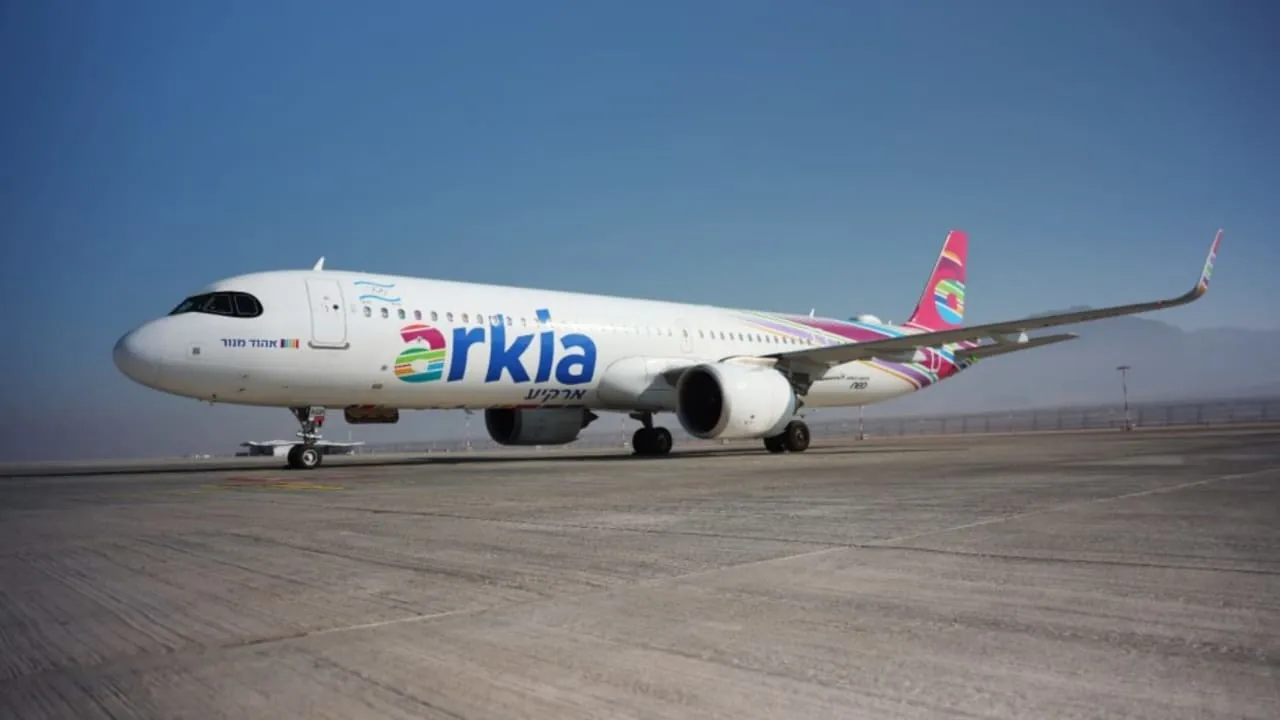
Arkia is set to resume direct flights between Tel Aviv and Marrakech on 4 January 2027, restoring a route suspended after Israeli authorities tightened aviation security rules. The Israeli airline announced on 20 November that it had secured the necessary approvals from the Civil Aviation Authority and security officials. It plans to operate two flights a week, on Mondays and Wednesdays, throughout the year. Tickets are on sale, with one-way fares starting at $299.
Arkia will use its own Israeli-registered Airbus A321neo aircraft, which can carry 214 passengers and offers onboard Wi-Fi. The move allows the airline to meet tighter security requirements introduced after an incident involving a Flydubai flight from Dubai to Tel Aviv in late September.
The restart makes Arkia the first of three Israeli airlines that had planned to serve Marrakech to announce a confirmed return date following the security-related suspension.
Flights suspended after security rules tightened
Arkia returned to Morocco in August 2026 after nearly three years without direct flights. But it stopped selling tickets to Marrakech on 21 October, following new security instructions from Israeli authorities.
The restrictions followed an incident on 30 September involving a Flydubai flight travelling from Dubai to Tel Aviv. Israeli officials reviewed security risks linked to aircraft leased from foreign operators and crews, leading to tighter requirements for airlines serving the route.
The measures also affected Israir, which suspended ticket sales, and Sun d’Or, an El Al subsidiary, which postponed its planned Marrakech service.
Arkia’s flights scheduled for the end of October were cancelled, disrupting passengers’ plans and leaving the winter route uncertain.
The airline’s August return had ended a suspension of nearly three years, following the regional conflict that began in October 2023.
856 seats a week in both directions
Arkia will operate two weekly flights between Ben Gurion Airport near Tel Aviv and Marrakech Menara Airport, using its 214-seat Airbus A321neo.
That means 428 seats a week in one direction and 856 seats when both directions are counted.
If the schedule runs uninterrupted for 52 weeks, the route would offer 22,256 seats in one direction and 44,512 return-direction seats over a full year.
The flight covers about 3,630km (2,255 miles) and takes around five hours and 30 minutes westbound.
The aircraft has a single-class layout, with all 214 seats in the same cabin, and onboard Wi-Fi. The use of an Israeli-registered aircraft gives Arkia greater control over its aircraft, maintenance arrangements and flight crew, helping it meet the new security rules.
The twice-weekly schedule is designed to serve holidaymakers, people visiting family and longer-stay travellers while keeping aircraft use predictable during the winter season.
Suspension cost thousands of seats
The 75-day suspension between 21 October 2026 and 4 January 2027 removed an estimated 9,160 round-trip seats from Arkia’s planned capacity.
The calculation is based on about 10.71 weeks without service and 856 seats a week in both directions. It does not include seats that Israir or Sun d’Or might have offered had their routes launched.
Arkia is expected to hold all confirmed Israeli airline capacity on the Tel Aviv-Marrakech route in the first quarter of 2027, giving it a temporary advantage while its competitors await clearance.
$299 starting fare
Arkia’s advertised one-way fare of $299 places the route in the mid-market range for a journey of about five and a half hours.
At that price, filling all 214 seats on a single flight would generate $63,986 in gross ticket revenue. Two weekly departures in one direction would bring the figure to $127,972, assuming every seat was sold at the starting fare.
These are theoretical figures, not estimates of profit. Actual revenue would depend on passenger numbers, fares paid, baggage fees, seat-selection charges and operating costs. Arkia’s occupancy rates and profit margins are not publicly disclosed.
The $299 fare translates into about 8.24 US cents per available seat kilometre, an airline measure of revenue against the capacity offered. That is equivalent to 13.26 cents per available seat mile.
Operating its own aircraft, rather than relying on short-term aircraft-and-crew leases, may also help Arkia avoid some of the higher costs associated with wet leasing. Israeli carriers still face higher war-risk insurance premiums and security-related costs than many European airlines.
Direct flights began in 2021
Direct commercial flights between Israel and Morocco began in July 2021, following the countries’ December 2020 agreement to restore official relations and establish direct air links.
The route initially attracted airlines including El Al, Israir, Arkia and Royal Air Maroc. Passenger demand was supported by leisure travel, cultural links and visits between family members.
Flights stopped following the regional conflict in October 2023 and remained suspended for nearly three years. Arkia’s return in August 2026 marked the first sustained restoration of commercial flights before the latest security freeze disrupted the route again.
An estimated 700,000 to one million Israelis have Moroccan heritage, providing a potential base for family and heritage travel between the two countries.
Marrakech competes for winter visitors
Marrakech remains one of Morocco’s main international tourism destinations, attracting visitors for its cultural attractions, leisure trips and winter weather.
The country’s 2023-2026 tourism roadmap aimed to attract 17.5 million international visitors by 2026, with a longer-term target of 26 million by 2030.
The direct Tel Aviv connection adds to the city’s international air links and could support travel during the winter season, traditionally a busy period for visitors from Europe and the Middle East.
Marrakech competes with shorter leisure routes from Israel, including Larnaca in Cyprus and Athens in Greece. Dubai is about 2,130km away, or roughly three and a half hours by air, while the Tel Aviv-Marrakech route is nearly twice as long in flying time.
The longer route puts pressure on airlines to keep operating costs low. A high-density 214-seat Airbus A321neo helps spread costs across more passengers and makes promotional fares below $300 possible.
Arkia moves ahead of rivals
Arkia is Israel’s second-largest airline by fleet and passenger numbers. It is majority-owned by Jordache Enterprises, controlled by the Nakash family, which also has hospitality and real estate interests. Employees also hold a stake in the airline.
El Al operates leisure routes through its subsidiary Sun d’Or, while Israir competes with Arkia on short- and medium-haul travel.
Both competitors remain without confirmed restart dates for Marrakech. Arkia’s return could therefore give it a head start in rebuilding demand and securing passengers for the 2027 winter season.
The new security requirements may also set the standard for other Israeli carriers hoping to return to the route, particularly those that previously relied on foreign-registered aircraft and crews.
The January restart restores direct air connectivity between Tel Aviv and Marrakech, but the route’s longer-term recovery will depend on security approvals, competition and whether passenger demand can support regular year-round flights.