
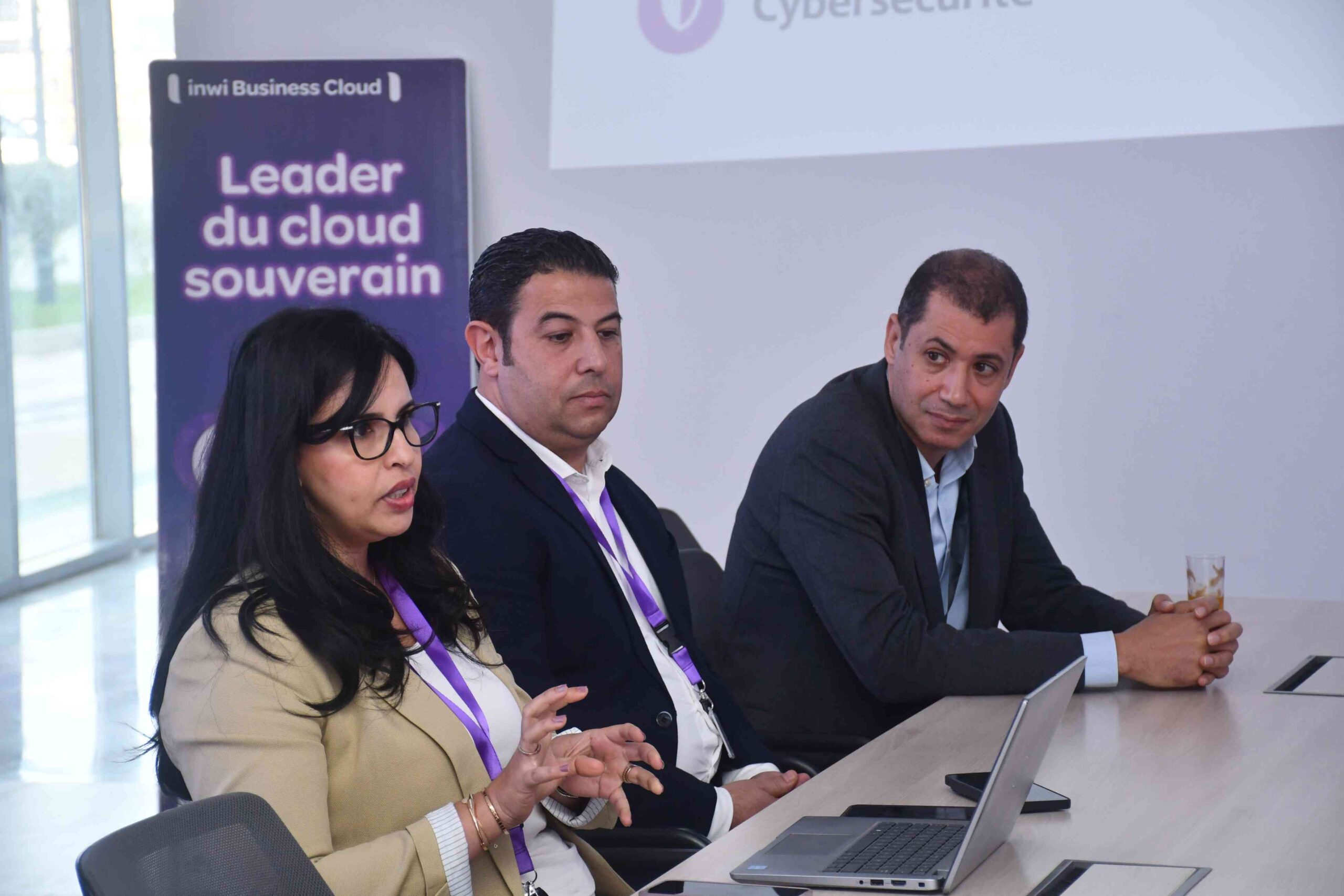
Moroccan telecoms operator inwi is pitching its network of local data centres to firms and government bodies that want to keep sensitive data inside the country. The company set out its strategy for data hosting, “sovereign cloud” and cybersecurity at its data centre in Rabat Technopolis on Thursday.
It said infrastructure built and run in Morocco would give organisations more control over where their data is stored and help keep services running in the event of an outage or attack.
The push comes as Morocco moves government services online and recovers from a string of damaging cyber attacks.
inwi runs nine data centres in several regions of Morocco. They host the IT systems of large companies and public bodies, as well as equipment for international operators working in the country.
Four have Tier III certification from the Uptime Institute, a US body that grades data centres on their resilience. The standard requires that equipment can be maintained without shutting down services.
Depending on the site, the facilities also meet international security standards such as ISO 27001 and PCI DSS, which covers card payment data.
The operator also offers two sovereign cloud platforms, built on different technologies and spread across several locations in Morocco.
They allow firms and government bodies to keep sensitive data and applications on Moroccan soil, under Moroccan law, rather than with foreign providers.
The platforms can also be used to back up data and to restore systems after a disaster.
inwi’s cybersecurity services include protection against distributed denial-of-service (DDoS) attacks, which knock websites offline by flooding them with traffic, as well as firewalls for networks and web applications. It said the services were run from Morocco by local experts.
Data security has shot up the agenda in Morocco since April 2025, when hackers breached the national social security fund, CNSS.
The attack, described as the biggest data leak in the country’s history, exposed personal details and salaries of nearly two million people. A group calling itself Jabaroot claimed responsibility.
Other public bodies have since been targeted, including the land registry agency ANCFCC and the Royal Moroccan Football Federation.
Morocco’s data centre market is still small. A report by BMI, part of Fitch Solutions, counted 14 facilities with just 1.5 megawatts of operational capacity in the second quarter of 2026.
But demand is expected to rise sharply. Under its Digital Morocco 2030 strategy, the government plans to move public services to sovereign cloud platforms, and has adopted a “cloud first” policy for the state.
It also plans a 50-megawatt sovereign data centre in Rabat, and launched an AI roadmap in January.
inwi faces a crowded field. Morocco’s market is shared between national telecoms operators, specialist local firms and, increasingly, the global cloud giants.
The company is owned by Al Mada, the investment holding company of the royal family.