
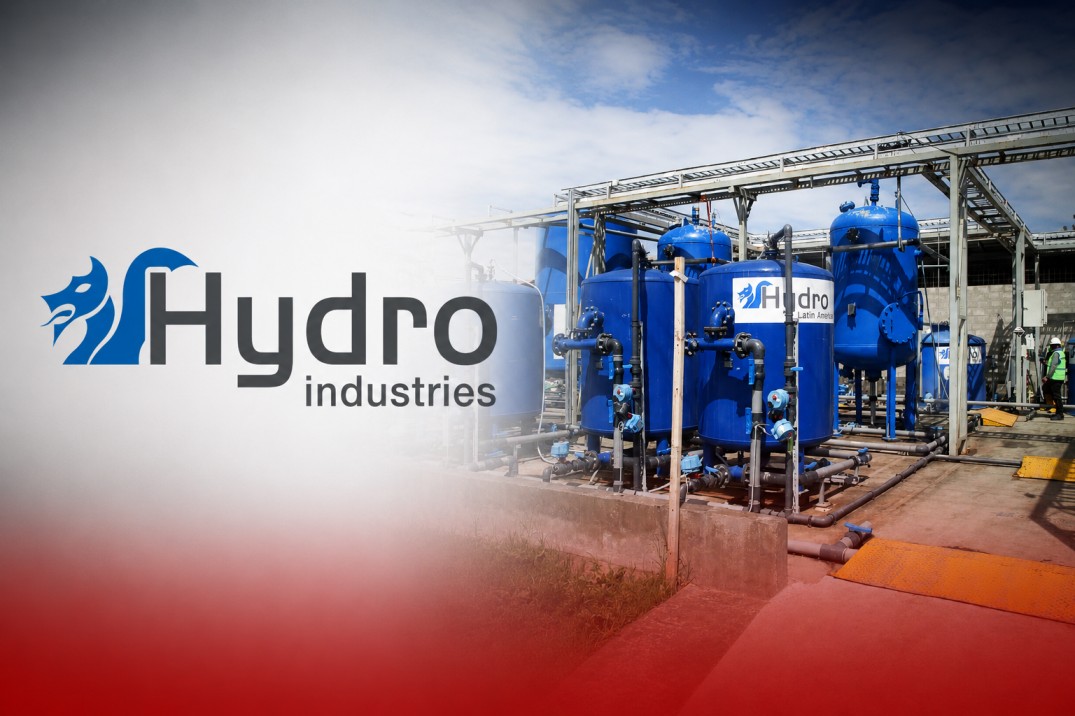
British water technology company Hydro Industries has opened a new business in Morocco as the country steps up investment in desalination and water treatment to tackle water shortages. The company has launched Hydro Services Morocco, a Casablanca-based subsidiary with a share capital of about $110,000. The business was officially incorporated in March 2026 after documents were signed on 12 February, 18 February and 3 March.
Hydro Services Morocco will design, build and maintain water treatment and water transfer facilities. It will also install pretreatment systems, operate wastewater treatment plants, treat domestic and industrial wastewater, and build and run seawater and brackish water desalination plants.
The company will also sell water treatment equipment and provide consulting, technical expertise and water quality analysis.
The move comes as Morocco accelerates investment in water infrastructure. The country wants 60% of its drinking water to come from desalination by 2030, up from around 25% today. It also plans to increase annual desalinated water production from about 320 million cubic metres to 1.7 billion cubic metres. Morocco currently has 17 desalination plants in operation, with four more under construction.
Hydro Industries is a privately owned company based in London. Founded in 2010, it develops water treatment technologies for municipalities and industrial customers, focusing on wastewater treatment, drinking water production and industrial water purification.
Financial accounts filed with the UK’s Companies House show the company operates under the UK’s small companies regime.
The company employed an average of 28 people in the year to May 2024, down from 34 the previous year.
Its net assets fell from £10.52m ($14.3m) to £5.25m ($7.1m).
Current assets also dropped from £9.33m ($12.7m) to £5.64m ($7.7m) as inventories declined from £5.27m ($7.2m) to £3.80m ($5.2m). Trade receivables fell from £3.45m ($4.7m) to £1.83m ($2.5m).
Tangible fixed assets decreased from £1.35m ($1.8m) to £341,325 ($465,000), while cash reserves stood at £10,571 ($14,400) at the end of May 2024, compared with £610,092 ($831,000) a year earlier.
The accounts do not explain the reasons for these changes. However, the directors said the financial statements had been prepared on a going concern basis because they believed the company had enough resources to continue operating “for the foreseeable future.”
Hydro Industries says it has operations in the UK, Egypt and Saudi Arabia, with offices in London, Riyadh, Cairo and Bahrain.
Earlier this year, the UK government announced that the company had won two water treatment projects in Ecuador. One is worth about $15.3m for the municipality of Sucre, while the second is valued at around $8m for Montecristi.
No contracts have yet been announced for Hydro Services Morocco.
Morocco is expanding its water infrastructure after years of drought pushed renewable freshwater resources down to about 600 cubic metres per person each year, well below the international water scarcity threshold of 1,000 cubic metres.
The country’s desalination market is expected to grow from about $400m in 2024 to around $850m by 2033.
One of the biggest projects is the Casablanca desalination plant, which is expected to become Africa’s largest with a planned capacity of 300 million cubic metres a year. The first phase, producing 200 million cubic metres annually, is due to begin operating by the end of 2026.
Other projects are underway in Safi, El Jadida and Dakhla. The Dakhla plant will be powered by wind energy.
Morocco is also rolling out 244 mobile desalination units for rural areas, with more than half already delivered.
The government wants to increase the local content of desalination projects from about 30% today to 70% by 2030. Future plants are also expected to run on renewable energy.