
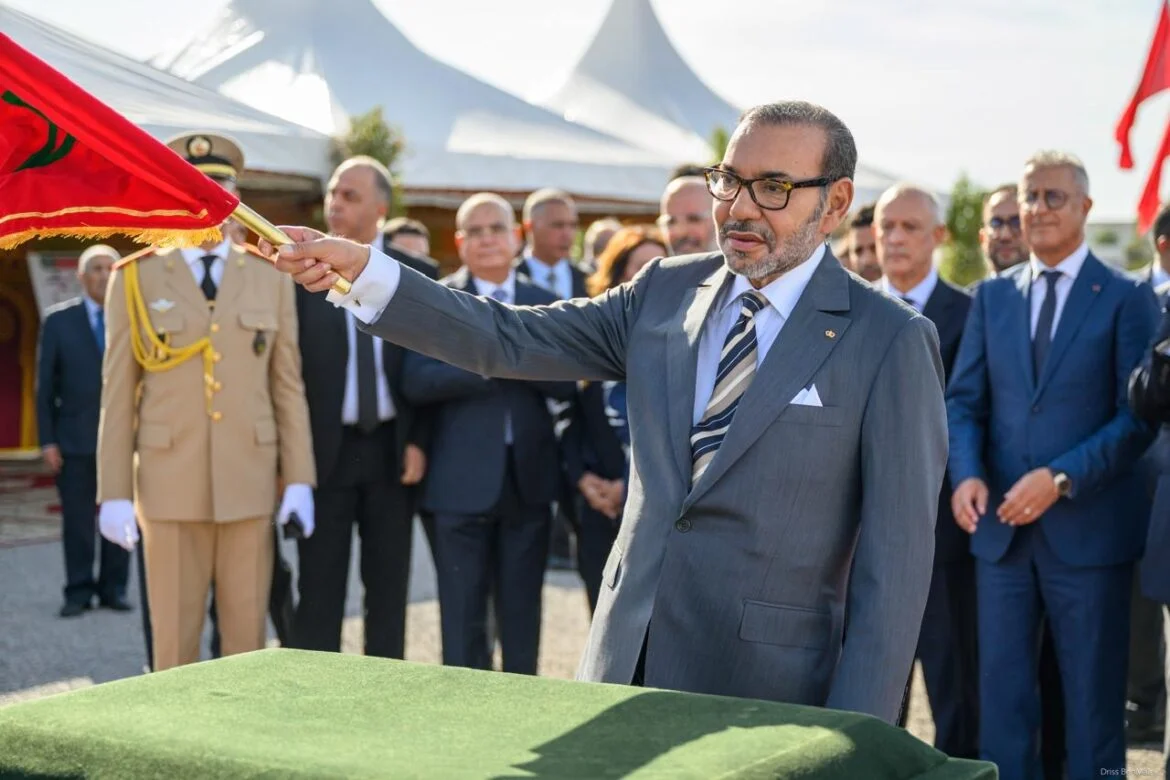
Casablanca’s major rail upgrade is moving ahead one year after King Mohammed VI launched the programme. The 20 billion dirham programme was launched on September 24, 2025, in Casablanca. It is part of the national rail transformation plan for 2030, which has a total investment of 96 billion dirhams. The Greater Casablanca programme aims to improve train services and make it easier for people to travel across the city and surrounding areas.
The programme includes three new major railway stations, 10 new commuter train stations and the renovation of five existing stations. It also covers 260 kilometres of new railway lines, the construction or expansion of 50 engineering structures, two technical centres and five maintenance centres.
The plan also includes 48 new trains for commuter and regional services.
Work is now under way on the three main new stations: Casablanca-Sud, Mohammed V Airport and the future Hassan II Stadium station in Benslimane.
Each station is expected to take 24 months to build. Work at all three sites is progressing according to the planned schedule.
Casablanca-Sud will become one of the main railway hubs in the city. It will have six platforms and 10 tracks for high-speed trains, conventional trains, regional trains and commuter trains.
The station will also connect directly with the tramway, high-service buses, regular bus services and taxis.
The new Mohammed V Airport station will connect the airport more directly to the railway network serving Greater Casablanca. The station will have a direct link to the airport terminal, allowing passengers to move between air and rail services more easily.
It will also have a separate entrance from the city side, opening towards the Nouaceur area.
The station will have four platforms and seven tracks. Two tracks will serve conventional trains, two will serve high-speed trains and three will be used by Aerexpress services.
The future Hassan II Stadium station in Benslimane will serve passengers travelling to major events at the stadium, particularly during the 2030 World Cup. It will also support rail services for new urban areas expected to develop around the stadium.
The station will have two platforms and four tracks for high-speed trains during major events. It will also have five platforms and six tracks for commuter trains. The new infrastructure will connect Benslimane with several communities in the Casablanca and Rabat regions.
The commuter train network is also being expanded. Construction has started on 10 new stations across Greater Casablanca.
The stations will be built in Mohammedia Colleges, Zenata Industrial Zone, Zenata New City, Sidi Bernoussi, Ain Sebaa, Hay Mohammadi, Mers Sultan, Casablanca Oasis, Sidi Maarouf and Nouaceur New City.
The new stations will follow a common design. They will include clear routes between city entrances, station halls and platforms, as well as areas for passenger reception, ticket sales and waiting. They will also include the technical equipment and safety systems needed to operate the stations.
The new stations are intended to bring train services closer to major residential and business areas. They are also expected to improve connections between different parts of Greater Casablanca and respond to growing demand for transport.
The programme is designed to increase the capacity of the railway network, improve services to major urban and economic centres and expand commuter train services.
New railway infrastructure, stations and related facilities will work together as part of a more connected rail network across Greater Casablanca. The aim is to make the network better able to handle changing transport needs across the city.