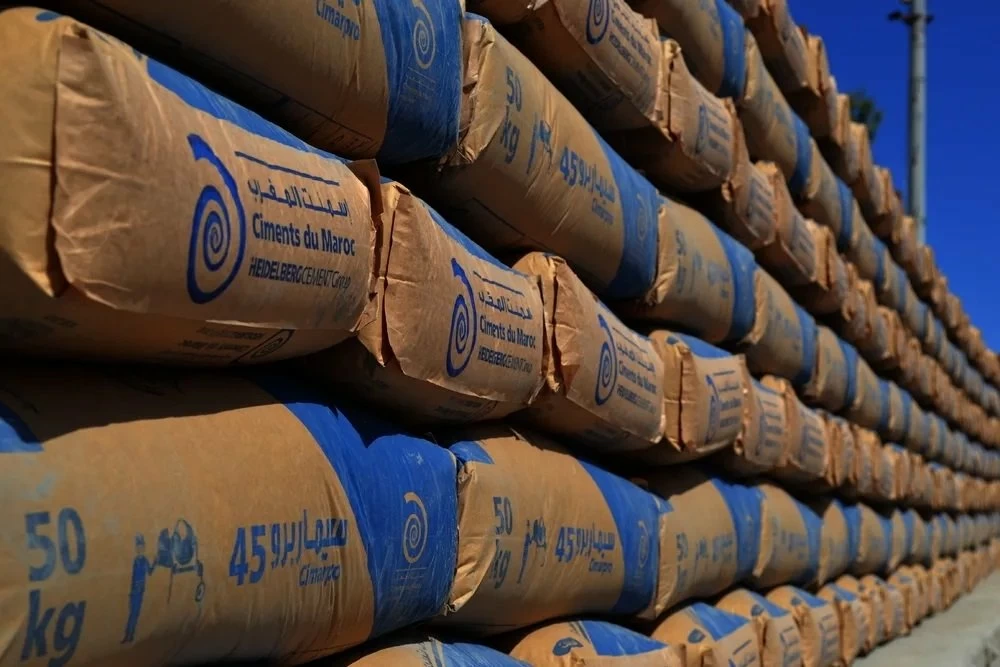
Construction activity in Morocco picked up sharply in April, with cement sales rising by almost a third compared with the same month last year.
The Ministry of Economy and Finance’s Directorate of Financial Studies and Forecasts (DEPF) said cement sales, widely seen as a key measure of construction activity, increased by 31.8% in April.
The growth was driven by stronger demand across the sector. Sales of ready-mix concrete jumped by more than 60%, while cement used in building projects rose by 65%. Infrastructure projects, including roads and public works, also recorded strong growth.
The rebound comes after a difficult start to the year. Heavy rainfall in January and February forced many construction sites to temporarily stop work, slowing activity across the country.
As the weather improved, developers and contractors moved quickly to make up for lost time, leading to a surge in construction work during March and April.
Even with the strong April performance, total cement sales during the first four months of 2026 were largely unchanged from a year earlier.
The figures suggest Morocco’s construction sector remains supported by a pipeline of major projects, including preparations for the 2030 FIFA World Cup, government housing programmes and investments in transport, water and renewable energy infrastructure.
The property market also showed signs of strength.
Real estate lending topped 323 billion dirhams ($35bn) during the first three months of the year. That means banks have now lent more than 323 billion dirhams to homebuyers and property developers across the country.
Mortgage lending to households rose by 2.9%, while loans to developers increased by 4.8%.
The rise in lending suggests both buyers and construction companies remain confident about the market despite the weather-related disruption earlier this year.
With several large public projects moving ahead and demand for housing holding up, the construction sector is expected to remain an important driver of Morocco’s economic growth in 2026.