

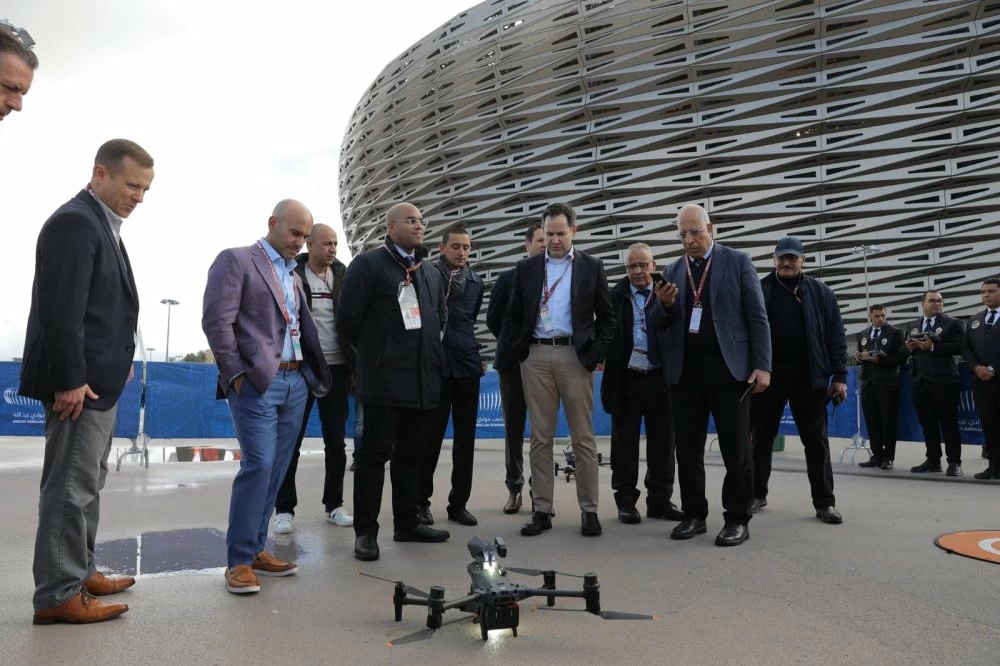
Security preparations for the 2025 Africa Cup of Nations in Morocco are drawing international attention—most notably from the United States. From January 4 to 6, a delegation from the FBI visited the country to observe Morocco’s safety and crowd management systems for the tournament, highlighting growing global interest in how the kingdom is organizing the event.
The visit began in Rabat, where the American officials attended the Morocco vs. Tanzania match at Prince Moulay Abdellah Stadium. There, they conducted a thorough assessment of Morocco’s multilayered security strategy, which includes access point checks, specialized intervention units, high-resolution surveillance cameras, aerial drone monitoring, and real-time coordination from centralized command centers.
Leading the delegation were Douglas Olson, director of field operations, and Kevin Kowalski, deputy director for emergency response. The group also visited the African Security Cooperation Center, a facility that coordinates between Moroccan law enforcement and security officers from other African nations participating in the tournament. Discussions centered on the protocols in place, the technology being deployed, and the logistical decisions designed to ensure safety during matches.
The FBI’s mission is set to continue with a second site visit to Stade Moulay Hassan during the Algeria vs. Democratic Republic of Congo match. This phase will focus specifically on managing international fan groups and examining coordination with liaison officers—often referred to as “spotters”—tasked with overseeing foreign supporters’ behavior and safety.
This initiative comes at a critical time, as the United States prepares to co-host the FIFA World Cup in 2026. The FBI is taking a close look at how Morocco has developed its international coordination model, including a centralized command system that brings together security representatives from all participating countries. The goal is to identify effective practices that could be adapted for the upcoming global tournament.
Beyond the immediate scope of the Africa Cup of Nations, the visit marks a deepening of security cooperation between Rabat and Washington. It reflects a broader commitment to sharing expertise in risk management, emergency intervention, and the integration of advanced technologies into public safety frameworks. This dialogue is expected to continue, with both nations looking ahead to future high-stakes sporting events, including the 2026 and 2030 World Cups.