
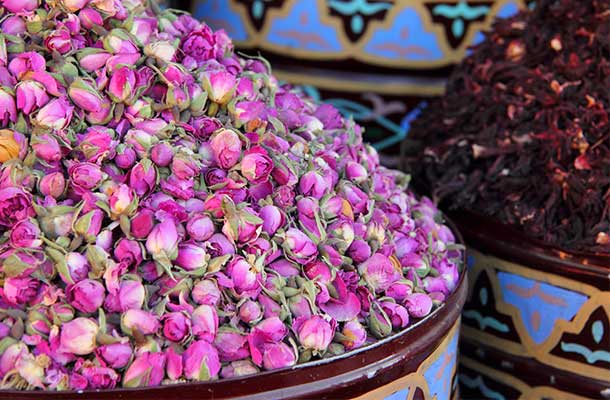
International Rose Festival began on 7 May in the valleys of Kelâat M’Gouna and Dadès, with officials expecting a stronger rose harvest this year.
Production for the 2026 season is forecast at around 5,000 tonnes of perfume roses, up from an average of 3,700 tonnes. The sector supports about 6,000 farmers across seven rural communes.
The forecast was shared during a scientific meeting held alongside the festival. The sector is recovering after a seven-year drought that reduced output in recent years.
Officials also said recent rain and snowfall helped plants recover, although farmers remain concerned about unpredictable weather.
The rose industry, based on Rosa damascena, is still largely traditional but is slowly modernising. Abdellah Abdellaoui, from the Ouarzazate Regional Office of Agricultural Development (ORMVAO), said the sector has strong potential but also clear risks.
“The potential of this crop rests on favourable territorial and climatic conditions,” Abdellaoui said. “However, the sector remains confronted with several fragilities, notably linked to climatic hazards, the maintenance of traditional agricultural practices, price instability, and limitations in certain recovery and marketing circuits.”
The sector has benefited from investment under the Green Morocco Plan, which put 52.4 million dirhams into 950 hectares over the past decade.
A new strategy, “Generation Green 2020–2030,” now sets new targets: increase annual production to 6,000 tonnes, process 70% of roses locally in upgraded facilities, and double exports of rose products to 150 tonnes by 2030.
Organised under the High Patronage of Mohammed VI, the festival has become more than a cultural event. It now also focuses on business and development in rural areas.
The 2026 edition includes seminars, workshops on sustainable farming, a parade, the crowning of the “Rose Queen,” and traditional Ahwash dance. It is expected to attract visitors and investors to Kelâat M’Gouna.