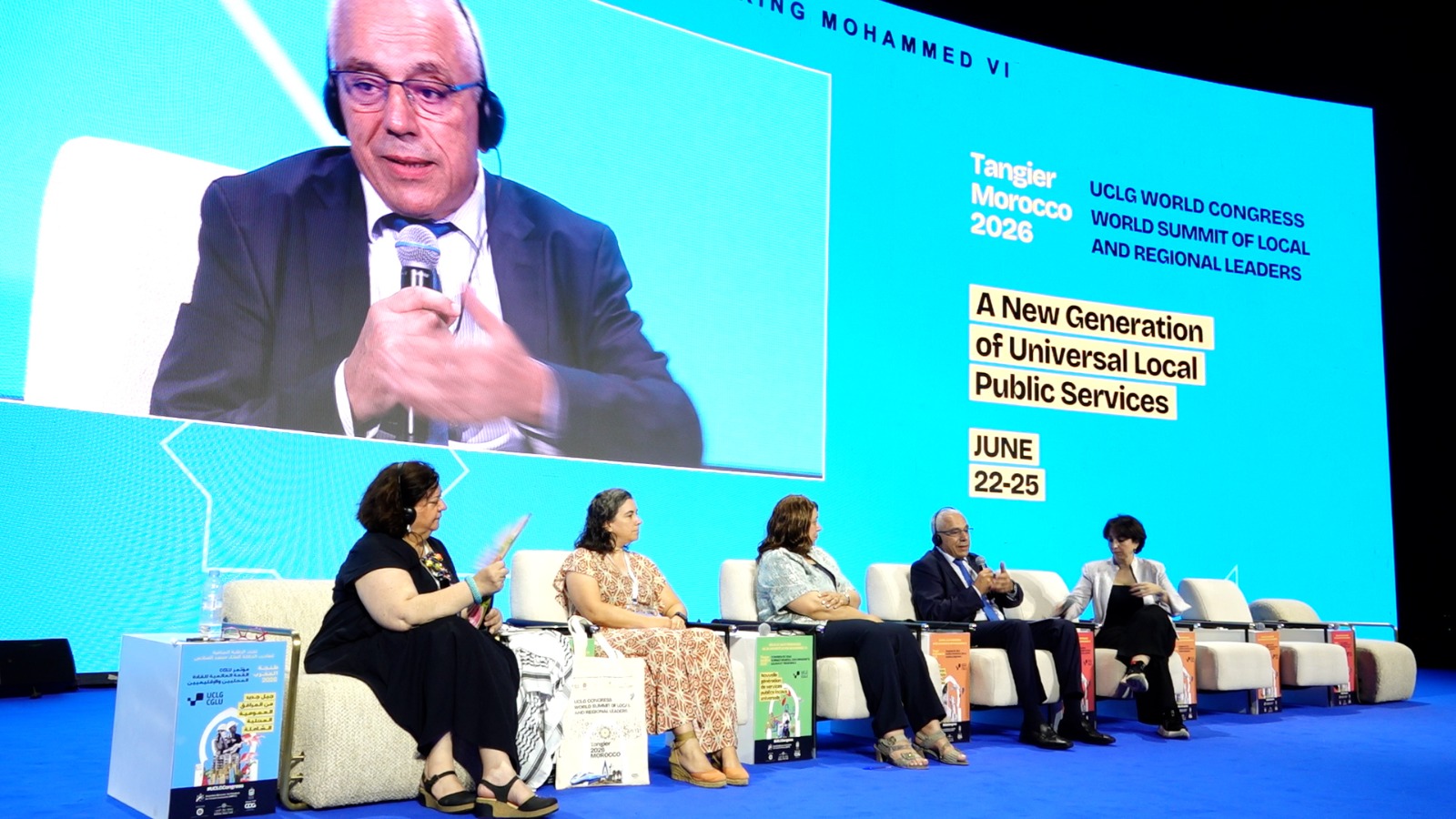
People who move between countries can help build stronger communities and grow local economies if they are given the chance, speakers at the United Cities and Local Governments (UCLG) World Congress in Tangier said.
The event brought together local leaders from around the world to discuss how elected officials from diaspora communities can help connect their countries of origin with the places where they now live and work.
One of the main topics was how migration can become a driver of development instead of being seen only as a challenge.
Speaking at the summit, Casablanca Settat Regional Council President Abdellatif Maazouz said Morocco has more than five million citizens living abroad, while nearly 160,000 immigrants now live and work in Morocco.
He said around 60% of those immigrants are based in the Casablanca Settat region, working in sectors including agriculture, finance and technology.
“This approach is one of integration, opportunity creation and pragmatism,” Maazouz said. “There is a specific economic need for talent and manpower. Therefore, we must be open to this and we must support them, because it is essential for the economic development of the country.”
He added that Moroccans living abroad also play an important role in the countries where they live.
“They fulfil the developmental needs of those host countries while also pursuing their personal ambitions,” he said.
Maazouz said Morocco has continued the policy launched in 2013 under the directives of King Mohammed VI to regularise the status of African migrants living in the country.
“Today, they enjoy the same rights as any resident in the country, including schooling for children, healthcare and employment,” he said.
He also pointed to Morocco’s Constitution, saying Articles 17 and 18 guarantee the rights of Moroccans living abroad to vote, run for office and take part in elected institutions.
“To demonstrate this to you, we have a Vice President on our Regional Council from the Moroccan diaspora, as well as another female Vice President from the diaspora,” he said. “This serves as the prime example, showing that they actively participate in managing local regional affairs right alongside their fellow citizens residing in Morocco.”
During the congress, delegates also discussed the main challenges facing elected members of the diaspora. These include fighting discrimination, balancing the needs of local voters with ties to their home countries, encouraging investment and skills transfers, and helping more young people enter public life through programmes such as UCLG’s Young Elected Local Officials (YELO) network.