
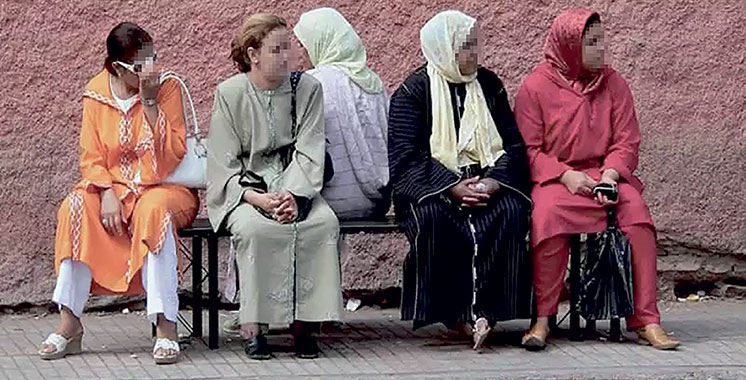
More women in Morocco are reaching the age of 50 without ever getting married, according to new figures from the High Commission for Planning (HCP). The data also shows fewer marriages, lower birth rates and smaller families.
The HCP’s Social Indicators of Morocco – 2026 report found that 12.4% of women aged 50 had never married in 2024, compared with 9.7% of men. Thirty years ago, the opposite was true, with more men than women remaining unmarried at that age.
In 1994, only 0.8% of women had never married by the age of 50, while the figure for men was 2.9%. By 2004, the rates had risen to 4.5% for women and 4.9% for men. In 2014, women overtook men, with 8.3% of women unmarried at 50 compared with 7.3% of men.
Today, about one in eight women in Morocco reach the age of 50 without ever marrying. The increase among men has been much slower.
The trend is still more common in cities, but it is growing faster in rural areas, especially among women.
In 2024, 13.1% of women aged 50 had never married in urban areas, compared with 11.1% in rural areas. The figures for men were 10.8% and 7.7% respectively.
The share of rural women reaching 50 without marrying almost doubled from 5.9% in 2014 to 11.1% in 2024. In cities, it rose from 9.7% to 13.1%, reducing the gap between urban and rural areas from around four percentage points to two.
People are also marrying later. The average age at first marriage reached 28.5 years in 2024. Men married for the first time at an average age of 32.4 years, while the average for women was 24.6 years. The average was 29 years in cities and 27.5 years in rural areas.
Between 2014 and 2024, the average age at first marriage increased for men from 31.3 to 32.4 years, but fell for women from 25.7 to 24.6 years.
The share of unmarried people aged 15 and over fell slightly from 34.8% in 2014 to 33.2% in 2024. The figure dropped from 40.9% to 39.3% for men and from 28.9% to 27.3% for women.
This is because that measure includes young people who may still marry in the future, while the age-50 figure only counts people who have never married by that age.
Marriage numbers also continued to fall.
Authorities registered 239,300 marriages in 2024, down 3.9% from 249,100 a year earlier. The total has fallen by more than 22% since 2008, when 307,500 marriages were recorded.
Family life is changing too.
The number of households increased from 7.31 million in 2014 to 9.27 million in 2024, while the average household size fell from 4.6 people to 3.9.
Single-person households almost doubled, rising from 5.9% in 2004 to 11.1% in 2024.
Nuclear families made up 66.2% of households in 2024, up from 54.4% in 2004. Extended and complex families fell from 39.7% to 22.6% over the same period.
Birth rates also continued to decline.
The fertility rate fell to 1.97 children per woman in 2024, down from 2.22 in 2014 and 2.5 in 2004. The figure is now below the 2.1 children per woman needed to maintain the population without migration.
Women had an average of 1.77 children in urban areas, compared with 2.37 in rural areas.
The report also showed that the population is getting older. People aged 60 and above made up 13.8% of the population in 2024, up from 9.4% in 2014. Their number increased from 3.2 million to nearly five million over the same period.