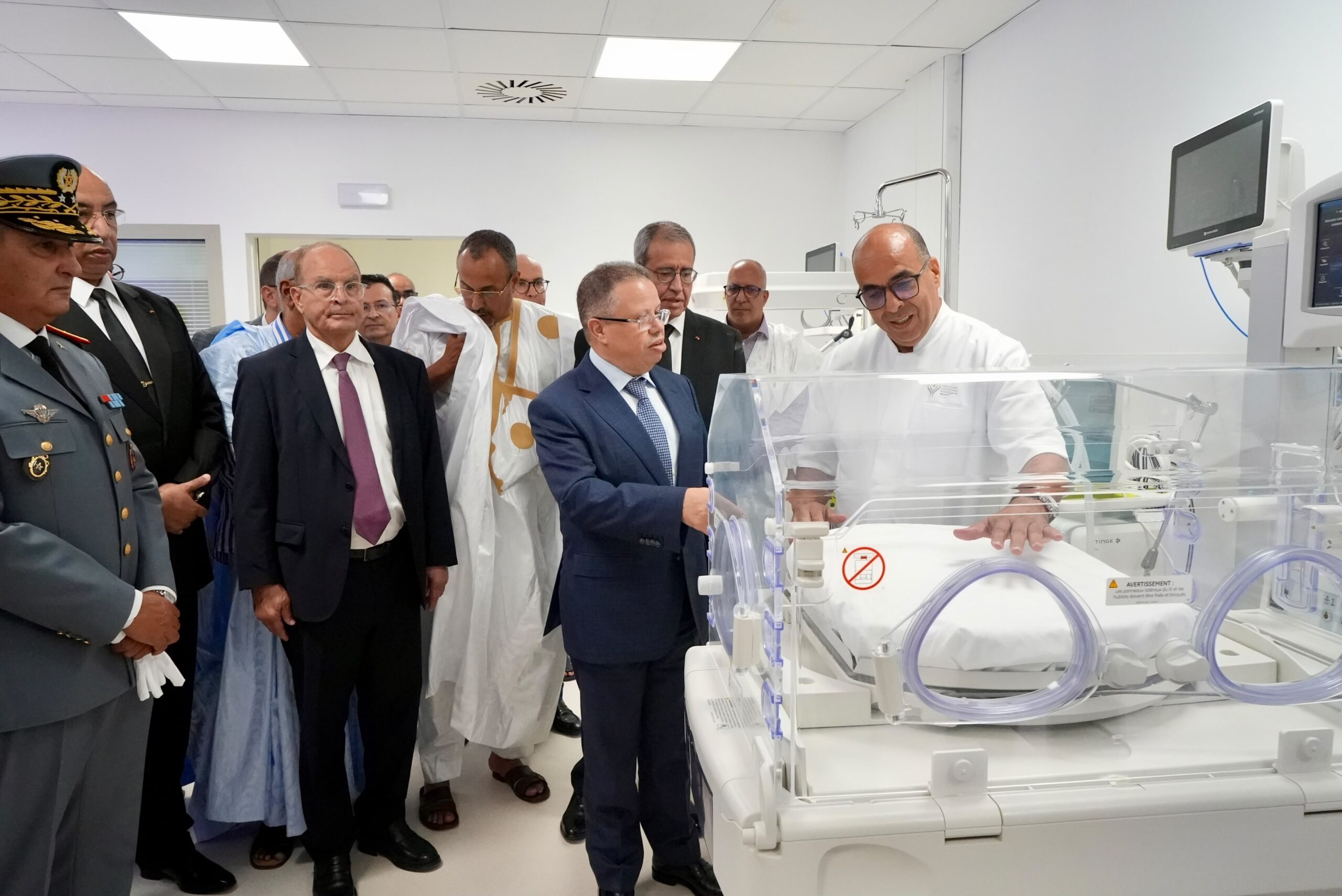
Patients in Morocco’s southern provinces will have greater access to specialist medical care following the opening of a new university hospital in Dakhla, which aims to reduce the need for long journeys to cities such as Agadir and Casablanca for treatment. Health and Social Protection Minister Professor Youns Bjijou inaugurated the Mohammed VI International University Hospital Complex. The opening marked the 71st anniversary of Independence Day.
Built by the Mohammed VI Foundation for Science and Health (FM6SS), the complex covers 470,000 sq m, of which 112,500 sq m are built-up areas.
The hospital has 259 beds, including 51 for patients requiring critical care. It is equipped to provide up to 226,000 outpatient consultations and treatments each year.
The facility covers 28 medical specialities and has 15 operating and intervention rooms. Its 11 specialist centres include services for heart disease, brain surgery, nuclear medicine, radiotherapy, and adult and childhood cancers and blood disorders.
Other facilities include an automated medical laboratory, an imaging department operating 24 hours a day and units providing hyperbaric oxygen therapy.
Reducing journeys for medical treatment
The hospital is expected to make specialist treatment more accessible to people living in Dakhla-Oued Eddahab, a vast region covering more than 142,000 sq km – almost one-fifth of the country’s total land area.
The region has a population of about 220,000, according to the 2024 census.
Patients needing advanced treatment for cancer and neurological conditions have traditionally faced long journeys to reach specialist hospitals. Agadir is more than 1,100km from Dakhla, while Casablanca is nearly 1,600km away.
The new facility aims to bring some of these services closer to home and reduce the need for patients to travel hundreds of kilometres for treatment.
A campus for 3,000 students
The project also includes a university campus designed to accommodate 3,000 students studying medicine, nursing and health engineering.
The campus supports a wider national effort to train more healthcare workers. Morocco aims to reach the World Health Organization’s target of 45 health professionals for every 10,000 people by 2030.
Professor Ahmed Bennana, deputy director of the FM6SS, said the complex would strengthen healthcare provision across the region.
He also highlighted the medical simulation centre, which will allow future healthcare professionals to develop their practical skills in a controlled environment before treating patients. The centre is also expected to help improve patient safety.
A wider African healthcare role
The complex will also house the African Academy of Health Sciences, which brings together experts from across the continent to address healthcare challenges and strengthen Africa’s ability to meet its own health needs.
The academy is associated with the Dakhla Global Summit, scheduled for 20 and 21 November 2026.
Launched in Dakhla in November 2024, the academy aims to promote scientific cooperation and the exchange of medical expertise between African countries.
The new complex joins FM6SS university hospital centres already operating in Casablanca and Rabat, expanding the foundation’s network of hospitals, medical education and research facilities.
Dakhla is also undergoing major infrastructure development. These projects include the 1,055km Tiznit-Dakhla expressway and the planned Dakhla Atlantic Port, which are expected to improve transport links and support the city’s economic development.