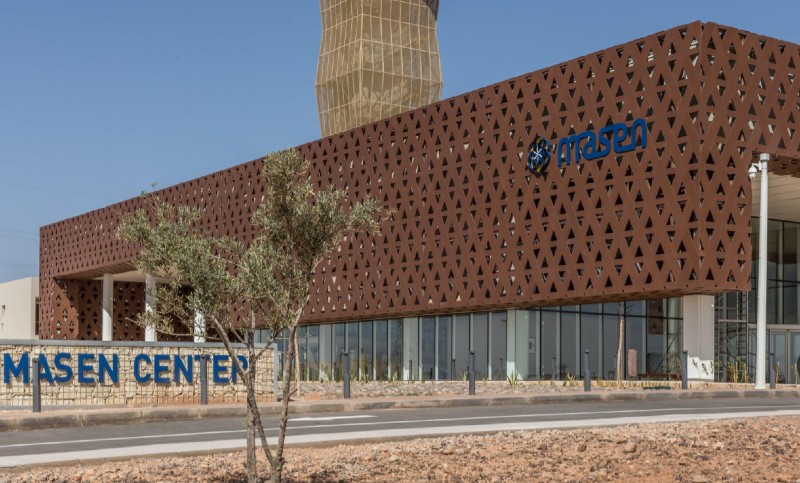
Up to 350,000 households could benefit from electricity generated by a new network of solar power plants planned across five regions of Morocco, under a programme aimed at expanding renewable energy and meeting national targets for 2030. The Moroccan Agency for Sustainable Energy (Masen) launched an international tender on 14 October 2026 to select companies to build, operate and maintain four to six photovoltaic plants with a combined capacity of at least 350 megawatts (MW).
The plants will be spread across Casablanca-Settat, Béni Mellal-Khénifra, Marrakech-Safi, Souss-Massa and Guelmim-Oued Noun. Their individual capacities are expected to range from 40MW to 170MW, although their final locations and sizes have yet to be confirmed.
Masen estimates that the plants could generate between 650 and 750 gigawatt-hours (GWh) of electricity a year, enough to supply about 300,000 to 350,000 average households. Actual output will depend on sunlight, weather and operating conditions.
Companies and consortia have until 12:00 Moroccan time on 30 November 2026 to submit prequalification applications. Requests for clarification must reach Masen by 20 November.
The agency plans to announce the shortlist on 14 December, with tender documents expected to be issued in December 2026 or the first quarter of 2027. Final bids are scheduled for March 2027.
The process, identified as RFQ/15/2026/MASEN, is designed to select companies with the expertise to design, supply equipment for and build the plants, as well as operate and maintain them.
Shortlisted bidders will be able to compete for one or more lots, submitting separate technical and financial proposals. The total value of the contracts and the allocation of costs across the sites have not been disclosed.
A project company controlled directly or indirectly by Masen will sign contracts with the selected firms and long-term power purchase agreements with the National Office of Electricity and Drinking Water (ONEE). The agreements will run for 25 to 30 years from the start of commercial operations at each plant.
Masen has not yet published the electricity tariffs, projected annual output for individual sites or their investment costs.
Financing agreements and the start of construction are provisionally scheduled for the second quarter of 2027. Construction is expected to take about 18 months, with the first plants due to begin commercial operations in the fourth quarter of 2028 or the first quarter of 2029.
The timetable depends on the selection of companies, the finalisation of contracts and the fulfilment of financing conditions.
The current process is the first stage of a two-stage competition. It does not constitute a final contract award, and the commissioning dates remain provisional. The plants’ technical specifications will be detailed in the tender documents sent to shortlisted bidders.
The programme supports a national target to source more than 52% of installed electricity capacity from renewable sources by 2030.
Meeting that goal is expected to require more than 10 gigawatts (GW) of additional clean generation capacity, including about 4,560MW of solar power.
The new projects also reflect a shift towards photovoltaic (PV) technology, which converts sunlight directly into electricity. Earlier phases of the Noor programme, including the Noor Ouarzazate complex, placed greater emphasis on concentrated solar power (CSP), which uses mirrors to focus sunlight and can incorporate thermal storage.
Newer initiatives, including Noor PV II, Noor Atlas and Noor PV Multisites, focus more heavily on large photovoltaic installations, which generally take less time to build than concentrated solar power plants.
The five regions cover a range of economic activities. Casablanca-Settat is a major industrial and commercial centre, while Béni Mellal-Khénifra and Marrakech-Safi have significant agricultural and mining electricity demand. Souss-Massa and Guelmim-Oued Noun are also part of the southern energy corridor, where green hydrogen development is emerging.
Spreading generation across several regions could bring electricity production closer to industrial, urban and agricultural demand, potentially reducing transmission losses. Masen has not published estimates of the savings expected from the programme.
In March 2026, Masen and ONEE signed long-term power purchase agreements covering 305MW under the Noor Atlas programme. The projects span six provinces and were awarded to international-Moroccan consortia, with operations expected to begin from mid-2027.
During 2026, Masen also finalised key developer agreements with ACWA Power for the Noor Midelt 2 and Noor Midelt 3 hybrid solar projects. These form part of a wider pipeline of hybrid solar generation alongside the photovoltaic plants planned under the multisite programme.
ONEE will purchase electricity generated by the new plants under agreements lasting 25 to 30 years. Depending on the start date and contract length, the agreements could extend into 2055-2060. The tariffs have not yet been announced.
A 40MW solar plant could supply electricity equivalent to the annual consumption of about 35,000 households, while a 170MW installation could serve roughly 150,000 households. These are estimates rather than guaranteed supply figures.
A 40MW solar farm typically requires about 80 to 100 hectares of land, equivalent to roughly 120 to 140 football pitches. A 170MW installation could occupy between 350 and 400 hectares.
The programme’s minimum combined capacity of 350MW is also equivalent, in a simplified comparison, to around 900,000 individual solar panels. The actual number will depend on the type and output of panels used.
The 350MW figure refers to installed generating capacity, not continuous electricity production. Actual generation will vary with sunlight, weather and operating conditions.
The final number of plants, their locations, costs and commissioning dates will depend on the outcome of the competitive process.