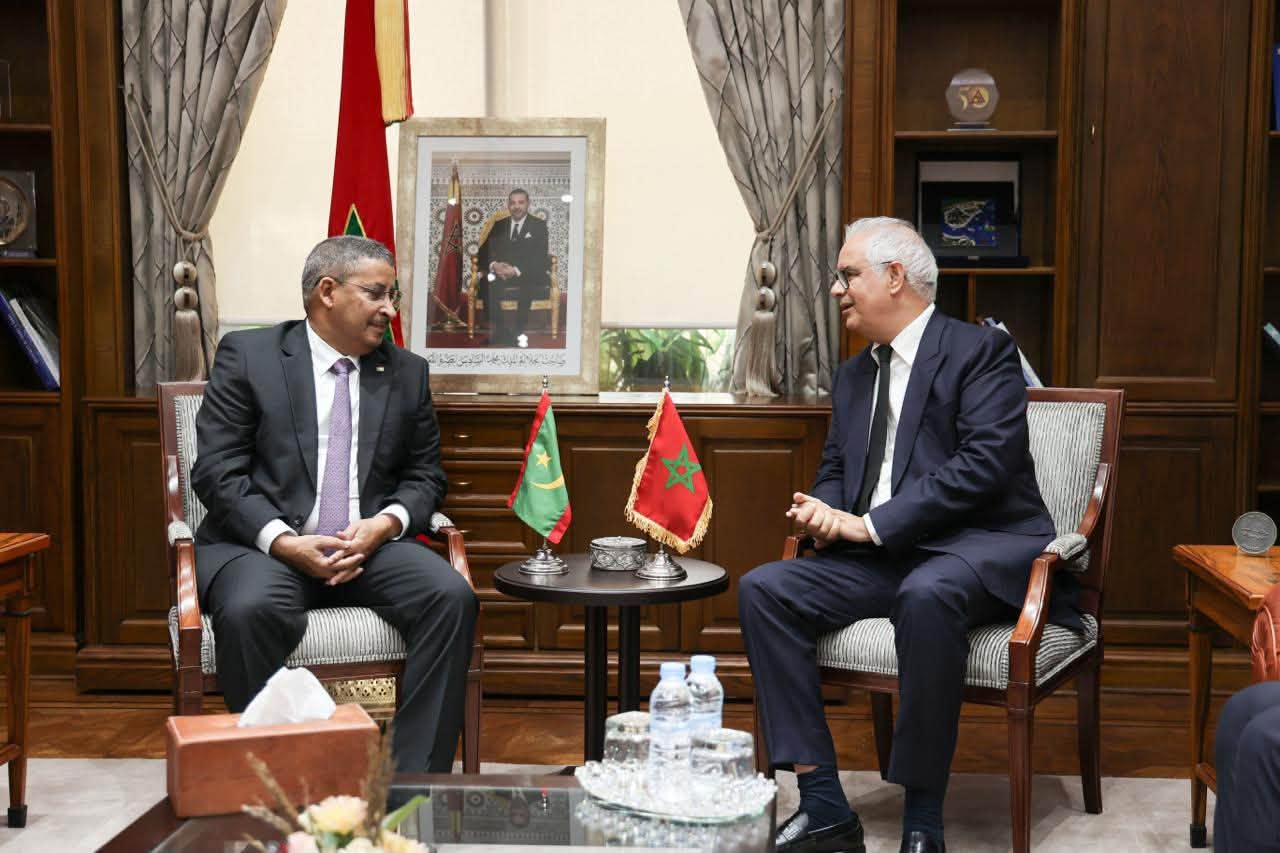
Morocco and Mauritania have agreed to upgrade a 480km road linking Nouakchott and Nouadhibou, in a project expected to make trade and road transport between the two countries easier. The framework agreement was signed in Rabat on Monday, September 21, by Nizar Baraka, Minister of Equipment and Water, and Ely Ould El Veirik, Minister of Equipment and Transport of Mauritania.
The road runs from Nouakchott to Nouadhibou through kilometre point 55. The project will cover its rehabilitation and expansion and will improve links between the road networks of the two countries.
The signing followed talks between the two ministers. The Chargé d’Affaires of the Mauritanian Embassy in Rabat, officials from both ministries and a representative of the Ministry of Foreign Affairs, African Cooperation and Moroccan Expatriates also attended.
The agreement sets out a framework for joint work on the project. It also covers cooperation on road maintenance and the exchange of technical knowledge and experience.
A joint engineering study office will be set up in Mauritania to oversee the technical work. The project will also include measures to improve the road’s ability to withstand climate-related damage.
The upgraded road is expected to make it easier for transport companies and businesses to move goods between the two countries. It should also help reduce delays and vehicle wear, which can lower transport costs and support higher trade volumes.
Nouakchott is the capital of Mauritania, while Nouadhibou is the country’s main northern economic and commercial centre. The road is an important link between the two cities and forms part of the wider land route connecting Morocco with Mauritania and markets further south.
The project is also linked to wider efforts to improve transport infrastructure between North Africa and West Africa.
The Guerguerat border crossing is a key land route for trade between Morocco, Mauritania and other West African markets. Both countries have been working on customs procedures, logistics infrastructure and trade facilities around the crossing.
The Dakhla Atlantique port project is another part of the wider transport network. The port and related logistics zones, including El Argoub, are being developed as part of a planned $1.6bn maritime and land transport corridor aimed at moving goods towards Mauritania and the wider Sahel region.
Transport cooperation between the two countries also covers professional road transport, passenger travel, customs facilitation and technical cooperation on road maintenance.
Trade between Morocco and Mauritania has also grown in recent years.
Bilateral trade turnover is around 3.3bn dirhams, or roughly $330m to $400m a year. The trade balance is heavily in favour of Morocco, with exports making up most of the trade between the two countries.
Moroccan exports to Mauritania include processed food, fresh fruit and vegetables, sugar, electrical and electronic equipment, consumer goods and industrial products.
Mauritanian exports to Morocco are mainly fisheries products, including frozen fish, crustaceans and molluscs.
Trade reached 3.3bn dirhams in 2024. Exports from Morocco to Mauritania rose from 1.7bn dirhams in 2017 to 3.3bn dirhams in 2024. Imports from Mauritania rose from 3m dirhams to 16m dirhams during the same period.
Data from UN Comtrade puts exports to Mauritania at about $489.5m in 2025.
The new road project is expected to support this trade by improving the movement of trucks and goods along the Nouakchott-Nouadhibou route.
The agreement also aims to support investment and wider economic cooperation between the two countries.
The two governments have not yet announced the project’s financing structure or a construction timetable.
The project is part of a broader push to strengthen transport and infrastructure links between Morocco and Mauritania and improve connections between North African and sub-Saharan markets.