
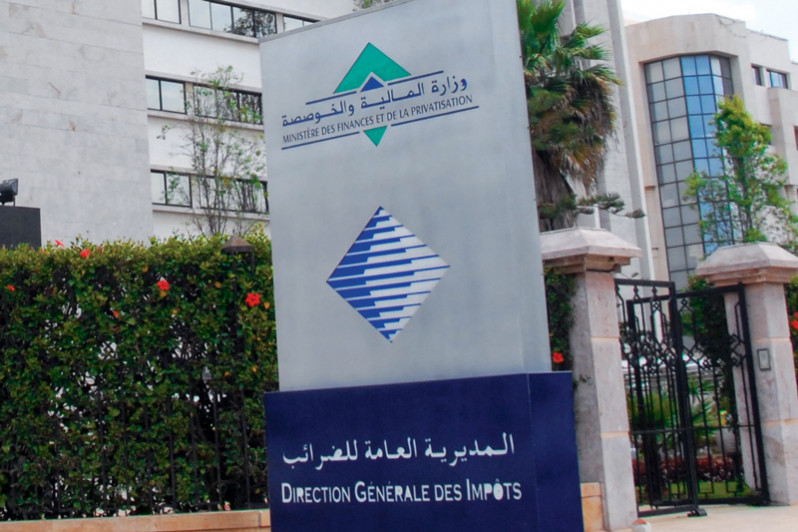
Businesses in Morocco will have to deduct tax from some commercial rent payments, while buyers using large cash payments for property deals will face extra charges under new tax rules announced on Wednesday. The changes are part of Morocco’s 2026 Finance Law. The government says they are meant to improve tax compliance, encourage bank payments and make business and property transactions easier to track.
From 1 July 2026, companies with annual turnover of at least 500 million dirhams, excluding VAT, must withhold 5% tax on rent paid for commercial property. The money will be deducted before the landlord is paid and sent directly to the Directorate General of Taxes (DGI).
The same 5% withholding rule also applies to some individual landlords whose rental income is taxed under the Real Net Income or Simplified Net Income systems.
Businesses and taxpayers covered by the new rules must pay the withheld tax to the DGI before the end of the month after the rent is paid and submit the required tax declaration.
The measure will be rolled out in stages. Companies with turnover of at least 500 million dirhams are affected from 1 July 2026. The threshold will fall to 350 million dirhams from 1 January 2027 and to 200 million dirhams from 1 January 2028.
Until now, landlords received the full rent payment and paid tax later through their annual tax return. Under the new system, the tenant collects the tax for the government by deducting 5% before making the payment.
For example, if a company rents an office for 20,000 dirhams before VAT, it will keep 1,000 dirhams and pay the landlord 19,000 dirhams. The 1,000 dirhams must then be sent to the DGI before the end of the following month. The landlord can later deduct that amount from their final tax bill.
The DGI also introduced a new 2% registration charge on property, real estate rights and business asset transactions worth more than 300,000 dirhams if the payment cannot be proved through approved methods such as bank transfers or crossed non-transferable cheques.
If only part of the purchase price is paid in cash, the extra charge will apply only to that cash payment.
The rule is aimed at reducing cash payments that are sometimes used to hide the real value of a property and lower registration fees and property tax.
For example, if a property worth 1.5 million dirhams is paid for entirely in cash, the buyer will have to pay an extra 30,000 dirhams, on top of the standard 4% registration fee for completed buildings.
To avoid the extra charge, payments must be made through approved methods such as bank transfers, crossed non-transferable cheques, bank loans or escrow accounts managed by banks or notaries.
The new rules also give notaries more responsibility. They must check where the money came from and record the details of bank transfers or cheques in the official deed. If the parties still choose to pay in cash, the notary must report it, which will automatically trigger the 2% charge when the property is registered.
The reforms come as Morocco’s property market continues to grow. The government’s housing support programme offers grants of between 70,000 and 100,000 dirhams depending on the value of the home, while property transactions have increased by more than 14% in major cities including Casablanca and Marrakech.