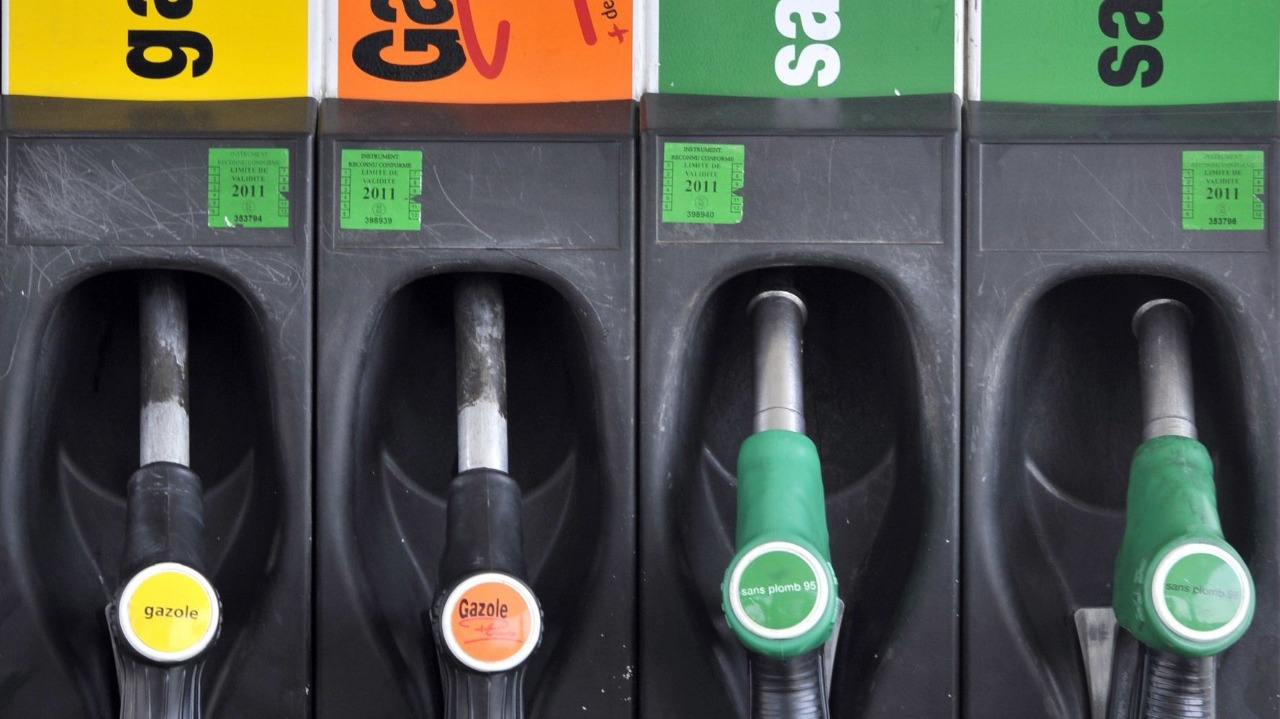
In Casablanca, filling a car with diesel has become an increasingly painful exercise. The numbers spin on the pump, the litres rise, and the bill climbs. For a driver watching every dirham, the difference between a full tank and an almost-empty wallet can be painfully small.
Across the Sahara and along the West African coast, motorists face a different price. In Côte d’Ivoire, a litre of diesel was reported at around 725 CFA francs on October 12, equivalent to 11.33 dirhams. In Burkina Faso, it cost about 750 CFA francs, or 12 dirhams. In Morocco, the price had climbed above 16 dirhams.
The gap is roughly four dirhams per litre. For a taxi driver filling the tank every day, a lorry crossing the country or a family travelling to work, those dirhams soon add up. They also travel beyond the petrol station, hidden in the price of bread, vegetables, building materials and other goods carried by road.
The comparison raises a simple question: why are Moroccan motorists paying more than drivers in other African countries that also depend on imported fuel?
The answer lies partly in the world oil market. Shipping, insurance, exchange rates and the cost of refined fuel all shape the price at the pump. It also lies in decisions made in Rabat, where the government chose to leave fuel prices largely to the market.
In 2015 Morocco lifted state controls on fuel prices. The idea was straightforward. Let companies compete, and they would have to fight for customers. Competition would keep prices in check, improve efficiency and pass savings on to drivers.
A decade later, the promise is under pressure. The question facing Morocco is whether its fuel market is delivering the benefits that liberalisation was meant to bring.
When the state stepped back
Morocco has a weakness that makes fuel especially costly: it depends on imports for its refined petroleum products.
The closure of the SAMIR refinery left the country without its main domestic refining facility. Morocco now relies on foreign suppliers for finished products such as diesel and petrol. Its fuel bill moves with international prices, shipping costs and the value of the dirham against the dollar.
When the dollar strengthens, imported fuel can become more expensive. When shipping routes are disrupted or refining capacity tightens, the cost can rise again. These pressures begin far from Morocco, yet they end at the pump.
The government has also withdrawn broad fuel subsidies and allowed distributors to set retail prices. The result is a system in which much of the cost of international price swings falls directly on consumers.
There are sound reasons for this approach. Subsidies can drain public money, encourage waste and give the largest benefits to people who consume the most fuel. Price controls can also create problems if suppliers are forced to sell below their costs.
But a market needs real competition to work well. When several strong companies compete for customers, they have an incentive to lower prices and improve their service. When a small number of firms dominate, consumers may have fewer choices and less power to push prices down.
Morocco’s fuel-distribution market is concentrated. Afriquia, part of the Akwa Group, is one of its largest players, with the supplied research estimating its share at around 30%. A market of this kind needs close supervision to ensure that companies compete fairly.
There is already reason to look closely. In late 2023, Morocco’s Competition Council fined nine fuel companies a total of about 1.84bn dirhams over competition-related violations, according to the supplied material.
The decision brought a difficult question into sharper focus: when the cost of fuel falls on international markets, how quickly does that fall reach Moroccan drivers?
A price rise is easy to notice. A price cut can be harder to track. To understand what is happening, regulators need to follow the full journey from the purchase of imported fuel to the price displayed at the pump. They need to examine taxes, shipping, storage and distribution costs, as well as the margins earned by companies.
Without that information, motorists are left staring at the final bill without knowing exactly what they are paying for.
Fuel is a political issue because almost everyone feels its effects. A driver pays at the pump. A shopkeeper pays more to receive deliveries. A farmer pays to move produce. Families encounter the cost again when they buy food and other essentials.
The choice made in 2015 was built around a clear promise: competition would help discipline prices. If the market is failing to deliver that result, the policy deserves a fresh look.
Côte d’Ivoire offers one possible lesson. Its authorities set maximum prices for fuel and revise them periodically. This system gives the state a direct role in limiting what consumers can be charged.
Burkina Faso also uses government regulation in setting fuel prices. Their experience shows that African countries can choose different ways of managing the cost of imported energy.
Morocco cannot simply copy either model. The countries differ in their taxes, transport networks, supply contracts and public finances. A lower price at the pump may also mean that the government or suppliers are absorbing part of the cost elsewhere.
Price controls have risks. If the permitted price is too low, suppliers may struggle to cover their expenses. If the state pays the difference, public money must come from somewhere. Subsidies can offer relief to households, but they can also become expensive and difficult to remove.
Still, these examples give Morocco a reason to examine its own choices. Could a temporary price ceiling help during an exceptional shock? Would a change in fuel taxes offer meaningful relief? Could better competition enforcement reduce the cost paid by drivers?
Each option would need careful study. The first step is to understand where the money goes.
A bill that reaches every home
Diesel powers much of the machinery that keeps an economy moving. Lorries carry food from farms to markets. Trucks deliver goods to shops. Construction vehicles move materials to building sites. Businesses rely on transport to connect workers, suppliers and customers.
When diesel becomes more expensive, companies must decide what to do with the extra cost. They can accept lower profits, cut spending or raise their prices. Often, consumers end up paying part of the bill.
That is how the price at a petrol station can find its way into a shopping basket. A household that owns no car may still pay more for vegetables, bread or household goods because transporting them has become more expensive.
The burden is especially heavy for people with little room in their budgets. A wealthy motorist may be able to drive less. A taxi driver who needs fuel to earn a living has fewer options. A small delivery business cannot easily remove fuel from its costs.
Higher prices therefore do more than make travel expensive. They can squeeze wages, cut business earnings and leave families with less money for other needs.
The government has several possible ways to ease that pressure. It could review fuel taxes, offer targeted help to vulnerable households or consider temporary measures when international prices surge. Such policies would need clear limits and a public estimate of their cost.
The goal would be to protect people from severe shocks while keeping public spending under control.
Three steps towards a fairer market
The new government has an opportunity to put Morocco’s fuel market under closer scrutiny.
First, it should make the price easier to understand. A regular public breakdown should show the cost of imported fuel, transport, insurance, storage, taxes and distribution. Consumers would then have a clearer picture of why prices rise and what might bring them down.
Second, it should strengthen competition enforcement. Regulators should examine how quickly domestic prices respond to changes in international costs and investigate unexplained differences between companies. Their findings should be made public, giving consumers a clearer view of how the market operates.
Third, the government should examine temporary and targeted forms of support. A review of fuel taxation, help for vulnerable households and carefully designed price-stabilisation measures could soften the blow during periods of exceptional volatility. Each measure would need clear rules, a defined cost and regular review.
These steps would not shield Morocco from every movement in the world oil market. They could, however, help ensure that consumers receive the benefits of lower costs when conditions improve and that companies operate under clear, enforceable rules.
The test at the pump
The four-dirham gap between Morocco and the cited prices in Côte d’Ivoire and Burkina Faso does not provide a complete explanation of Morocco’s high fuel costs. Differences in taxes, supply arrangements and operating costs must be examined before firm conclusions can be drawn.
Yet the gap is large enough to demand answers.
Since 2015, Morocco has relied on market forces to set fuel prices, trusting competition to protect consumers. The country’s dependence on imported refined products, its concentrated distribution market and its exposure to international price swings make that promise difficult to assess without better public data.
Liberalisation should be judged by its results. Are companies competing effectively? Do lower international costs reach the pump? Can consumers understand the price they pay? Are regulators equipped to act when competition breaks down?