
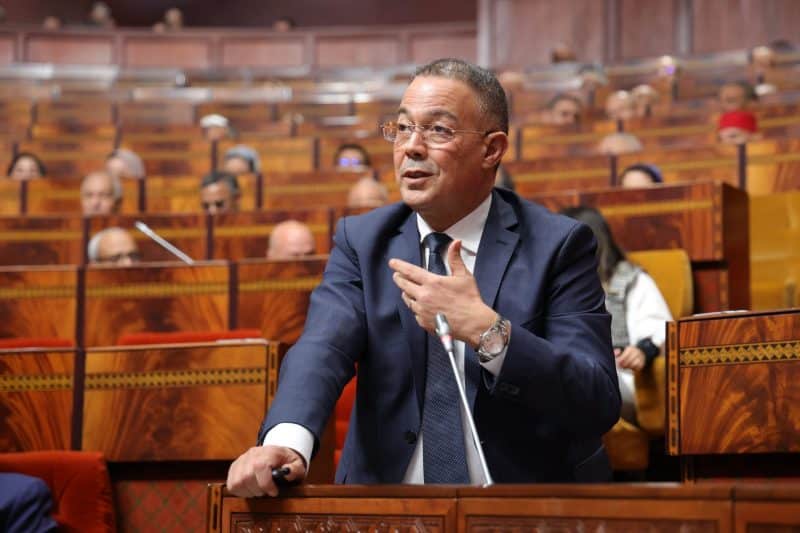
Artists and film companies in Morocco can benefit from a range of tax breaks and easier customs rules. Fouzi Lekjaa, minister delegate in charge of the budget, listed the measures in a written answer to questions from members of the House of Councillors. Artists can get a 35% tax deduction on their taxable wages, up to 35,000 dirhams ($3,500). Artists who are paid for individual performances can get a 50% deduction on their gross income.
Literary and artistic prizes worth up to 100,000 dirhams a year are also tax-free. Copyright payments to resident artists are exempt from income tax in some cases.
Self-employed artists under the auto-entrepreneur system do not have to pay the minimum tax during their first three years of activity.
Cinema tickets are taxed at 10% VAT. Documentary and educational films can also qualify for VAT exemptions.
Support for film productions
Foreign film and TV productions can get a 30% cash rebate on eligible spending in Morocco.
Productions must spend at least 10m dirhams locally and film for at least 18 days in the country.
Eligible costs include local staff, equipment, hotels, transport, sets and post-production.
Recent productions have brought large amounts of money into the local economy.
Foreign productions accounted for about 1.21bn dirhams in direct spending, according to figures from the Moroccan Cinematographic Center (CCM).
Christopher Nolan’s Charlie’s Tale spent about 252m dirhams locally.
The US series UNT Merc spent 234.3m dirhams. The second seasons of The Terminal List and The Agency spent 156.9m dirhams and 113.9m dirhams respectively.
Easier customs rules
Film crews and artists can also bring equipment into the country more easily for temporary events and productions.
The ATA Carnet system allows companies to bring equipment into Morocco without paying import duties and taxes upfront. The equipment must leave the country after the event or production.
Customs can accept a commitment letter from the organising ministry instead of a bank guarantee when an ATA Carnet is not available.
The rules also cover artworks, antiques and collectors’ items brought in for non-profit exhibitions.
These items can stay in the country for up to two years. The period can be extended to four years.
Film companies can use the same temporary admission system for filming equipment by providing a commitment letter from the CCM.
Local film industry
The film industry is also seeing strong activity from local producers.
Total investment in film production reached about 1.8bn dirhams, according to CCM figures.
Local productions accounted for about 596.5m dirhams.
Cinemas sold 2.19 million tickets and generated 129.8m dirhams in revenue.
Local films sold about 1.03 million tickets, giving them a 47% share of total admissions.
The state provided 73.5m dirhams in funding for 84 projects.
Private money is also playing a bigger role. About 54% of completed local feature films received no state funding.