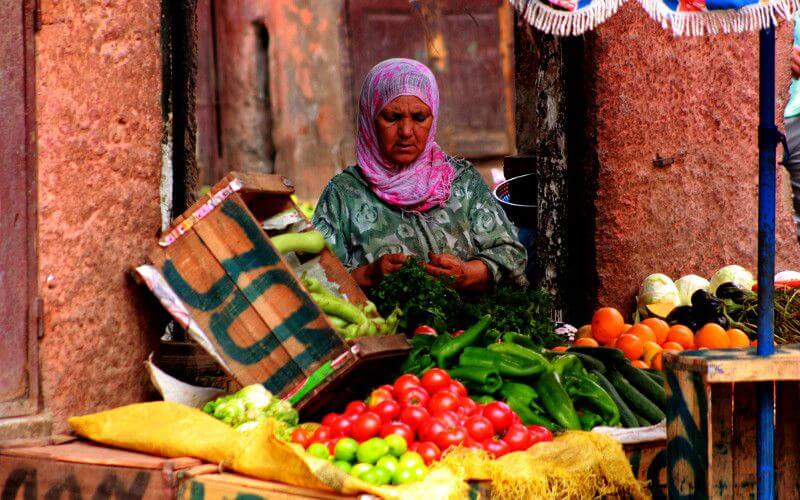
About 2.3 million people in Morocco do not get enough calories from food, as the country’s undernourishment rate rises to 6.5%, according to figures in the 2026 Global Hunger Index report. The rate has climbed from 3.6% in 2018, reversing years of progress. Morocco ranks 47th out of 122 countries, with a score of 9.0, placing it in the index’s low hunger category.
Repeated droughts, water shortages, rising food prices and higher costs for farmers have put pressure on households and food production, according to the report summary.
The figures show that undernourishment affected 5.8% of the population in 2000, before falling to 4.8% in 2006, 4.3% in 2012 and 3.6% in 2018. The latest rate is the highest in the series provided.
Children are also affected. About 13.7% of children under five are too short for their age because of long-term undernutrition, while 2.7% weigh too little for their height, a sign of acute malnutrition.
The under-five mortality rate stands at 1.6%, down from 5.2% in 2000 and 2.0% in 2018.
Drought and food imports add to pressure
Morocco exports tomatoes, citrus fruits and strawberries but depends on imports to meet much of its demand for basic cereals, particularly wheat. This leaves the country exposed to changes in international prices and disruptions to global supply chains.
The country imports about 87.5% of its primary energy needs, adding to costs for farming, transport and food production when international energy prices rise.
Morocco consumes an estimated 9 million to 10 million tonnes of wheat each year. Domestic harvests vary sharply with rainfall, ranging from about 2.7 million tonnes in drought years to 7.5 million tonnes in wetter seasons.
That leaves the country importing between 4 million and 7 million tonnes of wheat annually, mainly from suppliers including France, Russia, Ukraine and Canada.
Six consecutive years of drought leading up to the 2024-26 period have added to the pressure, according to the supplied background information. At critical points, water levels in dams fell below 28-30% of their capacity, while restrictions on irrigation affected cereal production.
The report summary calls for more investment in farming that can withstand climate change, stronger social protection for vulnerable households and better management of water and energy resources.
Hunger worsens across the Middle East and North Africa
About one in 10 people in the West Asia and North Africa region cannot meet their basic daily calorie needs, according to the supplied figures.
Syria and Yemen are among the countries facing the most severe hunger, driven by conflict, economic collapse and water shortages.
In Yemen, 47.4% of children under five suffer from stunting and 16.8% from wasting, among the highest rates reported globally.
Sudan and the Gaza Strip are also facing severe food crises. Conflict has disrupted food supplies and damaged health services, making it harder for people to access food and medical care.
Global progress towards ending hunger stalls
The global hunger index score has risen to 18.1, placing the world in the moderate hunger category and leaving it off track to meet the United Nations’ goal of ending hunger by 2030.
About 147.4 million people face acute food insecurity, according to the supplied figures. Conflict, extreme weather, economic pressures and cuts to humanitarian funding are among the main drivers.
Armed conflicts have reached their highest levels since the Second World War, according to the background material. Sub-Saharan Africa and South Asia remain among the worst-affected regions.
Somalia, the Democratic Republic of the Congo and Chad are among the countries facing particularly severe hunger. Disruptions to food and fertiliser trade, extreme weather linked in part to El Niño, and declining international humanitarian funding have added to the pressure.
The Global Hunger Index is published jointly by German aid organisation Welthungerhilfe and Irish humanitarian organisation Concern Worldwide. It measures hunger through four indicators: the share of people who do not get enough calories, child stunting, child wasting and deaths among children under five.