
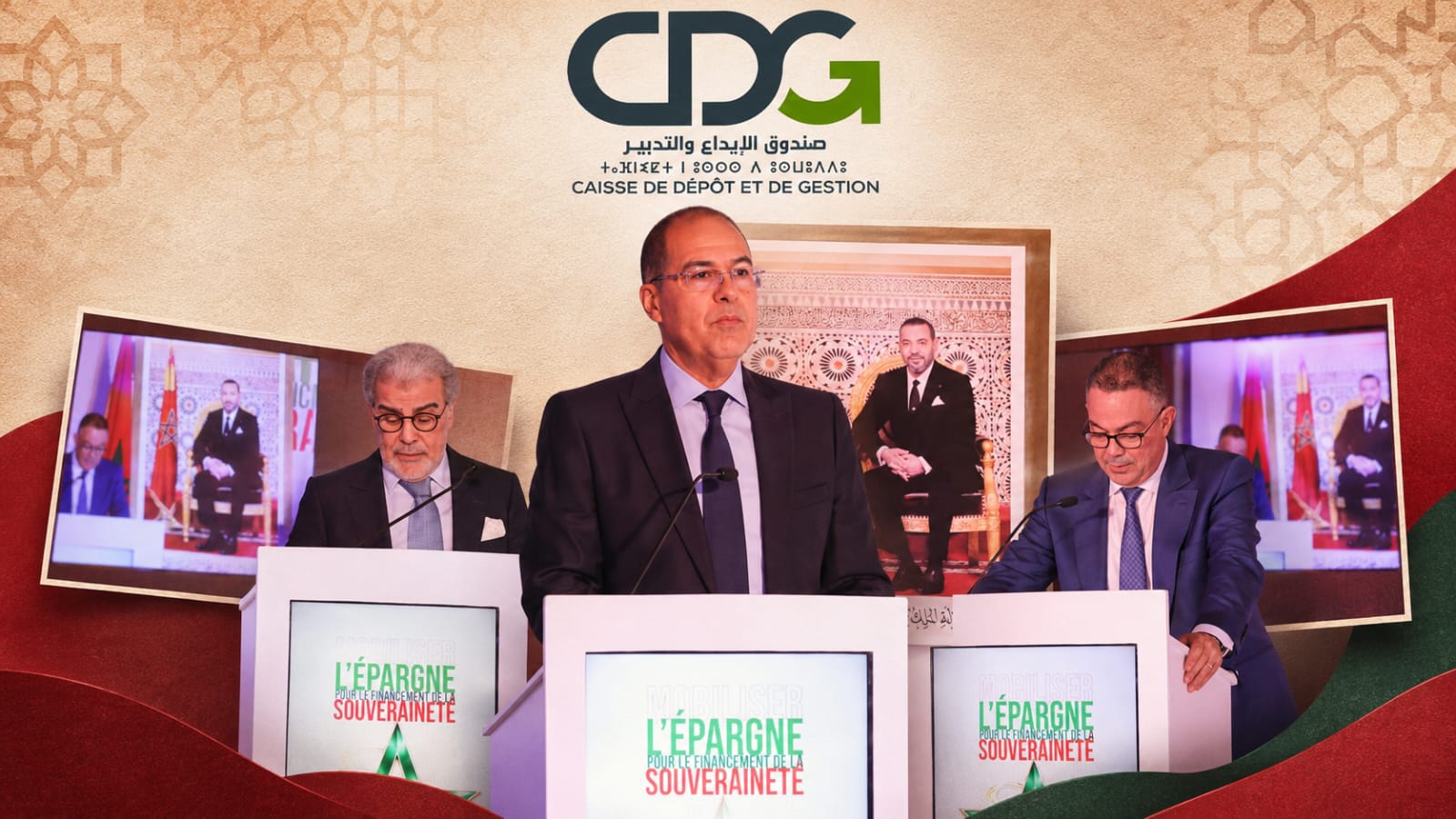
Morocco is looking to unlock more of its household savings to finance long-term investment, as the government seeks to fund major development projects with domestic money. The issue was at the centre of a meeting organised by the Caisse de Dépôt et de Gestion (CDG) in Rabat on Tuesday, 24 November, bringing together government officials, financial institutions and international partners for World Savings Day.
The meeting, held under the theme “Mobilising savings to finance sovereignty”, comes as the country seeks to reduce its reliance on external funding and make better use of money already held by households and institutions.
The push follows King Mohammed VI’s call in his Throne Speech on 29 July to mobilise unprecedented financial resources, mainly from domestic sources, to support the country’s development.

CDG chief executive Khalid Safir said financial sovereignty meant more than simply having money available.
“Financial sovereignty is not only about having resources: it is about being able to mobilise them through our own institutions, direct them towards our priorities and commit them over time,” he said.
Economy, Finance and Public Performance Minister Fouzi Lekjaa outlined four priorities: expanding and modernising savings collection, developing long-term savings, directing funds more effectively and ensuring they support local development.
He also stressed the importance of institutional investors and said the CDG model was an asset for the national economy.
Bank Al-Maghrib governor Abdellatif Jouahri said savings had become increasingly important amid geopolitical tensions, climate risks and cybersecurity threats.

More than 78% of household financial wealth is held in bank deposits
Moroccan households hold 1,192bn dirhams ($119bn) in financial assets, according to figures presented at the meeting. More than 78% of that wealth is held in bank deposits, meaning much of it remains in relatively liquid forms rather than being invested for the longer term.
High Commissioner for Planning Chakib Benmoussa called for a stronger link between household savings and productive investment. He said the country needed to channel more money into businesses and projects capable of generating growth and jobs.
The challenge is also linked to demographic changes. By 2040, people aged 60 and over are expected to outnumber those under 15, increasing the need for long-term savings products suited to different stages of life.
Benmoussa also highlighted the gap between high investment levels and relatively weak economic growth, which is generating fewer jobs. He argued that more productive private-sector investment was needed to improve that relationship.
CDG sets out its CAP 2030 strategy
CDG secretary-general Mohamed Ali Bensouda presented the institution’s CAP 2030 strategy, which aims to refocus it on its long-term mission, reorganise asset management and strengthen risk controls.
The institution plans to complement funding from the state, banks and capital markets while helping local authorities turn their development needs into projects capable of attracting financing.
CDG also intends to continue efforts to revive the Caisse d’Épargne Nationale in partnership with Al Barid Bank and the Ministry of Economy, Finance and Public Performance.
The meeting included representatives from deposit institutions in France, Italy and Gabon, as well as the European Savings Observatory. Discussions focused on how domestic savings could finance national development and local authorities’ investment needs.
CDG said it would compile the recommendations from the meeting into a report and monitor their implementation. It also proposed making the gathering an annual forum to track progress in mobilising domestic savings.