
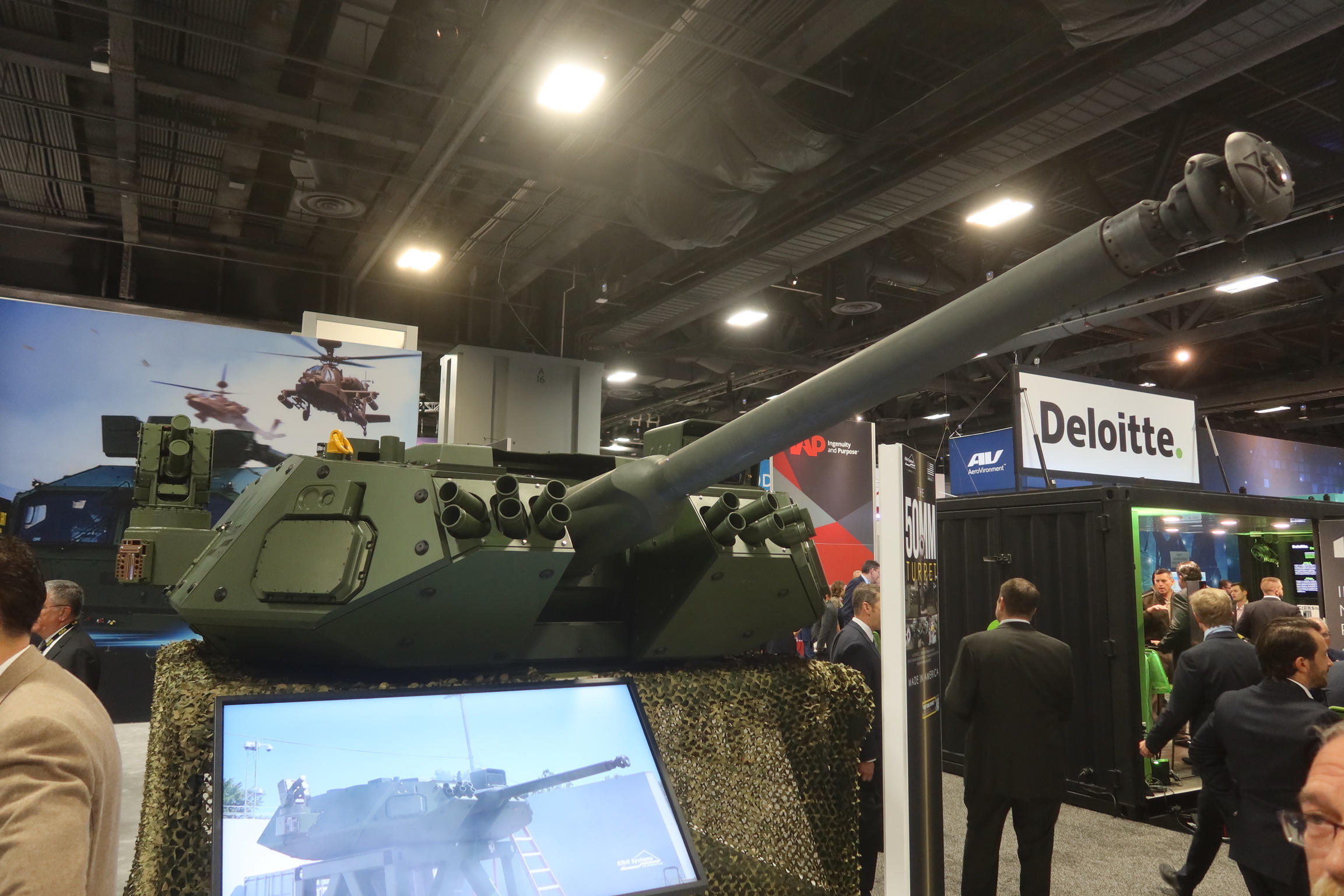
Moroccan soldiers could soon be using armoured vehicles fitted with Israeli-designed weapons made in Morocco. Israeli defence company Elbit Systems has signed a $277m (£207m) contract to supply 30mm gun turrets and ammunition over three years. The customer was not named in the company’s announcement, but defence industry analysts identified it as Morocco.
The turrets will be fitted to WhAP 8×8 armoured vehicles developed by India’s Tata Advanced Systems and the Defence Research and Development Organisation (DRDO). The first locally manufactured turrets are expected to reach the Royal Moroccan Armed Forces in March 2027, according to Kaduri Naor, general manager of Moroccan Military Industry (MMI).
The Israeli-turreted WhAP was displayed at the Marrakech Air Show in October 2026.
Morocco is developing facilities to assemble the turrets and produce ammunition locally. MMI operates a weapons systems facility in the Midparc industrial zone near Casablanca, while a second plant is being prepared in Sidi Yahya, north of Rabat, to manufacture ammunition.
Tata began producing the WhAP vehicles in September 2025 at a 20,000-square-metre factory in Berrechid. The project brings together an Indian-designed vehicle, Israeli weapons technology and Moroccan manufacturing.
The shift could give the armed forces greater control over equipment, maintenance and ammunition supplies, while reducing their reliance on foreign deliveries.
MMI employs a workforce that is 99% Moroccan, including its engineers. The company also wants to export military equipment and is targeting a European member of the North Atlantic Treaty Organisation (Nato), Naor said in October.
The company is developing an anti-drone version of the turret to help counter unmanned aircraft, which have become an increasingly important feature of modern warfare.
What the new weapons can do
The Elbit UT30 MK2 turret is equipped with a 30mm automatic cannon. It can also carry a 7.62mm machine gun and Spike anti-tank missiles, depending on its configuration.
The system can be operated with or without a crew inside the turret. Its design leaves more room inside the vehicle for soldiers.
Stabilised cameras and thermal imaging equipment help crews identify targets in daylight and at night, including while the vehicle is moving. The cannon can also fire air-burst ammunition, which explodes in the air and can engage certain targets behind cover or in the vicinity of low-flying aircraft.
The WhAP is an eight-wheeled armoured vehicle designed to carry troops across difficult terrain. Depending on its configuration, it weighs about 24 to 26 tonnes and can carry between 10 and 12 people, including crew and infantry.
Its 600-horsepower diesel engine allows it to reach speeds of about 100 to 110km/h on roads. The vehicle is also amphibious, with a reported water speed of around 10km/h.
Its V-shaped hull helps deflect the force of landmine and improvised explosive device blasts away from the crew compartment. Additional armour can improve its protection against bullets and other threats.
Morocco is also reportedly considering WhAP variants armed with 105mm and 120mm guns, calibres commonly associated with tanks.
These weapons would give the wheeled vehicles greater firepower while retaining the mobility of an eight-wheeled platform. They could be suited to operations in the Atlas Mountains and desert areas.
However, the reported plans for these heavier guns are separate from the confirmed $277m contract, which covers the 30mm UT30 MK2 turrets and ammunition. No contract value or delivery schedule has been made public for the larger-calibre systems.
The Israeli turret has a history in Spain, where a consortium involving Elbit, Spanish shipbuilder Navantia and defence company Expal presented a related system called Tizona in May 2019.
The project was designed for Spain’s future Dragon 8×8 armoured vehicle. Navantia said the plan included manufacturing and maintenance in Spain, as well as industrial jobs in Cádiz.
The Spanish army tested a demonstrator fitted with the UT30 MK2 in July 2020 at Viator, in Almería province. The tests included firing its 30mm cannon and Spike anti-tank missile.
Spain’s Defence Ministry chose a different system on 21 June 2021: the Guardian 30, developed by Spanish company Escribano.
The turret technology that failed to win the Spanish contract is now set to be manufactured for Morocco.
The $277m agreement follows a $370m contract signed in 2023 for about 40 Atmos 2000 artillery systems supplied by Elbit.
The deals reflect closer defence ties between Morocco and Israel since the two countries normalised relations under the US-brokered Abraham Accords.
Elbit’s president and chief executive, Bezhalel Machlis, said: “These contracts reflect the customer’s trust in our advanced land technologies.”
He said the company could provide “high-performance operational solutions” to meet the modernisation needs of armed forces around the world.