
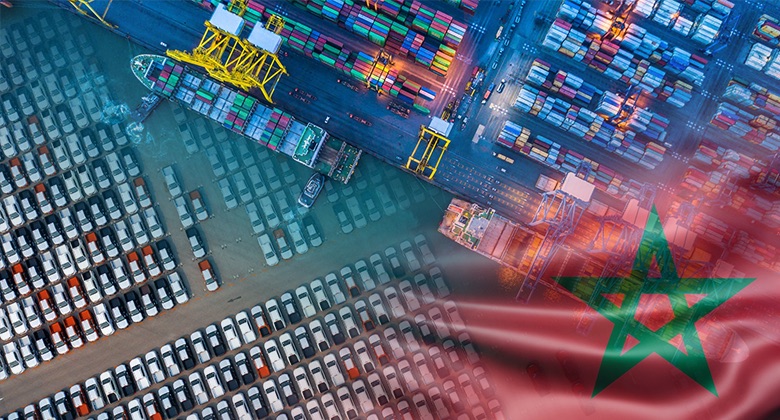
Morocco has become Africa’s leading industrial economy, overtaking South Africa, according to the 2025 Industrialisation Index published by the African Development Bank.
The report says the shift reflects a deliberate long-term strategy focused on industrial upgrading, export diversification and consistent policy execution.
Rather than relying on agriculture and raw phosphate exports, Morocco has moved into higher-value global supply chains. The index was presented alongside the first Industrial Investment Barometer for Africa, produced by WITBA Invest SA in partnership with Trendeo.
Morocco’s rise reflects more than expanded production. The report points to stronger export sophistication and an ability to attract large-scale industrial investment. North Africa, alongside southern Africa, leads the continent in production and export complexity.
The investment barometer reinforces this trend. North Africa ranks highest for industrial diversification, attractiveness and local value retention, accounting for 56% of total industrial investment between 2020 and 2025, led by Morocco and Egypt.
Key sectors have underpinned Morocco’s industrial push.
The automotive industry has become a central pillar. Morocco is now the largest non-EU supplier of vehicles to the European Union, with production driven by manufacturers including Stellantis in Kenitra and Renault in Tangier. The sector is expanding into electric vehicle and battery production.
In aerospace, industrial clusters around Casablanca supply components to global firms such as Boeing and Airbus, signalling growing capacity in high-precision manufacturing.
Infrastructure has also played a central role. The Tangier Med Port provides direct access to major shipping routes, while free zones offer tax incentives and simplified regulations to attract foreign investment.
The country has also shifted its approach to natural resources. While still a leading phosphate producer, Morocco now focuses on higher-value fertiliser production through OCP Group, aiming to retain more value domestically.
At the same time, investment in solar and wind energy is positioning Morocco as a potential hub for green hydrogen and low-carbon manufacturing.
Despite this progress, the AfDB says Africa’s industrial landscape remains fragmented. Intra-African trade accounts for just 14.4% of total trade, highlighting weak regional supply chains.
There are signs of improvement. Of the 54 countries studied, 41 have increased their industrialisation scores since 2010, with overall performance rising by 6%.
However, Africa still produces less than 2% of global manufactured goods and accounts for only 1.4% of manufacturing exports. Manufacturing value added per person has also fallen below pre-2014 levels.
The AfDB says future growth will depend on better infrastructure, stronger economic corridors and closer integration under the African Continental Free Trade Area, alongside access to reliable energy and long-term financing.
It also warns that African industries must prepare for carbon border taxes expected from Europe and the United States, or risk losing competitiveness.