India’s drop in fertiliser production has given Morocco a bigger role in global supply, but it is also exposing pressure points in its own system.
India’s fertiliser output fell to its lowest level in five years in March. The fall is linked to shortages of natural gas, higher energy costs, and disruptions in Middle East trade routes that have hit several urea plants. India, the world’s biggest importer of urea, is now rushing to secure supplies ahead of the summer monsoon.
This has pushed Morocco further into the spotlight. India now sees Morocco as a key supplier of phosphate fertilisers, alongside Russia and Belarus. It has already secured about 2.5 million tonnes of Moroccan fertilisers for the 2025 to 2026 season to help meet demand for DAP and TSP.
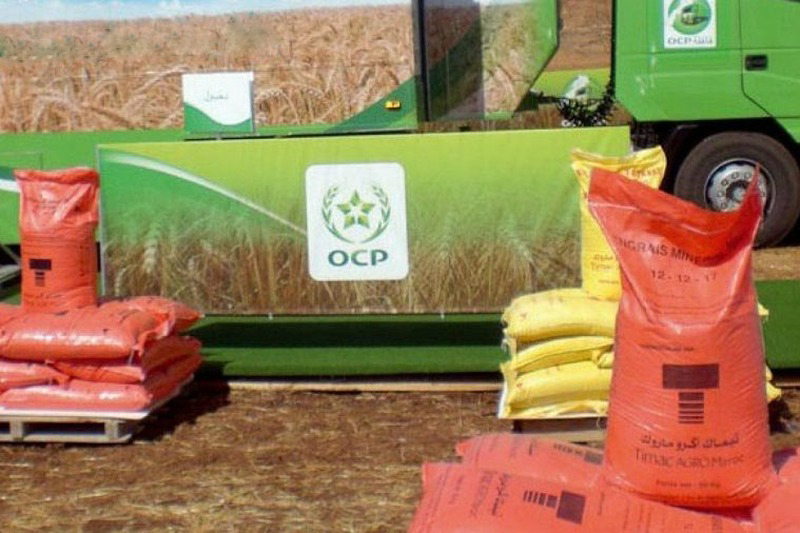
At the centre of this trade is OCP Group, which already supplies a large share of India’s phosphate rock and phosphoric acid needs. It also has close business links in India, including a stake in Paradeep Phosphates and partnerships with Tata Chemicals.
But the situation is not simple. Global fertiliser markets are still tight, especially after China reduced exports and gas prices stayed high. That has left fewer countries able to supply large volumes quickly, which strengthens Morocco’s position.
Supply pressures from the Gulf
Even so, OCP faces its own challenges. It depends on imported inputs like sulfur and ammonia, which are needed to make fertilisers.
Much of this supply moves through the Gulf and the Strait of Hormuz, a key shipping route that has seen rising tensions. Around 20 percent of global sulfur trade passes through this area, making it a sensitive chokepoint.
Sulfur prices have jumped by about 35 percent since the disruptions began. That has pushed up production costs. Shipping insurance costs have also increased.
To reduce risk, OCP has started buying more sulfur from places like Kazakhstan, Canada, Europe and the Gulf of Mexico. The company says it has enough stock to last until the end of June.
At the same time, planned maintenance at some sites could cut production capacity by up to 30 percent in the second quarter, adding more pressure.
Changing what it produces
To deal with these problems, OCP is changing its production mix. It is increasing output of triple superphosphate, known as TSP, which uses less sulfur and no ammonia compared with other fertilisers.
TSP made up around 30 per cent of OCP’s production in 2025 and could rise to more than half this year.
The idea is simple: make more of the products that are easier to produce during global supply disruptions.
Longer term uncertainty
The big unknown is how long the disruptions in the Gulf will last. If they continue, it could make it harder for OCP to produce fertilizers that depend heavily on sulfur and ammonia.
At the same time, the company is trying to reduce future risks. It has launched a $13 billion green investment plan to produce 1 million tonnes of green ammonia by 2027 using renewable energy in Morocco. That would reduce its dependence on imported ammonia.
The International Finance Corporation has also provided a $100 million loan to support expansion and greener production.
India, meanwhile, has increased its fertiliser subsidy budget by $2.5 billion to protect farmers from rising global prices.
Part of the current shift also comes from China stepping back from fertiliser exports to protect its own food supply. That has left a gap of around 2 million tonnes in India’s market, which Morocco is now helping to fill.