A team of doctors in Morocco and Belgium has conducted what they say is the world’s first two-way robotic surgery between two continents. The operation connected Casablanca and Brussels. Surgeons in both cities operated on patients hundreds of kilometres away using robotic systems linked by Orange Maroc’s high-speed network.
The project brought together Morocco’s Oncorad Group and Belgium’s ORSI Academy. It showed that doctors can safely perform robotic surgery across countries if they have a fast and reliable network.
During the operation, a surgeon in Casablanca controlled a surgical robot in Brussels to treat a patient there. At the same time, Dr Youness Ahallal, a robotic surgery professor at ORSI Academy and urological surgeon at Oncorad Group, operated from Brussels on a patient in Casablanca.
The success of the operation depended on Orange Maroc’s telecommunications network. In robotic surgery, even a small delay between a surgeon’s hand movement and the robot’s response can affect patient safety.
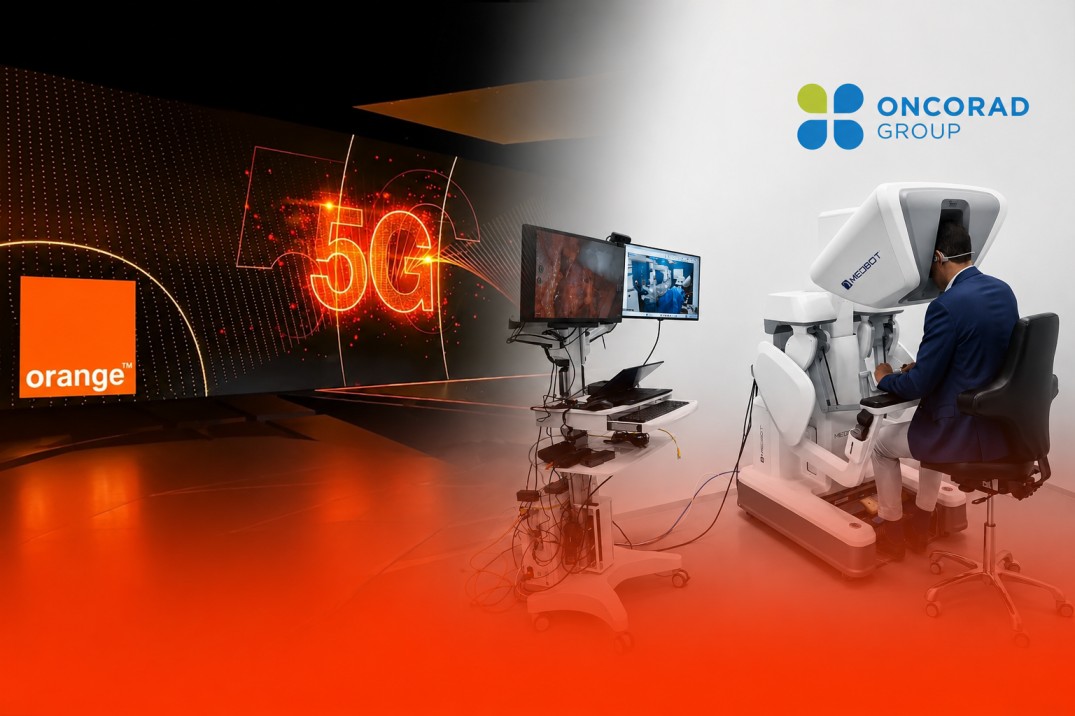
To avoid this, Orange Maroc used a dedicated 5G Standalone network instead of older 4G-based systems. It also created a private section of its network only for the surgery, so normal internet traffic could not slow down the connection.
The company gave priority to the surgical data and worked with international partners to keep communication between Casablanca and Brussels fast enough for real-time surgery.
The network carried three types of information at the same time. It transmitted the surgeon’s hand movements, live high definition 3D video from inside the patient’s body, and haptic feedback, which lets surgeons feel the pressure and resistance of tissues during the operation.
Orange Maroc also used edge computing, with processing servers placed close to the hospitals instead of distant data centres. This reduced delays by processing data closer to where the surgery was taking place.
The system included several safety measures. Patient data travelled through encrypted private networks using two separate communication routes. If one connection failed, the system automatically switched to the backup route within milliseconds. A surgical team was also present beside each patient and could immediately take over if the connection became unsafe.
The robotic system used a master slave setup. Surgeons controlled a console with 3D screens while robotic arms in the operating room copied every movement using surgical instruments.
The achievement comes as robotic surgery continues to grow worldwide. Industry forecasts expect the global telesurgery market to grow from $1.9 billion in 2025 to $2.1 billion in 2026, reaching $5.7 billion by 2036 with an annual growth rate of 10.5%.
Research also supports the technology. A 2026 study led by researcher Ye Wang tested robotic surgery over distances between 1,000 and 2,800 kilometres. It found that remote operations were as safe and reliable as surgeries performed in the same operating room.
The technology could also help improve access to surgery. Around 313 million operations are performed every year around the world, but only 6% take place in the poorest countries. Experts estimate that low and middle-income countries need another 143 million surgical procedures every year to prevent avoidable deaths and disabilities.
Most robotic surgery systems are still based in North America and Europe, leaving many African countries with limited access.
Alongside the operation, Oncorad Group and ORSI Academy signed a partnership to train more African doctors in robotic surgery through simulation programmes, mentoring and scientific exchanges.
Professor Redouane Samlali, Chief Executive Officer of Oncorad Group, said the goal is bigger than buying advanced equipment. “We aim to build a sustainable ecosystem of clinical excellence rather than simply acquiring expensive equipment.”