
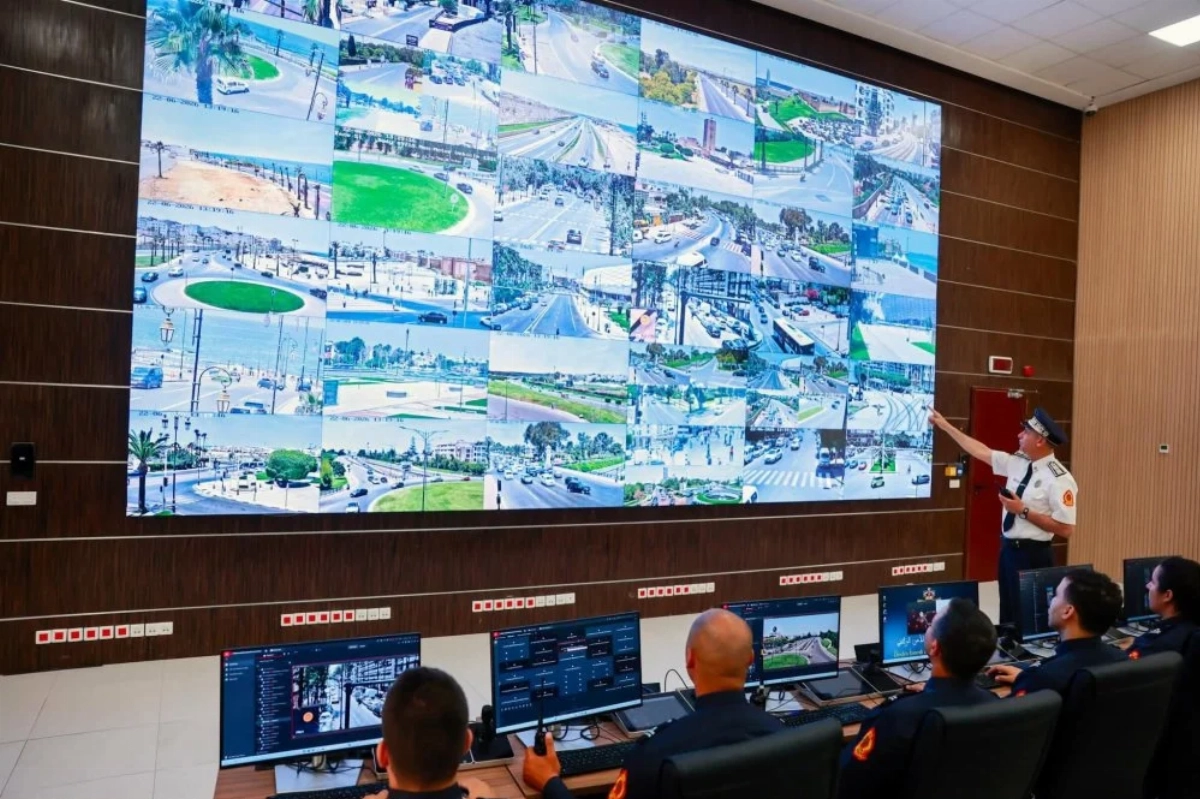
Rabat has opened a new smart police command centre that brings emergency calls, CCTV cameras, traffic control and police operations together in one place. The new centre, launched by the General Directorate for National Security (DGSN), is linked to more than 1,400 high-definition cameras installed across the capital. It allows police to monitor the city in real time, respond faster to emergencies and manage traffic more efficiently.
The project replaces a command room first opened in 2016 for mobile emergency police units. After a major upgrade completed in 2026, it has become a fully digital operations centre built to support modern policing.
The centre receives every call made to Morocco’s police emergency number, 19. It operates 24 hours a day, seven days a week, using an IT system that can handle large numbers of calls at the same time.
Each call is logged into a central database and sent immediately to police teams in the field. Operators can follow every incident from the first phone call until the case is closed, helping dispatchers send the right officers as quickly as possible.
The network of more than 1,400 cameras covers main roads, government buildings, public squares and other key locations across Rabat. Live video allows police to spot incidents even before someone reports them.
The system also helps manage road traffic. Operators can quickly identify traffic jams and accidents and send officers to clear roads, especially during rush hour.
Police will also use the platform to monitor large public events, including sports matches, cultural festivals and official ceremonies. Live camera feeds allow operators to track crowd movements, detect suspicious activity and coordinate police responses.
A new data centre supports the platform. It stores and processes information collected during police operations while meeting national cybersecurity standards and complying with laws on personal data protection.
The complex also includes a crisis management room connected to DGSN databases and secure communication networks. It is designed to coordinate police operations during major emergencies, natural disasters or cyber attacks.
The project is part of a wider effort to use digital technology to improve public services and city management. By combining emergency calls, video surveillance and police dispatch into one system, officers can make decisions faster using live information.
The camera network and fibre optic infrastructure were funded and deployed through a partnership between the Rabat Salé Kénitra regional Wilaya and the DGSN.
Much of the software behind the platform was developed by DGSN engineers. It includes SMART IJ, an artificial intelligence facial recognition system, SMART LPR, which automatically reads vehicle licence plates, and a geographic information system that tracks police patrols in real time.
The hardware was supplied through public tenders involving international technology companies. It includes secure TETRA radio communications, pan-tilt-zoom surveillance cameras, servers and cybersecurity equipment.