
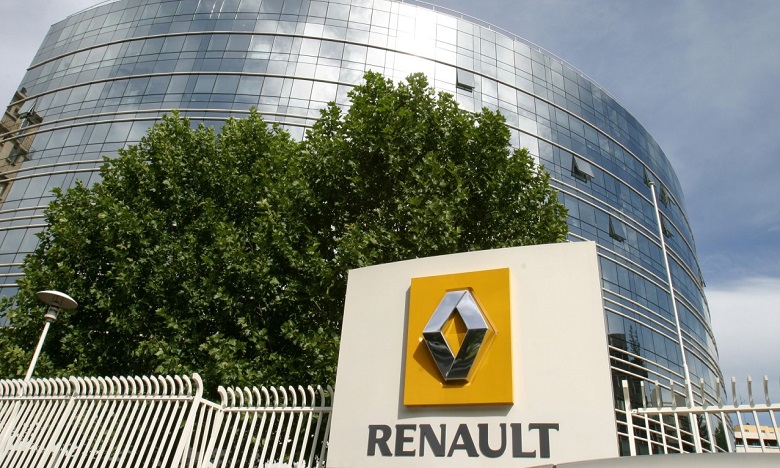
Renault Group is planning to cut its global engineering workforce by 15 to 20 percent by 2028 as part of a major restructuring aimed at making the company more competitive in the car market.
The cuts are expected to affect around 11,000 to 12,000 engineers worldwide, meaning between 1,600 and 2,400 jobs could go. The company says it will avoid forced layoffs and will instead rely on staff moving roles, retraining, and voluntary departures.
Impact in Morocco and other countries
Changes will affect Renault engineering sites across several countries, including Morocco, Romania, Spain, India, South Korea, Brazil and Turkey.
In Morocco, where Renault has important engineering and industrial operations linked to its global supply chain, the changes will follow the group’s wider plan. The country is a key production and sourcing hub, with more than half of parts locally integrated and over €1 billion in annual local sourcing.
The company said its main advanced research and development work will remain at the Renault Technocentre in France.
New strategy and faster development
The restructuring is part of Renault’s new “futuREady” plan, launched in March 2026 under CEO François Provost. The goal is to make the company faster and more tech focused, including learning from faster development methods used by Chinese carmakers.
Renault said it recently built its electric Twingo in 21 months, about half its usual development time, by working with Chinese partners. It now wants to use this faster approach across its engineering teams and cut electric vehicle costs by up to 30 percent.
Morocco’s changing role
In Morocco, Renault’s engineering work is expected to move more towards digital tasks and software-based vehicle development. The country already hosts key facilities such as the Africa Technical Center and CETIEV 2.0, which test and approve electric and hybrid cars.
Renault is aiming to launch its first software-defined vehicle in 2026.
Targets for the future
The company plans to launch 36 new models by 2030, including 16 electric vehicles. It also hopes to improve efficiency by 20 percent using digital tools and virtual testing systems.
From 2028, new Renault electric cars will use an 800 volt system, which will allow much faster charging of around 10 minutes.
Earlier job cuts and restructuring
This move follows earlier cost cuts in late 2025 under a programme called Project Arrow, which reduced support jobs like HR, finance and marketing by around 15 percent, or about 3,000 roles.
Renault has also merged and simplified parts of its electric vehicle and mobility businesses, including Ampere and Mobilize, as it tries to run a leaner operation.