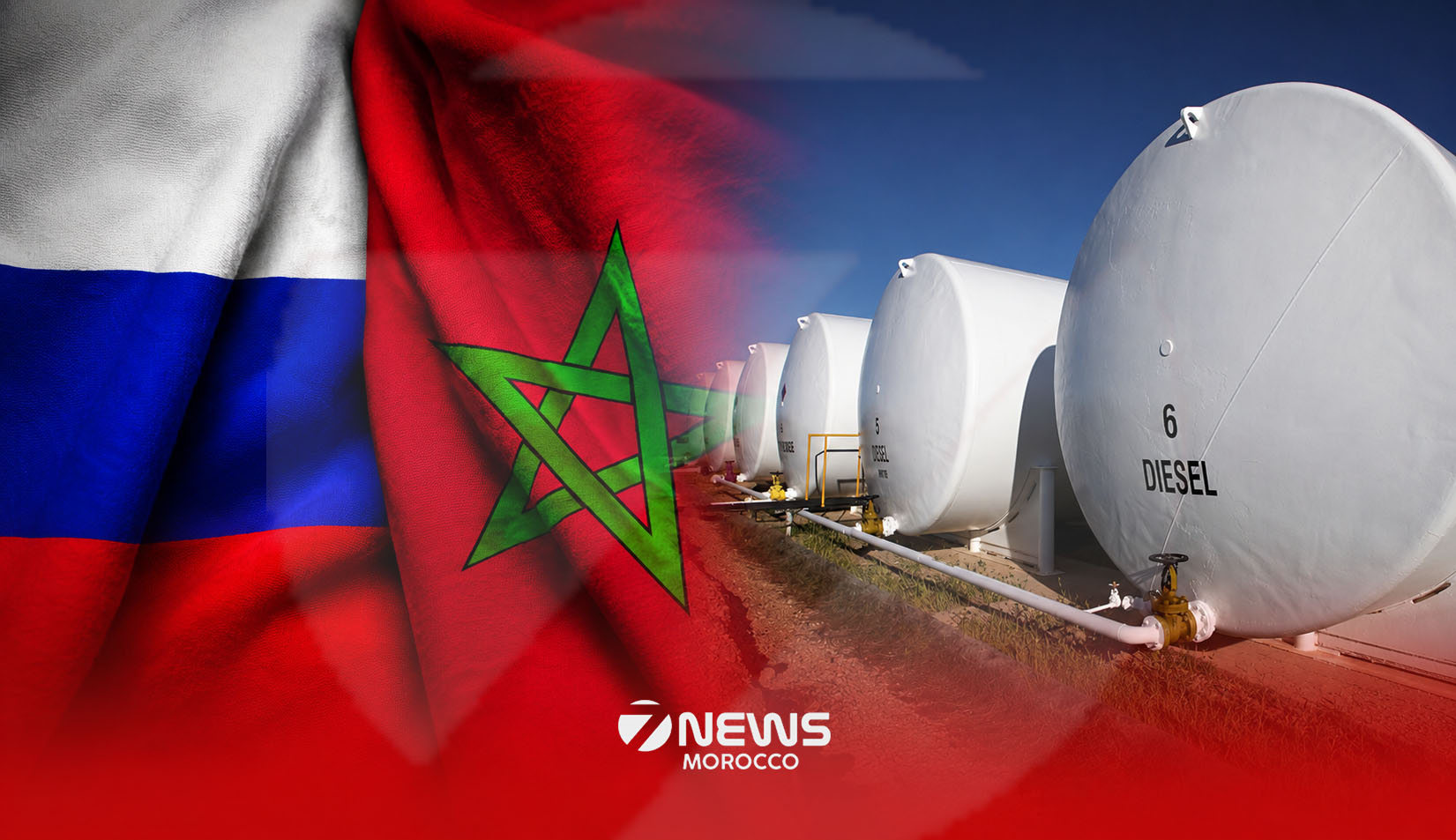
Moroccan motorists are paying more for fuel, with prices exceeding 16.30 dirhams a litre in early October. A tanker carrying about 40,000 tonnes of Russian diesel is now heading to the country, raising questions about whether new supplies could help ease the pressure on consumers.
The low-sulphur diesel was loaded on Tuesday at the Russian port of Primorsk, on the Baltic Sea, according to data from the London Stock Exchange Group (LSEG), a financial data and services provider.
The importer, the port where the cargo will be unloaded, its commercial value and its expected arrival date have not been disclosed.
The shipment is among the first reported exports after Russia partially eased restrictions on diesel exports on 10 October. The US Treasury Department’s Office of Foreign Assets Control also issued a licence allowing certain transactions involving the sale, transport and import of Russian petroleum products.
Fuel prices at Moroccan filling stations have continued to rise, although prices vary between distributors and cities. The arrival of Russian diesel comes amid questions about whether changes in international supply and prices will lead to lower costs for consumers.
Morocco has imported Russian diesel before. Its purchases increased in 2023 as Russia’s war in Ukraine reshaped global oil trade and forced Moscow to seek new markets.
The European Union’s ban on seaborne imports of Russian petroleum products pushed Russia to look for buyers in Africa, Asia and Latin America.
In March 2023, Economy and Finance Minister Nadia Fettah Alaoui told parliament that imports of Russian diesel had increased by 13% between 1 January and 27 February that year. She was responding to a parliamentary question about imports of Russian petroleum products.
The competitive prices of Russian fuel prompted debate about the profit margins of fuel distribution companies and whether consumers were benefiting from lower import costs.
Data published by the US Energy Information Administration in May 2024 also showed how Russian diesel exports shifted in 2023.
Morocco was one of four African countries — alongside Libya, Tunisia and Ghana — where annual seaborne imports of Russian diesel increased by more than 20,000 barrels a day compared with 2022.
The figures highlighted the growing role of Russian fuel in North African markets after European sanctions redirected trade.
Will cheaper supplies lower pump prices?
The latest shipment has renewed questions about whether Morocco can diversify its fuel supplies and use competition between international suppliers to negotiate better prices.
But an increase in supply does not automatically mean lower prices at filling stations.
Morocco liberalised fuel prices at the end of 2015, leaving distribution companies to set retail prices. Pump prices remain sensitive to international market movements and the costs companies pay for imported fuel.
It is not yet clear whether the latest Russian shipment will affect prices paid by consumers. The importer, the cargo’s value and its final destination within the country remain unknown.