
US farm exports to Morocco have jumped to record levels, as trade between the two countries continues to grow quickly. In 2025, US agricultural exports to Morocco reached $815 million, up 38% compared with 2024, according to the US Department of Agriculture.
The data shows Morocco is becoming one of the fastest growing African markets for US farm products, especially in North Africa. Much of the demand is coming from animal feed, vegetable oils and protein products used in livestock and poultry farming.
Trade between the two countries has risen sharply over time, increasing by 69% over the past five years.
The pace is also speeding up in the short term. In the first three months of 2026, US agricultural exports to Morocco reached $354 million, which is 47% higher than the same period last year.
The main reason behind the rise is Morocco’s repeated droughts, which have reduced local farm production, especially cereals. This has pushed the country to rely more on imports to cover food and animal feed needs.
A free trade agreement between Morocco and the United States, in place since 2006, has also made it easier for US farm goods to enter the market by reducing tariffs.
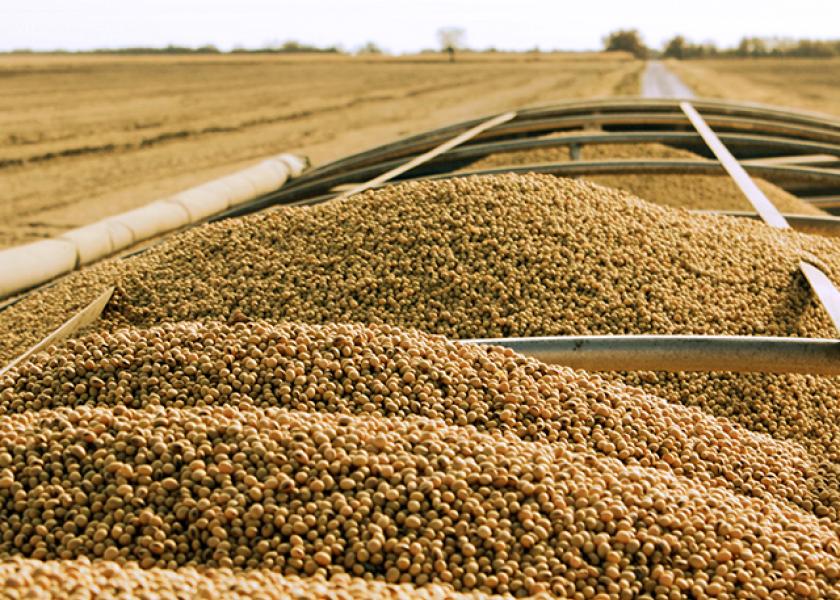
Animal feed and oils make up a large share of imports. Soybean meal used for feeding livestock brought in $75 million in the first quarter of 2026, compared with $35 million a year earlier. That is an increase of more than 111%.
Crude soybean oil imports also rose strongly to $37.7 million in the same period. In previous years, these imports were almost negligible. The increase reflects Morocco’s efforts to diversify its sources of vegetable oils.
Another fast-growing import is distillers’ dried grains, a protein-rich byproduct used in cattle and sheep feed. These imports rose by 118% in the same period, showing how quickly livestock farming is expanding.
In the poultry sector, imports of breeding turkeys and chicks have also increased. This points to Morocco’s growing reliance on imported genetics and farming inputs.
The report also raises concerns about food security. It notes that as Morocco’s livestock and poultry sectors depend more on imported feed and raw materials such as soybeans and oils, the country becomes more exposed to global price changes and supply shocks.
It warns that any disruption in global markets, or sudden rises in the cost of soybeans, energy or transport, could quickly push up prices for meat, poultry and eggs in Morocco.
On the US side, officials see Morocco as an important strategic partner and a gateway to markets in sub Saharan Africa, where Moroccan trade and investment links continue to grow.
If current trends continue, the report says US agricultural exports to Morocco could pass $1 billion for the first time in 2026.