Europe’s main airline group has asked the EU to delay one of its climate rules because the required synthetic fuel is too expensive and hard to get.
Airlines for Europe (A4E), which includes Lufthansa, Ryanair, Air France-KLM, IAG, and easyJet, said the 2030 goal of having 1.2% of plane fuel made from synthetic sources is “untenable” because there isn’t enough production.
They added that the wider target of 6% sustainable aviation fuel (SAF) by 2030 “can still work if prices come down a lot.”
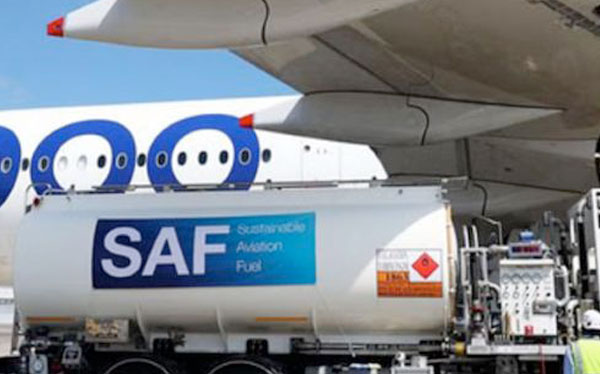
Under EU rules, airlines must gradually use more SAF: 2% now, 6% in 2030, 20% by 2035, and 70% by 2050. From 2030, a fifth of SAF must be synthetic fuel made from green hydrogen and CO2, not plants. That share rises to 35% by 2050.
But making synthetic fuel (called eSAF) is still experimental and very costly, up to 12 times more than regular kerosene. Current production would only cover 0.7% of the EU’s 2030 target.
“We are very late in producing enough SAF,” said Willie Walsh, head of the International Air Transport Association. Global production is expected to reach 2.4 million tonnes in 2026, still less than 1% of the fuel airlines need.
The rules carry heavy fines. Airlines missing the SAF targets could pay €2,700 per tonne of regular SAF and €14,000 per tonne for eSAF. If they fail, they must make up the shortfall the next year, and they can’t dodge the rules by filling up with cheaper fuel outside the EU.
The European Commission says the strict rules will stay to encourage investment in new fuel plants.
Airlines warn that Europe’s strict approach leaves them at a disadvantage compared with the US, where subsidies make SAF cheaper.
Aviation currently makes up around 3% of global CO2 emissions, and SAF and eSAF are seen as crucial to reaching the sector’s goal of zero net emissions by 2050.