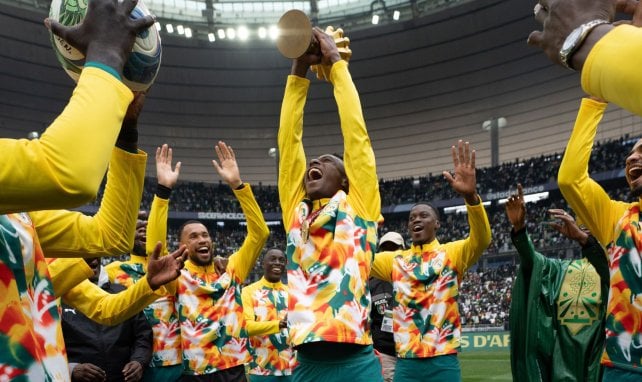
Senegal could face serious punishments after their national team celebrated with the Africa Cup of Nations trophy that is not theirs following a friendly against Peru, even though CAF stripped them of the 2025 title and awarded it to Morocco.
CAF is now reportedly preparing a formal report for FIFA, accusing Senegal of breaking “loyalty and compliance” rules. These rules require national associations to follow decisions made by football’s governing bodies. The trophy celebrations are seen as a direct challenge to CAF’s authority. Sources say CAF President Patrice Motsepe is furious and plans to send the matter to the CAF Disciplinary Committee.
Senegal has appealed to the Court of Arbitration for Sport (CAS) in Lausanne, claiming procedural mistakes and accusing the footballing body of corruption. However, no stay has been granted, so Senegal is legally supposed to act as if they are NOT the champion until CAS gives a final ruling.
CAF has already issued record fines against Senegal. After the final, Senegal was fined $300,000 for unsporting behaviour by players and staff and another $300,000 for actions by supporters that “brought the game into disrepute,” bringing total fines to over $700,000. If Senegal continues to hold the trophy or celebrate as champions, CAF could impose daily fines until the trophy is returned to their headquarters in Cairo.
Sanctions could also target individuals. Head coach Pape Bouna Thiaw has already received a five-match ban for his amateurish and defiant conduct during the final, which could be extended to all FIFA-sanctioned matches, including World Cup qualifiers. Key players such as Iliman Ndiaye and Ismaila Sarr could face further bans if they participate in unauthorised trophy tours or celebrations.
CAF and FIFA also have the option to take extreme action. If Senegal is found to be openly defying a CAF ruling, the national team could be barred from the next Africa Cup of Nations. FIFA could also step in, potentially banning Senegalese clubs, which are unheard of in the continental competitions, and national teams from all international competitions for bringing the game into disrepute.
The controversy started because Senegal was found to have forfeited the game after the referee awarded a rightful penalty to Morocco in the last minutes of the game during the 2025 AFCON final in Rabat, which Brahim Diaz missed after the crybabies returned to the field 15 minutes later. The game went on to extra time, and Pape Gueye scored the only goal of the game. But after almost two months, CAF overturned Senegal’s 1-0 win and gave a 3-0 victory to Morocco. Senegal argues that once the referee resumes play, the decision is final under the Laws of the Game. This has created a rare and unprecedented situation at this level of football.
There are some historical precedents, but they are mostly off-field cases. In 2019, Wydad Casablanca refused to continue a CAF Champions League final after a VAR dispute, and Esperance was later awarded the title. In 2023, Togo’s ASKO de Kara successfully challenged an ineligible player, and CAF overturned the match results. Juventus was stripped of two Serie A titles in 2006 for referee manipulation, while Marseille lost their French league title in 1993 for bribery. Nigeria faced a FIFA suspension in 2014 over government interference, and Morocco was banned from two AFCON tournaments in 2015 due to Ebola-related scheduling issues.
Until CAS issues a ruling or a stay of execution, Senegal must comply with CAF’s orders, including returning the trophy and the medals. Failure to do so could trigger severe punishments.