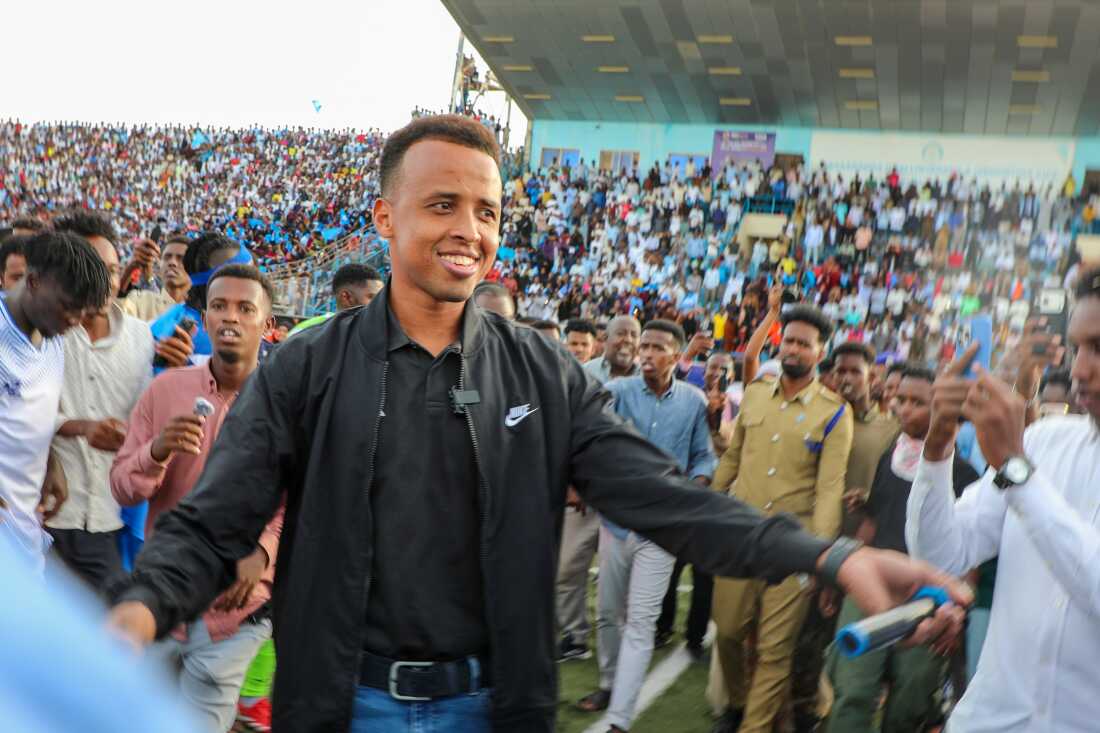
Somali referee Omar Artan will officiate one of Europe’s biggest football matches after being blocked from taking part in the 2026 FIFA World Cup. The 34-year-old has been appointed to referee the UEFA Super Cup between Paris Saint-Germain and Aston Villa on 12 August in Salzburg, Austria.
The decision was announced in a joint statement by the Confederation of African Football (CAF) and UEFA.
Artan had originally been selected by FIFA for the 2026 World Cup and was set to become the first Somali referee to officiate a men’s World Cup match.
However, he was unable to take part after being denied entry to the United States despite holding a valid visa.
Reports said Artan arrived in Miami from Istanbul on 6 June but was detained for 11 hours by US border officials before being sent back to Turkey. US authorities cited unspecified security concerns but did not publicly provide evidence.
CAF and UEFA said Artan earned the Super Cup appointment through his strong performances in recent years.
“Despite his young age, the Somali referee has established himself as one of the best in world football,” the statement said.
Artan has been on FIFA’s international referees list since 2018. Last season, he officiated the second leg of the CAF Champions League final and was named African Men’s Referee of the Year for 2025.
UEFA president Aleksander Čeferin called him “an excellent referee, young but already experienced”.
CAF president Patrice Motsepe said Artan had “made Somalia and the entire African continent proud” and described the appointment as “an honour for African refereeing”.
CAF and UEFA said the move reflects their commitment to “the development of football at all levels and the promotion of the core values of unity, equality, and non-discrimination”.
Artan’s case is part of a wider issue affecting some World Cup participants.
At least 15 members of Iran’s coaching and support staff were reportedly denied US visas. The Iranian team has since based itself in Tijuana, Mexico, and must travel across the border for matches in the United States.
Other football figures have also faced difficulties. Iraqi striker Aymen Hussein was reportedly questioned for nearly seven hours before being allowed into the country, while Iraq’s team photographer, Talal Salah, was deported after officials searched his phone.
FIFA has said it does not control the immigration policies of host countries.